
Get all your news in one place.
100’s of premium titles.
One app.
Start reading
Android Central
Android Central
Technology
Brady Snyder

OpenAI's audio-first hardware product could launch this year, and I'm excited

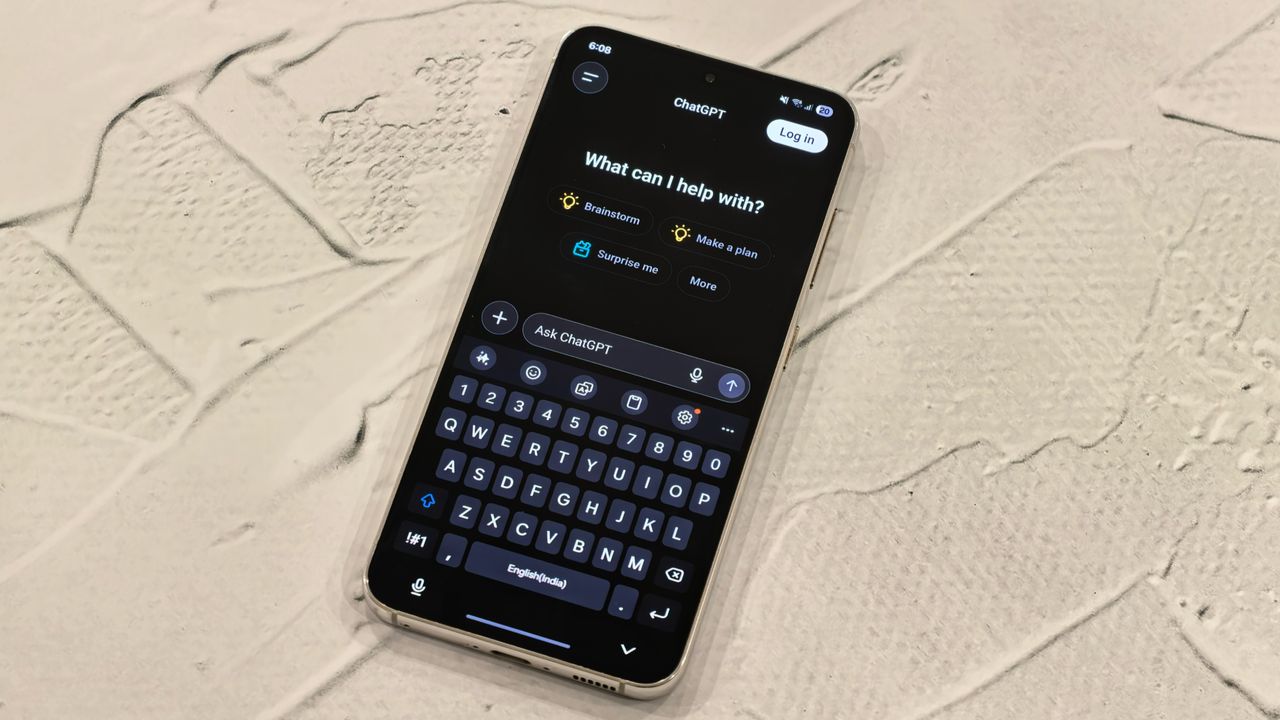
ChatGPT app on an Android phone.

OpenAI is building up an arsenal of design talent as it develops its first hardware product. The company acquired famed Apple designer Jony Ive's startup "io" in a $6.5 billion deal last year. The design lead behind the iPhone and more, plus his entire team, is now under OpenAI's roof working on an innovative hardware product. Now, we have a better idea of when OpenAI actually plans to unveil and release this secretive AI-powered device.

In an interview with Axios, OpenAI's Chief Global Affairs Officer Chris Lehane said that the company is "on track" to reveal its first product in the second half of 2026. The confirmation is the closest thing we've gotten to a timeline for OpenAI hardware. The company, including its CEO Sam Altman, has been teasing an upcoming AI device, but details have been sparse.

Notably, Lehane wouldn't commit to OpenAI's hardware product being available for purchase this year — we might see a reveal in 2026 and general availability in 2027. The OpenAI policy leader added that the company was "looking at something in the latter part [of 2026]," per the report.

Information regarding OpenAI's mysterious entry into consumer hardware products has been slowly trickling out since the May 2025 announcement. The Wall Street Journal reported that Altman told OpenAI employees that he and Ive plan to ship 100 million of these products. The report notes that Altman described the opportunity as having the potential to be "the biggest thing we've ever done as a company here."

Shortly after, industry analyst Ming-Chi Kuo claimed in a post on X (formerly Twitter) that mass production of the product was expected to begin in 2027.

More recently, Altman and Ive confirmed they had prototypes of the upcoming product and expected to start building it within two years, the duo said in November 2026 at Emerson Collective's Demo Day (via 9to5Mac).

Finally, we have the first prototypes. I can’t believe how jaw-droppingly good the work is and how exciting it is. But also, now getting to the benefit of hindsight and looking at the progress — the process backwards — how much it’s all in there and how it wouldn’t have worked any other way. And then out of the end of it comes this extraordinary thing.

Sam Altman, OpenAI CEO

Leading us to the present day, The Information reported this month that OpenAI is strengthening its audio-based models as it nears closer to building its initial product. The product is expected to ship without displays and instead focus on voice input, explaining the audio focus.

Now, we know that OpenAI's timeline might be moving up with a late 2026 reveal and the potential for 2027 availability.

Why I think OpenAI's first product is worth watching

The now-defunct Humane AI Pin in a press image. (Image credit: Humane)

OpenAI's debut hardware product is inching closer to becoming a reality, and that's exciting for tech enthusiasts. We really haven't seen an innovative new form factor find success since the smartphone and the smartwatch. Other emerging wearables, like earbuds and smart glasses, are making noise — but they're far from becoming ubiquitous. Does OpenAI's first consumer product have the potential to change that?

We don't know enough about OpenAI's plans to know for sure. However, the company seems fixed in its position that it will focus on an audio-based device, and that gives me confidence. Screen-based consumer technology products will always compete with existing form factors, like smartphones and smartwatches, which is an uphill battle.

That's true even of products that think outside the box in their implementation of displays, like Humane's AI Pin. That now-discontinued device used a tiny projector to display images on your hand. At the end of the day, a screen is still a screen. Humane's once-hyped AI product fizzled out very quickly, leaving early adopters high and dry.

It's a similar story for the Rabbit R1, another screen-based AI device that never caught on. To Rabbit's credit, the company is still supporting the device and recently overhauled the operating system. Even with that in mind, we're not likely to see the Rabbit R1 — or anything similar — disrupt the smartphone or smartwatch form factor.

(Image credit: Andrew Myrick / Android Central)

Meanwhile, it feels like audio-based devices still have room to grow. AI voice recorders are finding a niche in the business world despite offering the same functionality as your smartphone. Earbuds are slowly becoming AI devices with features like Live Translate. Companies continue to experiment with unique form factors for audio gear, from open earbuds and bone-conduction headphones to pillow speakers.

Consumers are voting with their wallets, telling companies that they want more audio products. OpenAI seems to be listening and rising to the occasion. The company confirmed an audio focus for its upcoming product, and leaks suggest it could take the form of earbuds.

The teasers, leaks, and rumors all point to the same thing. OpenAI is putting its hardware efforts in the right direction, avoiding screen-based devices that'll always lose against the smartphone. Instead, it's supposedly leaning into audio, and it sounds like a winning strategy. Based on today's announcement, we might learn more about what this product might look like later this year.

Sign up to read this article
Read news from 100’s of titles, curated specifically for you.
Already a member? Sign in here
Related Stories
Top stories on inkl right now
One subscription that gives you access to news from hundreds of sites
Already a member? Sign in here
Our Picks
Fourteen days free
Download the app
One app. One membership.
100+ trusted global sources.