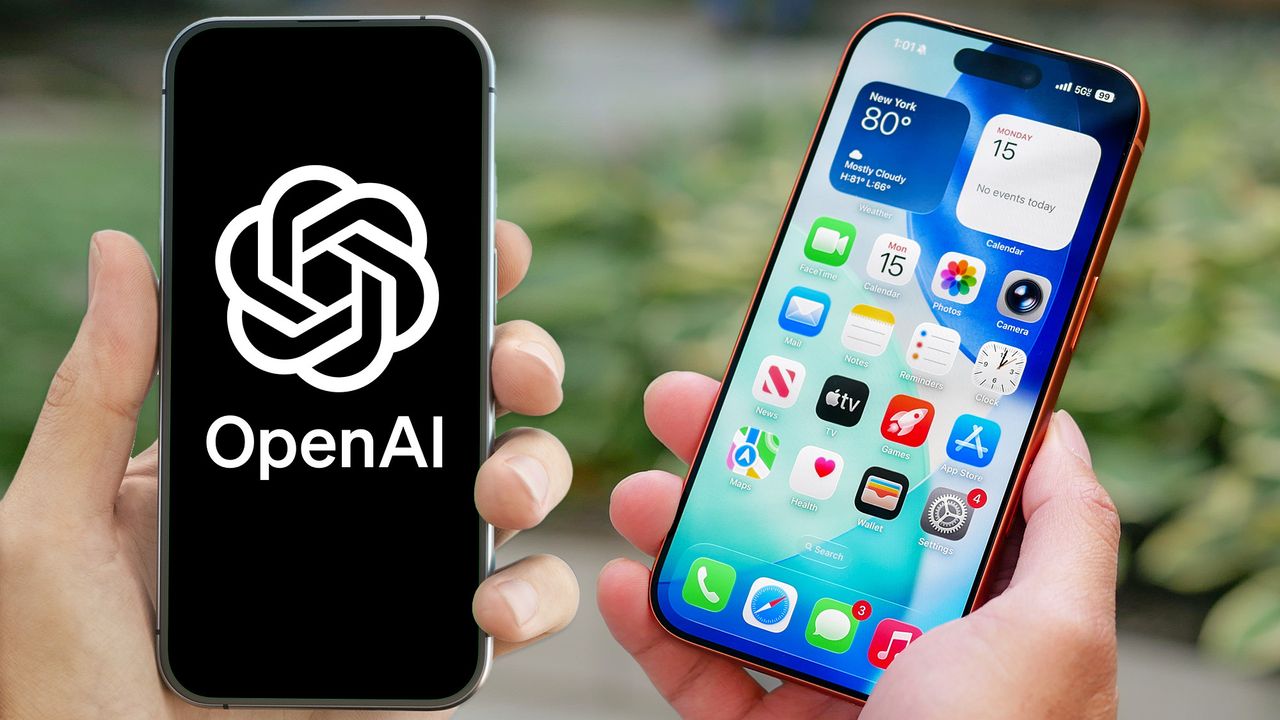
With OpenAI’s partnership with former Apple design chief Jony Ive, the designer/creative firm LoveFrom and the AI hardware startup io Products, Inc., everyone has kept their eyes peeled for the first physical product to come from Sam Altman’s company.
Rumors have pointed to OpenAI’s consumer hardware launching as a screenless, voice-powered, pocket-sized AI companion sometime in 2027. AI-powered smart glasses and earbuds may also be on the docket for OpenAI’s first line of physical products.

A new report has surfaced regarding OpenAI’s foray into the smartphone market and how it could differentiate itself from its competitors, which are primarily Apple’s iPhones and Samsung’s Galaxy models.
An OpenAI smartphone that could land in your hands in 2028

Analyst Ming-Chi Kuo of TF International Securities posted on X that OpenAI is reportedly working with MediaTek and Qualcomm on smartphone processors.
He also claimed OpenAI is partnering with Luxshare as both the manufacturing partner and exclusive co-designer of the device’s system, with mass production potentially starting in 2028.
Kuo suggested an OpenAI smartphone could differentiate itself from current leaders by focusing less on traditional app marketplaces dominated by Apple and Google, and more on AI agents that handle a wide range of tasks. He added that building its own hardware stack could allow ChatGPT to operate with fewer restrictions than those typically imposed by mobile operating systems.
Kuo argued OpenAI’s strengths include its consumer brand, years of user data and leading AI models. He also suggested the company could bundle subscriptions with hardware and create a new AI agent ecosystem for developers.
The takeaway
Altman has high expectations for OpenAI’s foray into physical products, as evidenced by the open letter he and Jony Ive penned to commemorate his company’s partnership with the former Apple design chief. “What it means to use technology can change in a profound way,” he said. “I hope we can bring some of the delight, wonder and creative spirit that I first felt using an Apple Computer 30 years ago.
In a world where iPhones and Samsung Galaxy smartphones can be seen anywhere and everywhere, it’ll be hard for OpenAI’s rumored smartphone to make any major headway in the smartphone industry.
But if they find a way to inject ChatGPT into its device and produce comparable AI agents that mimic the reliable performance of its smartphone competitors’ most used apps, OpenAI may find a way to make a slight dent in the market with its signature device.
More from Tom’s Guide
- Claude now connects to more everyday apps like Instacart, Spotify and Uber — here’s what you can do now
- 'We’re doing this as part of our continued effort to run the company more efficiently': Meta announces layoffs of 10% of workforce amid massive AI push
- Google Meet's AI note-taking feature can now summarize your in-person meetings — here’s how it works