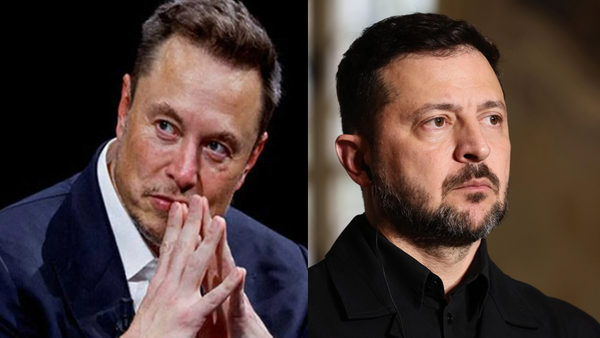
OpenAI co-founder Greg Brockman has told a US court he feared Elon Musk might physically attack him during a tense confrontation.
In a testimony first reported by Wired, which is providing primary courtroom coverage of the case, Brockman, giving evidence in the ongoing legal dispute between Musk and OpenAI's leadership, recounted a volatile 2017 meeting that, he said, escalated swiftly from a cordial exchange into a heated confrontation.
'Something really shifted in him,' Brockman said of Elon Musk. 'He became angry and he went off from there.'
'He stood up and he stormed around the table,' Brockman continued. 'I was sitting in front of the painting and I actually thought he was going to hit me. I truly thought he was going to physically attack me. Instead, he just grabbed the painting and started to storm out of the room.'
The testimony forms part of a high-stakes lawsuit in which Musk accuses OpenAI executives of abandoning the company's original non-profit mission in favour of commercial gain.
Power Struggle at the Heart of the Dispute
OpenAI was founded in December 2015 as a non-profit research organisation focused on developing artificial intelligence for the benefit of humanity.
However, tensions emerged as the cost of building advanced AI systems surged, prompting discussions about creating a for-profit structure to attract investment.
According to Brockman, the 2017 meeting marked a turning point. Musk allegedly pushed for majority control of the proposed for-profit entity, arguing that such authority was necessary to secure vast funding, reportedly tens of billions of dollars, to pursue ambitious AI and space-related goals.
When other co-founders resisted, advocating a more balanced governance model, the atmosphere deteriorated. Brockman said Musk grew increasingly agitated, questioning the company's direction and the roles of its leadership.
From Friendly Meeting to Breakdown
The encounter, held at Musk's residence, reportedly began on a positive note. Brockman said the discussion initially appeared constructive, with exchanges of gifts and informal conversation.
'The meeting started out very pleasant,' he told the court.
But as talks turned to equity distribution and control, Musk allegedly rejected proposals that would have limited his influence.
Brockman recalled that Musk issued ultimatums, including threats to withdraw funding if his demands were not met.
At one point, Musk is said to have abruptly stood up, pacing and raising his voice before ending the meeting and leaving. While no physical altercation occurred, Brockman said the intensity of the moment left a lasting impression.
Legal Battle With Billions at Stake
The testimony comes amid a closely watched trial in California, where Musk is seeking billions in damages and structural changes to OpenAI.
He alleges that the company's leadership, including chief executive Sam Altman, betrayed its founding principles by transitioning towards a profit-driven model.
OpenAI, in turn, argues that Musk was aware of and even supported plans for a for-profit structure before leaving the organisation in 2018.
The case, formally known as Musk v Altman, is being heard in a federal court in California and could have far-reaching implications for the governance of one of the world's most influential AI companies.
Personal Tensions Behind a Corporate Rift
Beyond the legal arguments, Brockman's testimony highlights the deeply personal nature of the fallout between Musk and OpenAI's leadership.
What began as a shared mission to develop safe and beneficial AI has evolved into a bitter dispute involving competing visions, financial stakes and accusations of betrayal.
Brockman's account suggests that the breakdown was not solely driven by strategic disagreements, but also by interpersonal dynamics that intensified under pressure.
As the trial continues, further testimony is expected to shed light on the events leading up to Musk's departure from OpenAI and the company's subsequent transformation.
For now, Brockman's stark claim, that he feared physical confrontation with one of the world's most powerful tech figures, has added a dramatic and human dimension to a case already defined by high stakes and global scrutiny.