The humble wah-wah pedal is probably one of the most underappreciated effects in the electric guitar universe.
Its most vocal legions of detractors usually point to its clichéd use in vintage porno movie soundtracks and a few too many Kirk Hammett solos, but wah effects have graced so many classic tunes – from Jimi Hendrix’s Voodoo Child (Slight Return) and Isaac Hayes’ Theme from Shaft to David Lee Roth’s Yankee Rose and Alice In Chains’ Man in the Box – that it’s pretty hard to truly hate the wah.

Vox/Thomas Organ developed the first commercial wah pedal almost by mistake when engineer Brad Plunkett designed a variable midrange circuit to replace the three midrange preset buttons on the Vox Super Beatle amp.
As Plunkett adjusted the control while a guitarist played, the vocal-like sweeping midrange sounds created a buzz in the Thomas Organ offices. A decision was soon made to mount this circuit in a volume pedal housing so musicians could manually adjust the sweep.
Initially, Thomas Organ conceived the wah pedal as a hands-free alternative to a mute for horn players, and they marketed the device as the “Clyde McCoy wah-wah”, with an endorsement from jazz trumpeter Clyde McCoy. However, guitarists immediately latched onto the wah pedal like a fly to raw hamburger, especially after Eric Clapton and Hendrix featured the effect prominently on their 1967 recordings.
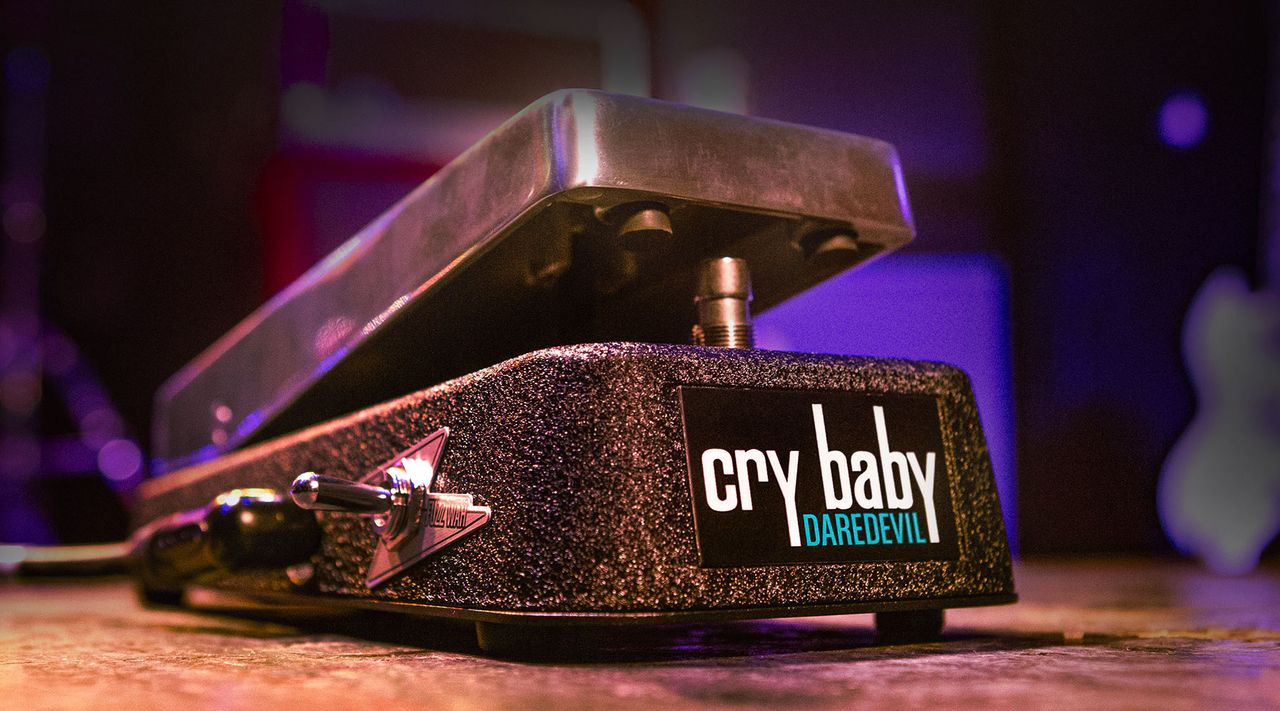
With Vox being based in the U.K. and Thomas Organ being headquartered in the USA, a decision was made in 1968 to market the wah pedal separately, with the Vox wah appearing in the U.K. and the newly renamed “Cry Baby” wah sold in the U.S.

These pedals were initially built in separate facilities, but in the late Sixties production was consolidated at the JEN manufacturing plant in Italy. Due to Thomas Organ’s failure to procure a patent, JEN started producing competing but identical devices that appeared on the market under various brand names.
Eventually production moved back to the U.S. until Thomas Organ went out of business in 1979 and Dunlop purchased the rights to the Cry Baby name, which Dunlop still retains to this day.
The original Cry Baby wah has remained a highly affordable staple for guitarists throughout its history, although Dunlop also offers a vast selection of artist models and upgraded designs with features like variable Q and range settings.
A wah pedal is one of the most expressive effects ever conceived.
The most basic way to use one is by rocking the foot at a steady rhythm, but more advanced techniques involve precise control of the sweep to accent notes or rhythmic intervals. With finesse, players can even emulate talking, like Steve Vai did on Yankee Rose. By sweeping the pedal slowly, the wah effect can sound like an ersatz phase shifter or flanger or provide subtle shifts in texture.
Another underrated application is using a wah pedal as a midrange boost or filter by leaving the treadle pedal in a fixed position at a desirable sweet spot. Michael Schenker famously used this approach to generate his fat-sounding solos with UFO during the Seventies, and numerous players have followed suit since then.
- This article first appeared in Guitar World. Subscribe and save.