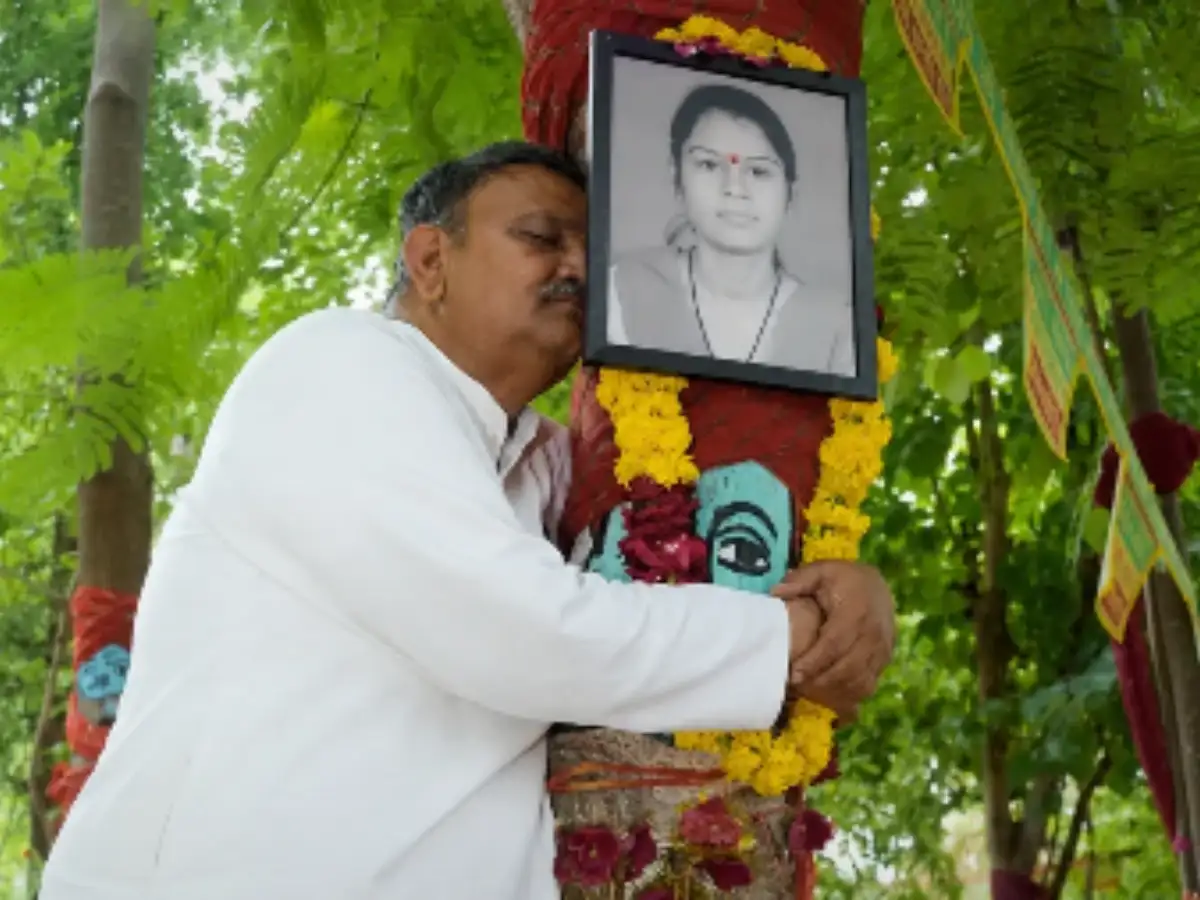
Sometimes, one person's grief can change the lives of thousands. When Shyam Sunder Paliwal lost his young daughter Kiran in 2006, he could have mourned in silence. Instead, he transformed his heartbreak into a movement that has made a small Rajasthan village famous across the world. Today, every time a girl is born in Piplantri, villagers celebrate by planting 111 trees, proving that daughters and nature can grow stronger together.
The initiative has not only made the village greener but has also helped change attitudes towards girls, improve groundwater levels and strengthen the local economy.

Who is Shyam Sunder Paliwal?
Shyam Sunder Paliwal, born on 9 July 1964, is a social activist from Piplantri village in Rajasthan's Rajsamand district. He served as the village sarpanch and is widely recognised for launching a unique campaign that combines environmental conservation with women's empowerment.
His remarkable work earned him the Padma Shri, India's fourth-highest civilian award, in 2021 for his contribution to social service.
How did the 111 trees initiative begin?
The movement began after the tragic death of Paliwal's daughter, Kiran, who reportedly died due to dehydration.
Determined that her memory would inspire hope instead of sorrow, Paliwal encouraged villagers to plant 111 saplings whenever a girl was born.
What started as a tribute to one child soon became a tradition embraced by the entire community.
Instead of seeing the birth of a daughter as a burden, families began celebrating it with trees that would benefit both future generations and the environment.
Why are 111 trees planted for every girl?
The number is symbolic, but the idea goes far beyond planting saplings. Every tree represents a promise that the girl will grow up in a healthier environment while also reminding the community that daughters deserve love, respect and equal opportunities.
As each girl grows, the trees planted in her name grow alongside her, becoming living reminders of her value.
The initiative supports girls beyond birth
The programme is not limited to tree plantation. As per The Better India report, families and villagers contribute Rs 31,000, which is invested in the girl's name until she turns 20.
Parents also sign a written pledge agreeing to:
- Educate their daughters.
- Not marry them before the age of 18.
- Help care for the trees planted in their honour.
This combination of financial security, education and community support has helped improve the lives of countless girls in the village.
How Piplantri became a green village
The environmental impact has been extraordinary. Within six years of the campaign, villagers had planted more than 2.5 lakh trees. By 2018, the number had crossed 3.5 lakh.
Trees such as mango, banyan, peepal and sheesham now cover areas that were once dry and barren.
The growing forest has helped:
- Improve groundwater levels.
- Reduce soil erosion.
- Increase soil fertility.
- Restore biodiversity.
- Make the village greener and cooler.
What was once a drought-prone landscape has become a thriving green oasis.
Changing the way people think about daughters
The initiative has also challenged long-standing gender bias. Paliwal has said that many families in the region once viewed the birth of a girl negatively. By turning every daughter's birth into a community celebration, attitudes slowly began to change.
Today, girls are welcomed with tree planting ceremonies instead of disappointment.
In another touching tradition, girls tie rakhis to the trees planted in their names, symbolising a lifelong bond between people and nature.
A model admired across the world
The Piplantri model has attracted attention from environmentalists, social workers and policymakers across India and beyond.
It shows that tackling environmental degradation and gender inequality does not always require expensive schemes. Sometimes, a simple community-led idea can create lasting change.
The initiative continues to inspire villages to celebrate daughters while protecting the planet.
Inputs from agencies