June 26 has witnessed pivotal moments in political history, global diplomacy, literature and governance. The date saw the signing of the United Nations Charter, laying the foundation for the modern international order, and the declaration of India's Emergency under Prime Minister Indira Gandhi. It also marked Richard III's accession to the English throne, the publication of the first Harry Potter novel and the appointment of Mark Rutte as the next NATO Secretary General. From imperial struggles and landmark legislation to cultural milestones and international cooperation, June 26 occupies a notable place in the historical record.
363: Emperor Julian killed during retreat
Roman Emperor Julian was killed while retreating from the Sassanid Empire. His death occurred during a military campaign and led to a change in imperial leadership as troops selected a new ruler on the battlefield.
363: Jovian proclaimed emperor
Following Julian's death, General Jovian was proclaimed emperor by Roman troops. His elevation ensured the continuation of imperial authority during a period of military uncertainty.
684: Benedict II begins papacy
Benedict II began his reign as pope of the Catholic Church. His accession marked the start of a new papal administration.
1483: Richard III becomes king of England
Richard, Duke of Gloucester, became King Richard III after Parliament declared that Edward V and his siblings were illegitimate through the Titulus Regius, also known as the Act of Settlement. The decision ended Edward V's brief claim to the throne and reshaped the English monarchy.
1539: Sher Shah Suri defeats Humayun
Sher Shah Suri defeated Mughal Emperor Humayun in the Battle of Chausa in Bihar. The major confrontation involved about 200,000 forces and significantly altered the balance of power in northern India.
1718: Death of Tsarevich Alexei Petrovich
Tsarevich Alexei Petrovich, son of Peter the Great, died from the effects of torture after being sentenced to death for allegedly plotting against his father. The episode remains one of the most dramatic events associated with the Russian royal family.
1723: Baku surrenders to Russia
After a prolonged siege and bombardment, Baku surrendered to Russian forces. The outcome marked a significant military success for Russia in the region.
1843: Hong Kong becomes British Crown Colony
Hong Kong was officially proclaimed a British Crown Colony. The move formalised British control over the territory and marked a major administrative change.
1857: First Victoria Crosses awarded
Queen Victoria presented the first 62 Victoria Cross medals for valour during the Crimean War. The award became one of the most prestigious military honours.
1894: Karl Benz receives US automobile patent
German inventor Karl Benz received a US patent for a gasoline-powered automobile. The patent represented an important step in the development of motor vehicles.
1900: Japan mobilises troops during Boxer Uprising
Japan mobilised 20,000 troops to assist in suppressing the Boxer Uprising in China. The action also reflected its growing ambitions to expand influence and power in mainland Asia.
1900: Russian language imposed in Finland
The Russian Tsar ordered Russian to become Finland's official language despite increasing unrest and international concern. The decision intensified tensions surrounding Russian rule.
1914: Indian Relief Act passed
The Indian Relief Act was enacted following a prolonged campaign of passive resistance led by M.K. Gandhi. The legislation abolished a tax imposed on Indians who had not renewed their indentures and recognised the validity of Indian customary marriages.
1934: National Firearms Act signed
US President Franklin D. Roosevelt signed the National Firearms Act into law. The legislation required registration and taxation of certain firearms, including machine guns, silencers and short-barrelled weapons, while exempting pistols, revolvers and long guns.
1934: W.E.B. Du Bois resigns from NAACP
W.E.B. Du Bois resigned from the NAACP after disagreements with the organisation's leadership and a reversal of his position on segregation. The departure marked a significant moment in the organisation's history.
1945: United Nations Charter signed
Representatives of 50 nations signed the United Nations Charter in San Francisco. The agreement established the framework for the United Nations and became one of the most important diplomatic milestones of the twentieth century.
1959: Ingemar Johansson wins heavyweight title
Swedish boxer Ingemar Johansson defeated Floyd Patterson in New York, flooring him seven times in the third round to capture the world heavyweight championship.
1959: St. Lawrence Seaway officially opened
Queen Elizabeth II and US President Dwight D. Eisenhower jointly opened the St. Lawrence Seaway. The waterway enabled oceangoing vessels to travel from the Atlantic Ocean to the Great Lakes of North America.
1962: Passive resistance begins in Cairo, Illinois
Black residents began a campaign of passive resistance in Cairo, Illinois. The action reflected ongoing efforts to challenge racial inequalities.
1963: Levi Eshkol becomes Israeli prime minister
Levi Eshkol succeeded David Ben-Gurion as Israel's prime minister. The leadership transition marked a new phase in Israeli politics.
1968: Iwo Jima returned to Japan
The United States returned Iwo Jima and the Bonin Islands to Japan. The transfer represented an important diplomatic development between the two countries.
1975: India declares Emergency
Prime Minister Indira Gandhi declared a state of Emergency in India. The announcement marked one of the most consequential political developments in the country's modern history.
1976: Muhammad Ali and Antonio Inoki fight in Tokyo
American boxing champion Muhammad Ali faced Japanese professional wrestler Antonio Inoki at the Nippon Budokan in Tokyo. The highly publicised contest drew global attention.
1977: Elvis Presley gives final concert
Elvis Presley performed before 18,000 fans at Market Square Arena in Indianapolis. Unbeknownst to audiences at the time, it was the final concert of his career, ending with his 1961 hit "Can't Help Falling in Love."
1989: Canada unveils new Queen portrait on coins
Canada introduced a new portrait of Queen Elizabeth II on its coinage. The design by Dora de Pédery-Hunt became the first royal effigy created by a Canadian artist.
1989: US Supreme Court ruling on death penalty
The US Supreme Court ruled that 16-year-olds could receive the death penalty. The decision became a notable legal development.
1990: Nelson Mandela addresses US Congress
African National Congress leader Nelson Mandela addressed a joint session of the US Congress in Washington, D.C. His appearance underscored the international attention focused on apartheid and political change in South Africa.
1993: US missile strike targets Baghdad
The United States launched a cruise missile attack against Baghdad's intelligence headquarters. The strike was carried out in response to a thwarted assassination attempt against former President George H. W. Bush in Kuwait.
1994: Extreme heat recorded in Death Valley
Death Valley, California, recorded a temperature of 126°F (52.2°C). The reading highlighted the region's reputation for extreme heat.
1995: Bloodless coup in Qatar
Hamad bin Khalifa al-Thani deposed his father, Khalifa bin Hamad al-Thani, as Emir of Qatar in a bloodless coup. The event resulted in a major leadership change in the Gulf state.
1997: Harry Potter and the Philosopher's Stone published
J.K. Rowling's Harry Potter and the Philosopher's Stone was published. The novel launched a bestselling series that became a major cultural phenomenon.
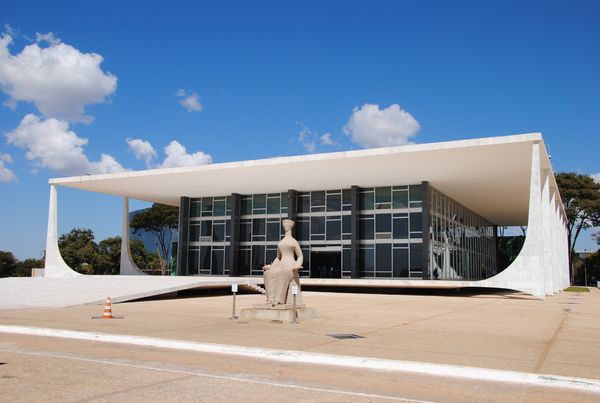
2017: Helicopter attack on Venezuelan Supreme Court
A helicopter piloted by a rogue police officer attacked Venezuela's Supreme Court in Caracas. The incident drew significant attention amid political tensions.
2024: Mark Rutte appointed next NATO Secretary General
Outgoing Dutch Prime Minister Mark Rutte was appointed as the next NATO Secretary General. The decision placed him at the head of the military alliance.
2025: Ancient meteorite crashes through house roof
A meteorite fragment estimated to be 4.56 billion years old and predating Earth crashed through the roof of a house in Georgia, United States. The unusual event attracted attention because of the object's extraordinary age.
People born on June 26
1974: Derek Jeter born
Baseball player Derek Jeter was born in Pequannock, New Jersey. He later became one of the sport's leading competitors and helped the New York Yankees win multiple World Series titles.
Notable firsts on June 26
1974: First UPC barcode scan
A pack of chewing gum became the first product ever scanned using a UPC barcode. The moment marked a milestone in retail and product identification technology.
Days celebrated on June 26
National Food Truck Day
National Food Truck Day celebrates food trucks and the variety of meals they provide.
Drive Your Corvette to Work Day
The observance encourages Corvette owners to use their vehicles for the workday commute.
International Day in Support of Victims of Torture
The day highlights support for victims of torture and raises awareness of their experiences.
National Cream Tea Day
National Cream Tea Day celebrates the traditional cream tea.
National Canoe Day
National Canoe Day recognises canoeing and its cultural significance.
Cancer Wellness Awareness Day
Cancer Wellness Awareness Day highlights the challenges faced by people living with cancer and promotes broader awareness of wellness and support.
World Drug Day
World Drug Day raises awareness of issues related to drugs and their impact on societies.
National SAFER Workplace Day
National SAFER Workplace Day promotes awareness of workplace safety and related initiatives.