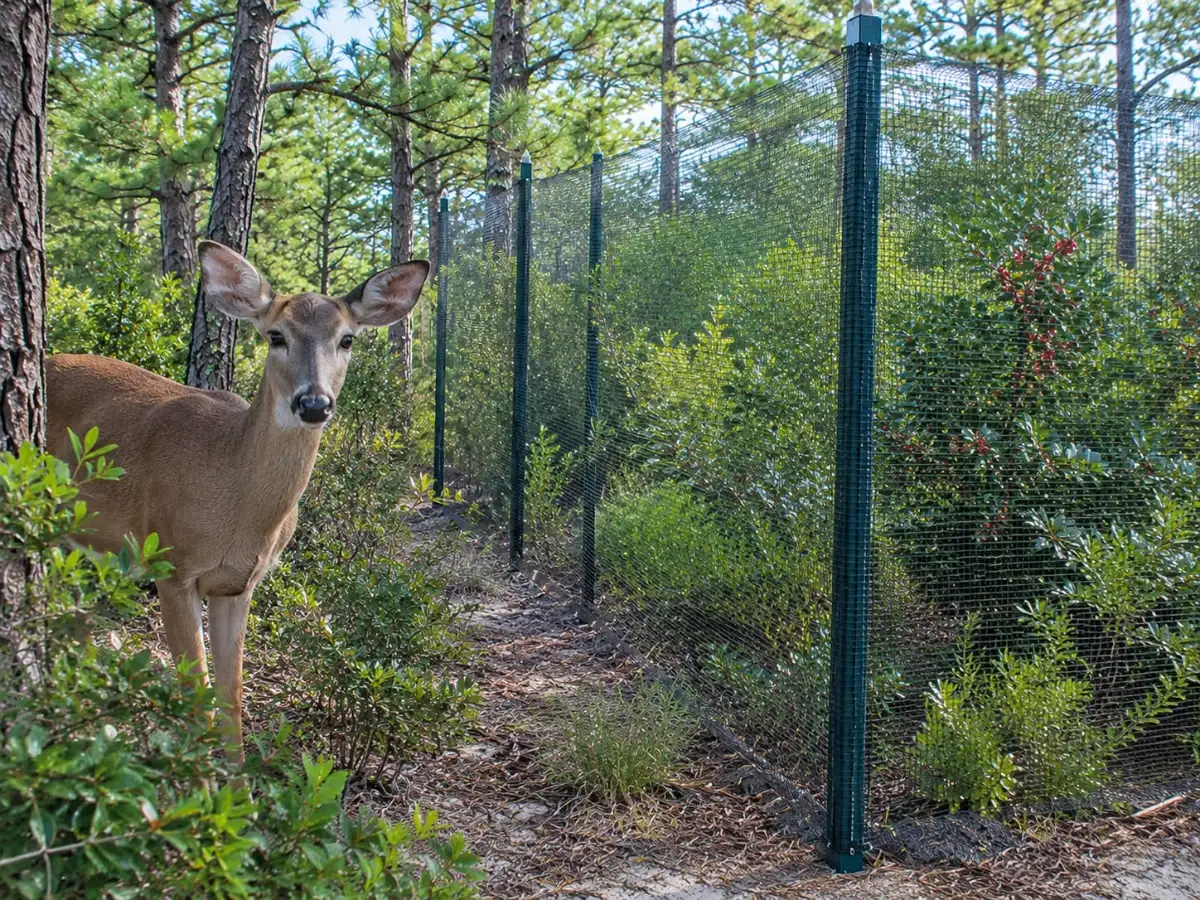
Summer is a time for sun, sea and sandals. However, if you’re lucky enough not to have anything on your calendar, you may be greeted with a little hitchhiker attached to your ankle that you won’t notice until tomorrow. While many of us have previously thought ticks were only an issue to worry about on our camping trips, if you’re spending any time outside you might be wondering how people manage to keep these pests at a minimum.
According to a 2002 study titled “Effect of deer exclusion by fencing on abundance of Amblyomma americanum (Acari: Ixodidae) on Fire Island, New York, USA,” conducted by Ginsberg, Butler, and Zhioua and published in the Journal of Vector Ecology, researchers tested a simple idea to see how effective it could be. The study was completed on Fire Island, New York, in an area where, by the time researchers set up the experiment in the late 1990s, lone star tick numbers had been rising for years: an early sign of a northward expansion that has only continued since.