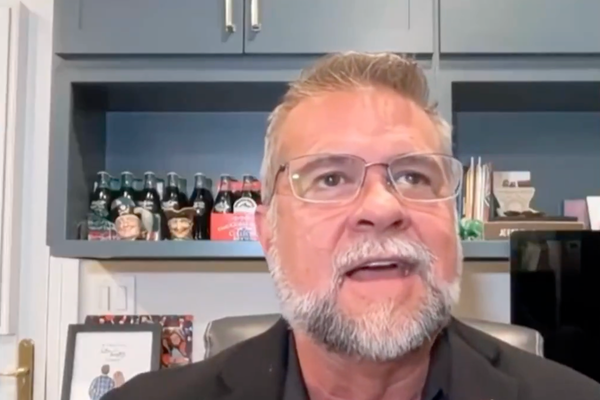
In a geopolitical landscape shaped by the ongoing war in Ukraine, neighbouring Romania’s role in European defence highlights the broader challenges facing the EU and NATO. RFI spoke to Claudiu Nasui, a former Romanian economy minister and current member of parliament in the pro-European Save Romania Union party, about the country’s defence strategy, public feeling on the Ukraine conflict and the future of European security.
RFI: How does Romania's role as a NATO eastern flank hub affect its stance in the European Union budget debate?

Claudiu Nasui: It is in our interest that more funds are allocated towards defence because we’re on the border, and we are the second biggest beneficiary of this new SAFE defence loan programme, after Poland. So we’re set to receive a considerable amount of money from the EU to rearm ourselves.
The main problem we have is that we’re not necessarily buying European equipment, which is very unfortunate and something we really should be doing.
Europe, and the European Union, have a significant technology gap in military technology compared to the United States. This is partly because we don’t have the same economies of scale as the US.
For example, when they built the F-35 jet, it was produced in such large numbers that the costs of research and development and many fixed costs were spread across many units.
Whereas in Europe, we have several different jets but don’t benefit from these economies of scale as much. The same issue applies to other weapon systems.

What I would say is that Romania should buy more European products. Right now, we’re buying a Turkish Corvette, which is not even really a Corvette but actually a patrol boat. We’re also buying a Turkish copy of the Joint Light Tactical Vehicle (JLTV.)
There’s a lot that we should be doing in closer integration with the European defence industry, which would help immensely.
Europe’s defence dilemma: autonomy or dependence?
If we're talking about the F-35, it’s clearly a more advanced generation of jet than the French Rafale or the Swedish Saab JAS 39 Gripen. So is there any discussion in Romania about buying European fighter jets?
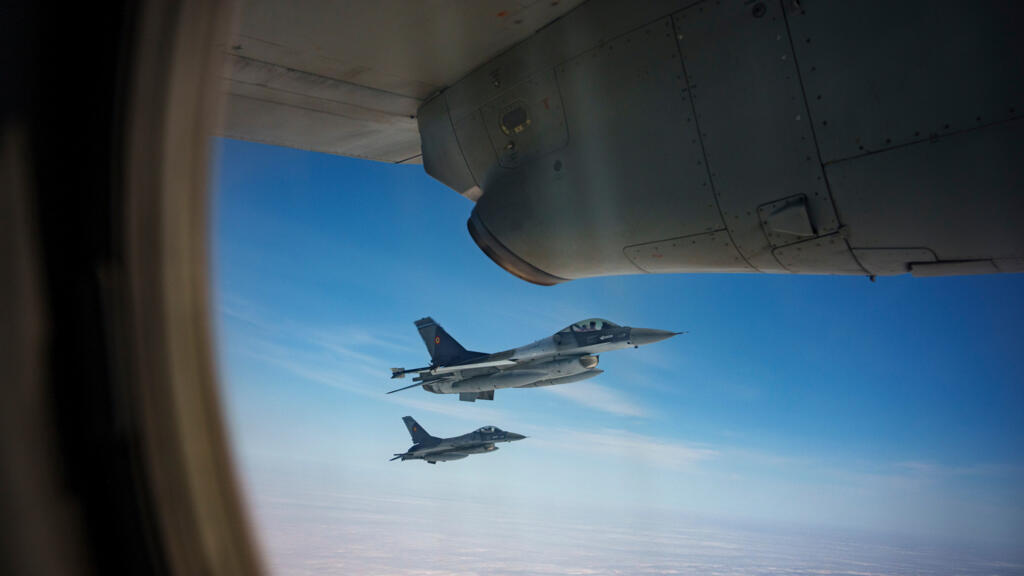
Currently, we’re very focused on the F-16. We have many second-hand F-16s, and there is a programme to buy F-35s which may come around 2030. So that’s in about five years’ time.
As just an example, I wouldn’t have a problem buying the F-35 provided we also bought other European products like the SAM-T instead of the Patriot, or other European weapon systems. This could help Europe gain economies of scale while producing these systems and reduce our reliance on non-European partners.
What is the general attitude of the Romanian public towards the Ukraine war effort and efforts in Romania to support it, after nearly three years?
There is what we call war fatigue. Initially, people were much more willing to help Ukraine. Now, because of Russian propaganda, the length of the conflict and the toll it is taking, fewer people want to help.

Pro-Russian parties in Romania exploit our economic difficulties. We have many problems, a lot of poverty, and a government increasing taxes. They claim we’re worse off because we support Ukraine. Which is false, but because it’s repeated so often, it’s starting to seem like the truth.
Romania hasn’t helped Ukraine as much as it could have, but this is used as a political weapon. So while there is some war fatigue, the majority still support Ukraine and Romania’s support for it – even more than before.
How sustainable is the EU’s current support for Ukraine, and what changes are needed?
I think we should use the Russian assets. The discussion over these is very worrying because it should be obvious – Russia is a threat, an aggressor, and has committed war crimes against Ukraine.
We should use these frozen assets to help Ukraine now when they need it most.
Ukraine is acting like a shield for Europe. The higher the cost of aggression for Russia, the greater the chance of peace. If Russia wins or gets a shameful peace deal – like the one proposed by the Trump administration recently – it would be a huge win for Russia and a major threat to Europe.
We should be grateful Ukraine is resisting, mounting a huge war effort, and we should help so the war stays in Ukraine, not Europe. If Ukraine falls or accepts a bad peace deal, Russia would have a decade of peace to rebuild and then likely start fighting again. It’s a pattern. The 28 points in the peace proposal can be interpreted in ways to justify new aggressions.
Europe demands more work on US peace plan to end Russia-Ukraine war
Last Sunday, Europeans came up with an alternative 28-point plan. What do you think of it?
Ukraine must have the final say, as they are the ones fighting. Europe should support whatever Ukrainians decide. They are the attacked party keeping the Russians at bay.
If they want to stop fighting and sign a peace deal, even if we think it’s bad, it’s their choice. We should support that. If they don’t, we should support that too – militarily, financially and politically.
I’m not sure about the European plan, so I can’t comment. But the general attitude must be to support Ukraine, as they’re protecting Europe from Russian aggression.
Regarding funding and the push for increased defence spending, is this mainly a budget issue, a political issue or a spending efficiency problem?
It’s also about spending efficiency. We should buy more European – like the SAM-T and other weapon systems – to achieve economies of scale.
For cheap, efficient weapon systems, you need economies of scale, which we won’t get if we don’t buy European. So it’s about more than just investing money – how you invest matters.
Romania's new president Nicușor Dan pledges to counter Russian influence
Where should extra defence funds come from, and what spending would you refuse to cut?
I wouldn’t refuse to cut any spending to boost defence. The biggest EU expense is agricultural subsidies, and we could cut those to finance defence.
European countries already have high taxes; we can’t grow the economy by raising taxes further. Spending must be rerouted from other areas like cohesion funds.
As a Romanian who’s benefited from cohesion funds, I’d still support cutting back so we can invest in defence and secure Europe’s future. That’s paramount.
You’ve spent a lot of time in France [Nasui studied for his undergraduate degree in Paris]. How would you assess the situation there? With a huge budget deficit and a record debt of €3.2 trillion, where could they find the money?
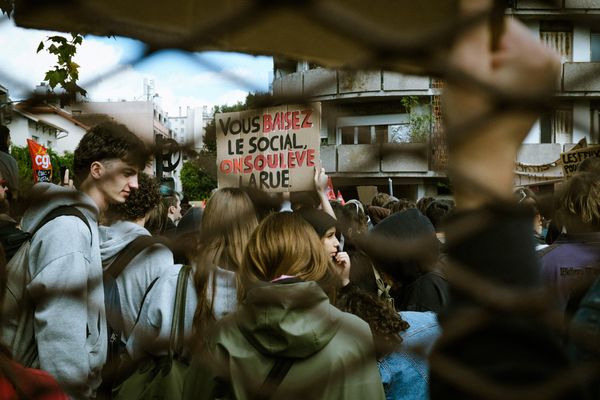
France is already at capacity in this regard. They need a clear cost-cutting programme, similar to what Javier Milei is doing in Argentina. There is huge spending in many areas.
One problem with Macron’s government [which was elected on the basis of reform] is they focused mainly on raising the retirement age rather than true reforms. They kept the same system and just tweaked it slightly, which angered many people.
To maintain parliamentary support, they are suspending the major reform Macron invested political capital in, which again was not a true reform, just minor adjustments.
France should cut a lot of spending, as well as taxes and bureaucracy. The country is known for introducing new regulations and bureaucratic layers which hinder economic growth and innovation.
We are heading towards a "Sputnik moment" when we realise the development gap between Europe, the US and China.
Can you expand on that "Sputnik moment"?
One example would be self-driving cars. US and Chinese cities have many, but in Europe we don’t see them yet. As these technologies become commonplace in the US and China, the gap will become more apparent here.
We are already seeing it in sectors like semiconductors. Except for [the Dutch company] ASML and [Belgian company] IMEC, Europe is nowhere in the major chip industry. We lack large foundries, big investments and advanced process nodes.
More bureaucracy, regulation and higher taxes won’t help. Considering France’s economic impact on Europe, if they manage to reform, the whole EU would benefit greatly.