On Jan. 5, 2011, the 251-foot former U.S. Navy vessel, having spent about 17 years in naval mothballs since her decommissioning, made its way under the turquoise waters of Seven Mile Beach off the west coast of Grand Cayman. According to a 2016 Cayman Compass report, the total number stood at 120,800 (53,000 divers and 67,800 snorkelers) of those who had visited the site over the past five years to observe what happens when a decommissioned warship becomes part of a coral reef ecosystem.
Meet the USS Kittiwake
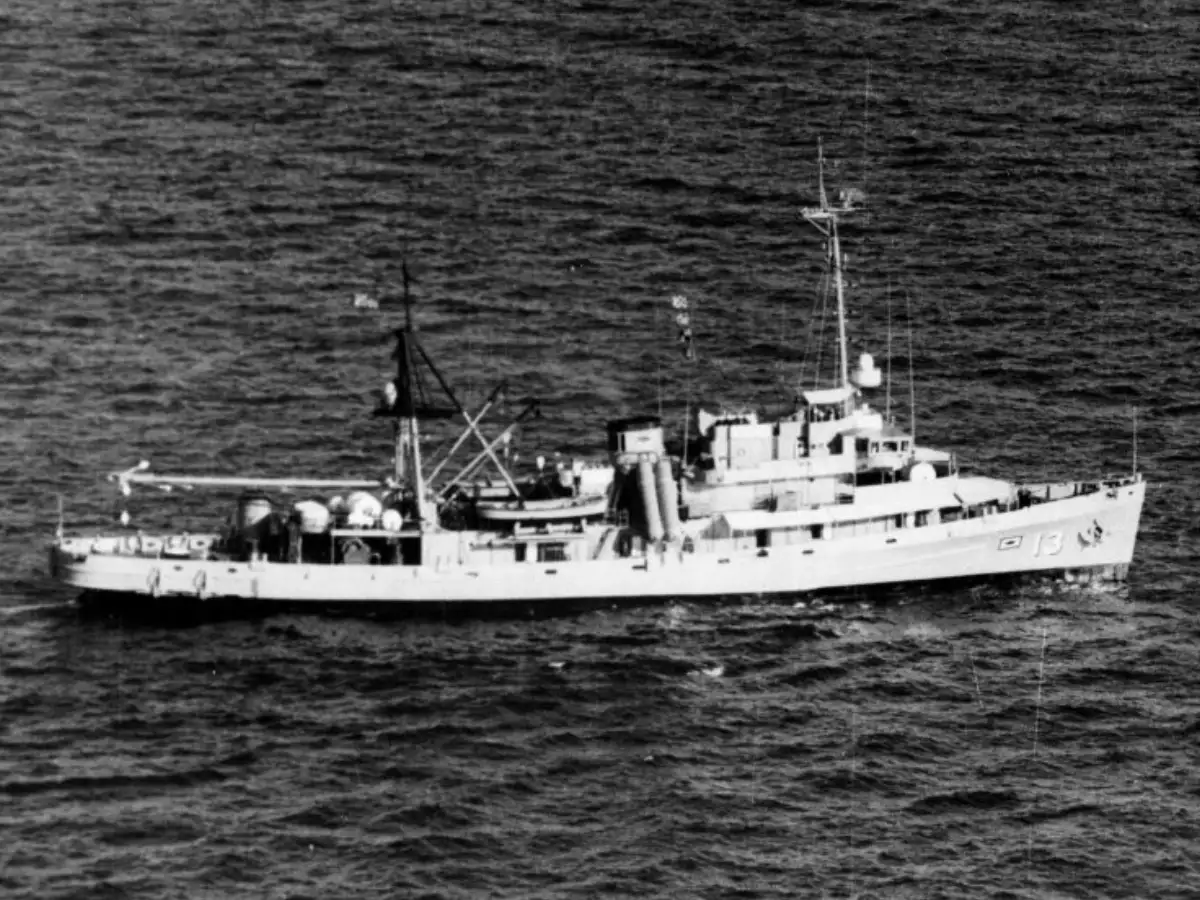
The ship in question, USS Kittiwake (ASR-13), was a submarine rescue vessel of the Chanticleer class that was launched on July 10, 1945, commissioned on July 18, 1946, and decommissioned on September 30, 1994, a run of roughly 48 to 49 years between her launch and decommissioning, helping submarine crews and monitoring underwater rescue drills. She's also frequently, and incorrectly, credited with sinking on purpose to recover the "black box" from the Space Shuttle Challenger disaster. Neither half of that claim holds up: the Space Shuttle never carried a crash-survivable flight recorder of the kind airliners use, so there was no "black box" to find, and Kittiwake herself was still a fully active Navy vessel in 1986, decades away from her own eventual scuttling. What actually happened is that she was diverted from a routine training mission in early 1986 to assist in the Challenger search-and-recovery effort off Cape Canaveral, where Navy records show she helped recover a large piece of one of the shuttle's Solid Rocket Boosters from about 175 feet of water, not any kind of flight recorder.