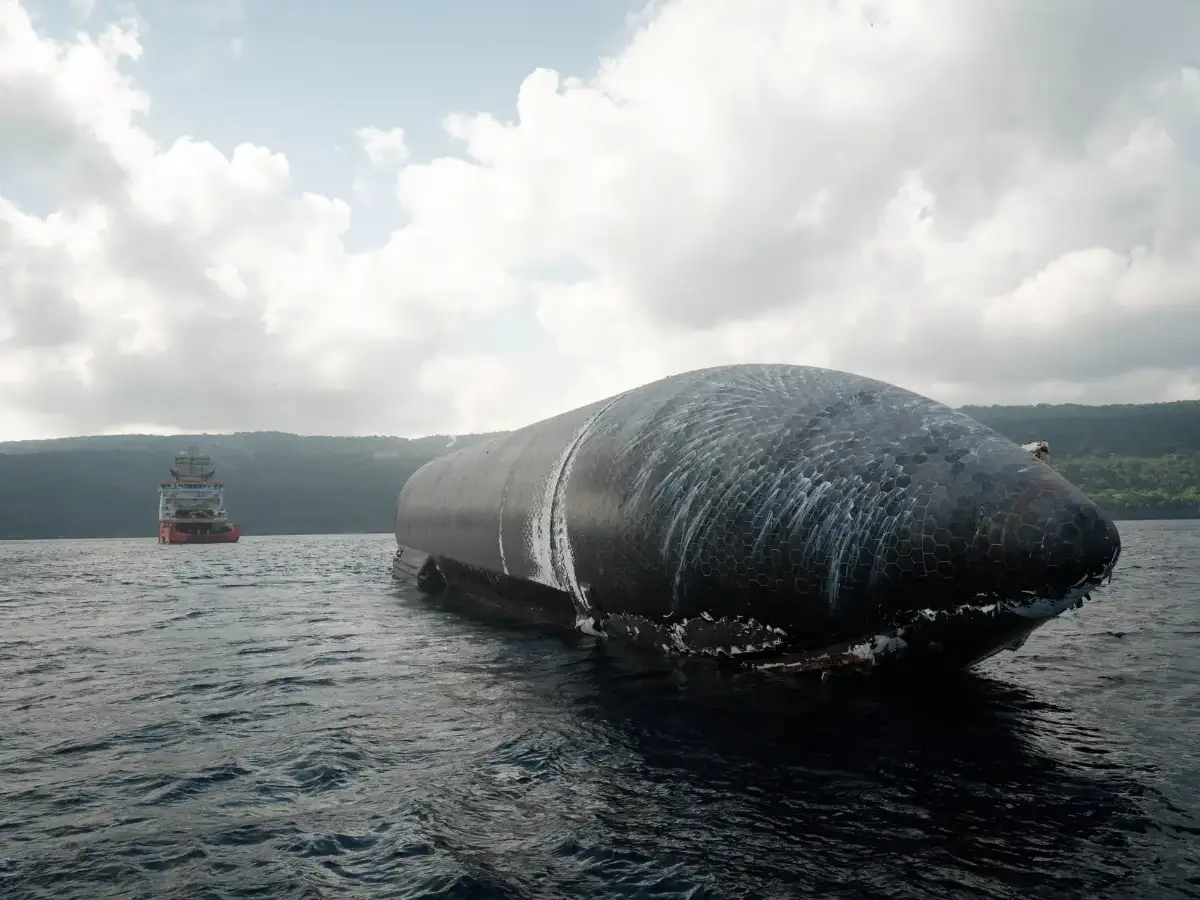
SpaceX has recovered Starship Ship 40 from the open ocean after the spacecraft returned from space, marking a new milestone for the Starship program.
Ship 40 spent about 24 days at sea after splashing down in the Indian Ocean following Starship Flight 13. A recovery team eventually guided the spacecraft to waters off Christmas Island, an Australian territory, where engineers will inspect it before deciding how to move it to Starbase in Texas.
The recovery is notable because no previous Starship upper stage had returned from space, remained largely intact after splashdown and then been deliberately brought under the control of a recovery team.
Notably, Elon Musk had earlier appeared doubtful about the operation. On August 7, Musk said, “Unfortunately, ship recovery is not looking good right now.” Eleven days later, SpaceX announced that the recovery team had successfully guided Ship 40 to a position near Christmas Island.
All you need to know about Ship 40
Ship 40 launched from Starbase on July 24 as the upper stage of Flight 13. The test flight followed a suborbital, orbital-class trajectory, deployed operational Starlink V3 satellites and demonstrated an in-space relight of a Raptor engine.
During its return, Ship 40 turned its heat shield into the airflow and descended through the atmosphere before flipping upright and performing a landing burn over the Indian Ocean. The splashdown was unusually gentle, allowing the spacecraft to remain afloat as a single vehicle and continue transmitting data.
SpaceX had not planned to recover the spacecraft from the ocean. The original engineering goals focused on telemetry, imagery and tests conducted during the flight and descent. The survival of the hardware created an unexpected opportunity for a recovery operation.
Recovering a Starship from open water is far more complicated than retrieving a vehicle at a prepared landing site. Ship 40 has no crew, no steering capability while inactive and a hull that was not designed to remain stable in ocean waves. Its flaps were built to control the spacecraft during atmospheric descent rather than withstand prolonged loads at sea.
The vehicle's stainless-steel tanks, heat-shield tiles, engines and other hardware also had to be protected during the salvage operation. A spacecraft roughly the height of a 17-storey building can be difficult to control in waves and currents, particularly when partly submerged and lying on its side.
The recovery team's immediate task was therefore not simply to tow the vehicle. It had to establish a secure connection and control Ship 40's movement without causing further structural damage or putting personnel at risk.
SpaceX said the next stage will involve engineering analysis in calmer waters near Christmas Island before an attempt is made to return the spacecraft to Starbase. That means Ship 40 has not yet completed its journey home.
The recovered vehicle could provide engineers with information that telemetry alone cannot deliver. They can examine heat-shield tiles, attachment hardware, flap edges, hinges, welds, tanks, plumbing and engine components that survived re-entry and splashdown.
That physical inspection could be particularly useful for understanding Starship's heat shield. The spacecraft must survive extreme temperatures during re-entry while keeping the system light enough to support rapid reuse. Engineers can compare physical damage on Ship 40 with onboard video, temperature readings and other flight data to determine when and how different areas were damaged.
However, Ship 40's recovery should not be confused with operational reusability. The spacecraft spent weeks exposed to salt water, which can affect engines, electronics, valves and other components. SpaceX has not indicated that Ship 40 will fly again.
Ship 40 wasn't supposed to survive the mission
The company's ultimate goal is much more ambitious: an upper stage that can return to its launch site, be caught by the launch tower, undergo limited inspection and fly again. A spacecraft that requires a lengthy ocean salvage operation does not demonstrate that capability.
Earlier Starship flights had already shown that the upper stage could survive controlled re-entry and splash down. Ship 40 adds another achievement by remaining afloat and recoverable long enough for a team to take control of it.
The distinction is important. Ship 40 is not the first spacecraft ever recovered after spaceflight, nor is it the first reusable rocket component recovered from the ocean. Space Shuttle orbiters returned to Earth after missions, crew capsules routinely land and are recovered, and SpaceX has already recovered Super Heavy boosters.
What makes Ship 40 unusual is that it is the first Starship upper stage to return from space and remain available as a largely complete physical vehicle for inspection.
Starship has now completed 13 flight tests, but several major milestones remain, including demonstrating in-space propellant transfer, catching an upper stage at the launch tower, refurbishing a ship and flying it again.
Ship 40's recovery does not prove that Starship is fully reusable. It does, however, give SpaceX an unexpected physical test article that could help answer questions about re-entry, splashdown and structural performance.
The spacecraft survived a mission it was never designed to complete at sea, remained afloat for weeks and was eventually brought under the control of a recovery team. What appeared likely to be lost on August 7 was still floating off Christmas Island on August 18 — giving SpaceX another chance to learn from its hardware.