The 2026 Winter Olympics have brought a number of legendary athletes to compete on international ice – and a number of inspirational sports photographers along with them. One technique in particular is turning the movement of ice skaters into ethereal art: the multiple exposure.
As a moment frozen in time, a single photograph doesn’t usually hint at what happened just before that split second or just after. But by exposing the image multiple times, Olympic photographers are capturing the athlete’s movement inside of a single frame.
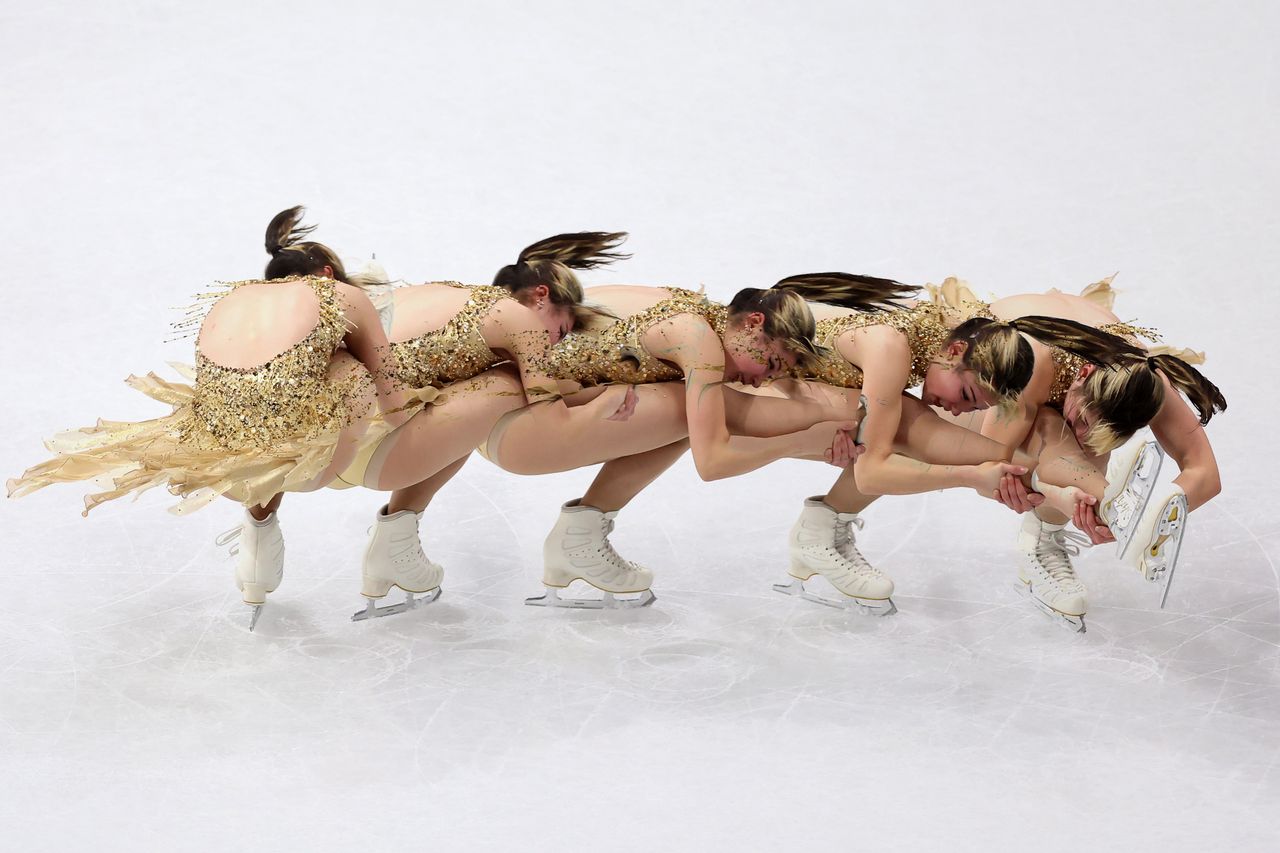
Multiple exposure photography combines multiple images within one frame. (A double exposure is a multiple exposure with only two images.) When the technique was first used in the 1860s, it was known for its ghost-like effect of adding another image onto the first. Echoes of that ghost-like, ethereal quality can be seen in some of the multiple exposures coming from the Olympics, like in this multiple exposure photograph by Vittorio Zunino Celotto, highlighting the shape of Alysa Liu’s spin:

Photography has, naturally, evolved quite a bit since the 1860s, and with digital cameras, photographers have the ability to choose how the exposures are combined in camera. While the traditional additive double exposure is still possible, using other blend methods can eliminate the ghost-like appearance and instead repeat the athlete multiple times without the ghost-like effect, like in this shot by Dean Mouhtaropoulos of Liu during warm-ups in the Women’s Singles Freeskating:

Using double exposures in sports photography highlights the athletes movement, even when only milliseconds exist between exposures. I’ve spotted the technique in a few of the different types of sports at the 2026 Winter Olympics. In skating, using multiple exposures against the background of white ice creates a lovely ethereal effect.
Of course, the multiple exposure technique, while it shows movement, does obscure some details – which is why a number of the photographers shooting multiple exposures have done so during warm-ups.
With digital photography, multiple exposures can be created with software or, as is the case with these Olympic photos, in the camera, without editing, using a multiple exposure mode and firing off several shots.
Out of all the fantastic images coming from the 2026 Winter Olympics, I love seeing a mix of artistic experiments like the double exposure, thermal images, and even blurry photos mixed in with the traditional sports photography and documentary photography.
You may also like
Learn how to create a double exposure in-camera. Or, browse the best cameras for sports photography.