Get all your news in one place.
100's of premium titles.
One app.
Start reading
Creative Bloq
Creative Bloq
Technology
Erlingur Einarsson

OLED vs IPS: which laptop screen should students actually buy?

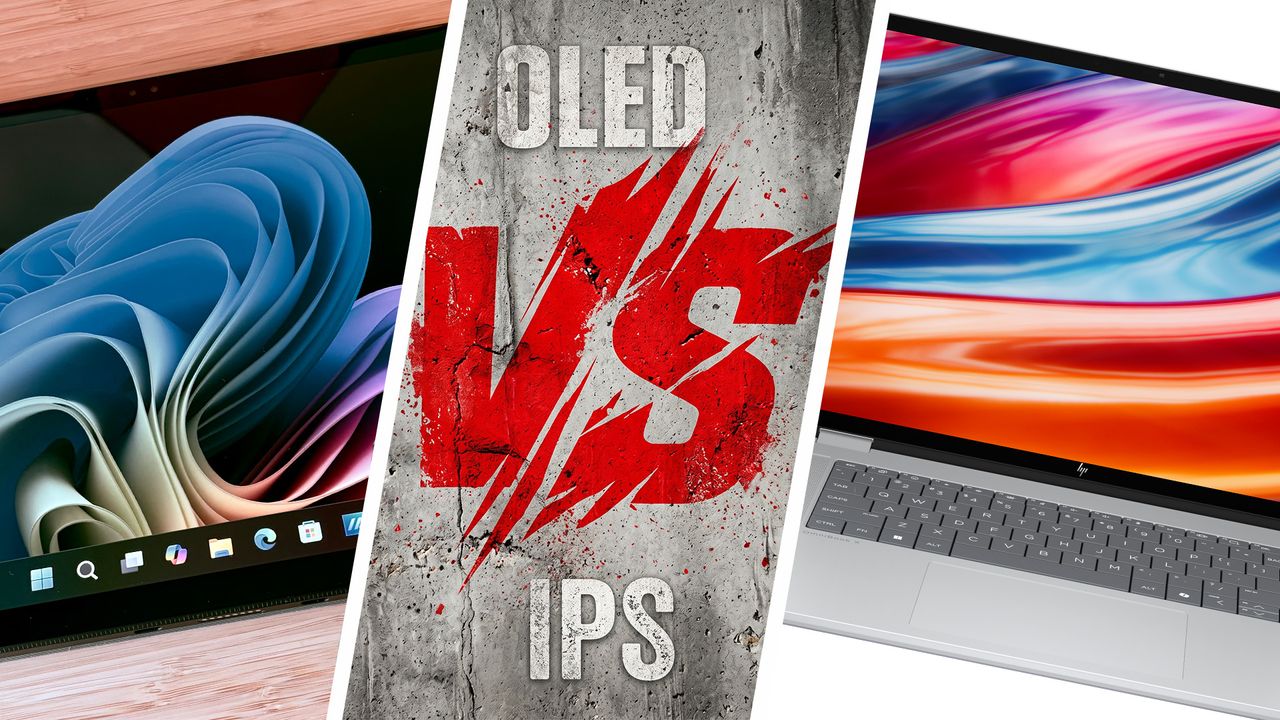
Two laptops on either side of a large VS sign.

As part of Creative Bloq’s Back to School 2026 coverage, we’re breaking down the tech choices that actually matter; not the ones brands shout loudest about. And few decisions shape your day‑to‑day student life more than the screen you stare at for hours.

Choosing between OLED and IPS shouldn’t feel like a personality test, but in 2026 it basically is. Laptop makers have turned display tech into a battleground, and students are left trying to decode spec sheets that read like astrophysics homework. So let’s strip it back.

MacBook Neo: the surprisingly sensible choice

OLED is the obvious show‑off. If you’ve ever opened something like the ASUS ProArt P16 or the Dell XPS 13 OLED, you know exactly what I mean. Blacks go fully black‑hole, colours pop like someone turned the saturation up to 200%, and contrast makes films and photos look genuinely cinematic. For creative students, be it photographers, animators or film majors, OLED isn’t just nicer, it’s more useful. You see more detail, more nuance, and more accurate colour.

The tech difference (in human words)

OLED and IPS don’t just look different: they work differently. OLED pixels light themselves individually, meaning every dot on the screen can turn completely off. That’s why blacks look bottomless and contrast goes wild. It’s also why OLED panels can be thinner, lighter, and more flexible. That's great for premium ultrabooks.

IPS, meanwhile, uses a traditional backlight. The pixels twist to let more or less light through, which is why blacks never go fully dark and why contrast is lower. But this setup is stable, predictable, and long‑lasting. It’s also easier to drive at high brightness, which is why IPS laptops often perform better outdoors than their OLED counterparts.

OLED isn't perfect

Outdoor brightness can lag behind good IPS panels, and while burn‑in is rare, it’s still a thing you have to be aware of. Plus, OLED models often sit higher up the price ladder. That's not ideal if your student loan is already being eaten alive by rent.

IPS, meanwhile, is the dependable workhorse. Solid colour accuracy, great viewing angles, and zero long‑term worries. For most students (humanities, business, STEM) IPS is absolutely enough. It’s cheaper, consistent, and doesn’t demand you treat your laptop like a museum piece.

So the rule of thumb is simple: OLED if you care about visuals. IPS if you care about value. Both are good; they just serve different vibes, workloads, and wallets.

Sign up to read this article
Read news from 100's of titles, curated specifically for you.
Already a member? Sign in here
Related Stories
Top stories on inkl right now
One subscription that gives you access to news from hundreds of sites
Already a member? Sign in here
Our Picks
Fourteen days free
Download the app
One app. One membership.
100+ trusted global sources.