
Get all your news in one place.
100’s of premium titles.
One app.
Start reading
Woman & Home
Woman & Home
Lifestyle
Caroline Brien

Old-school exfoliators are the secret to shifting winter dullness - here's how to master the art of manual exfoliation

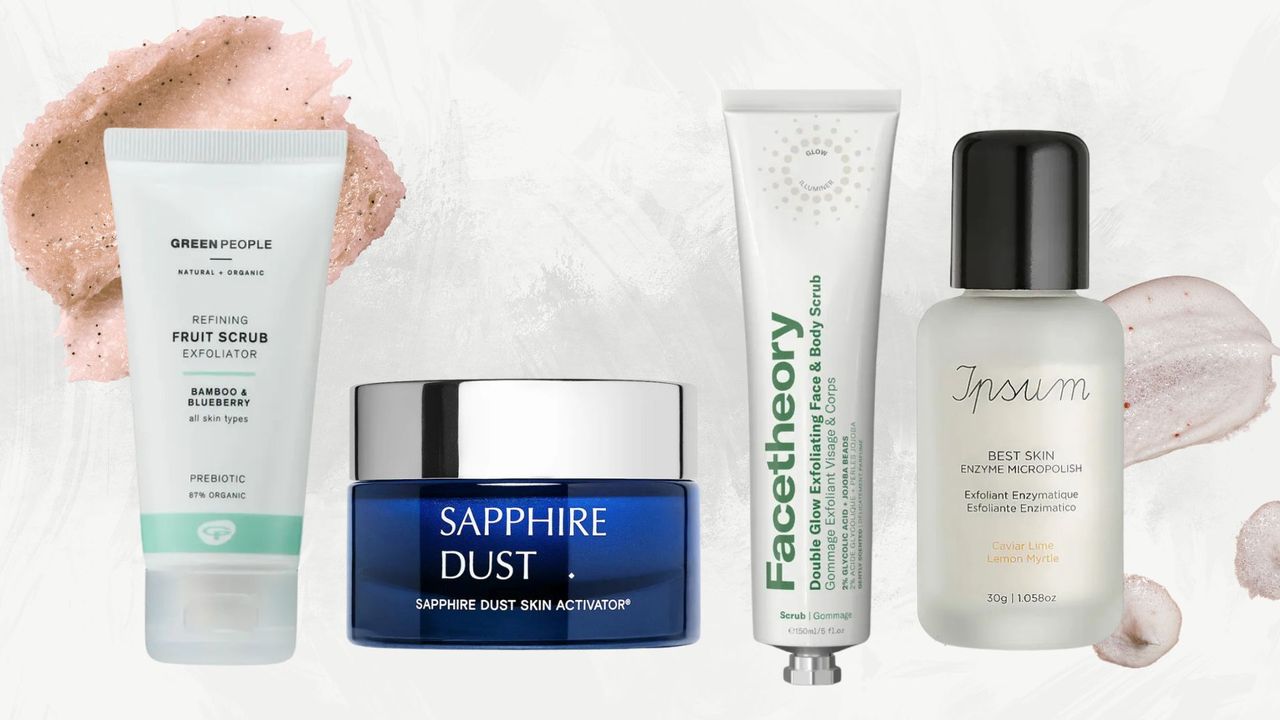
A white background with swatches of scrubs and four face scrubs pictured, by sapphire dust, green people, facetheory and Ipsum.

After years in the beauty wilderness, physical face scrubs are making a comeback. And the timing could not be better, as they're one of the easiest ways to ditch dull, dry winter skin.

We’ve largely eschewed them since the potential damage from harsh ingredients like ground walnut shells in scratch-your-skin-off textures was revealed. Coinciding with exfoliating enzymes and acids becoming hot skincare tickets, manual versions all but disappeared from our bathrooms.

But now there’s a reset; scrubs with gentle, rounded beads and finely milled powders promise to be the best facial exfoliators for tackling skin-dulling dead skin cells and flaky patches while boosting smoothness and luminosity. Intrigued? Here’s how to use a face scrub for your skin type and get the most from new, non-abrasive formulas.

How to use a face scrub to reveal soft, glowing skin - without damage

Worried about the scratchy scrubs of days gone by? Be assured that scrubs simply speed up the natural process of skin shedding its outermost layer. “Exfoliating ensures that flakiness and dead cells on the top layer are removed to reveal a brighter, smoother complexion, which also helps other skincare to absorb and make-up to sit better,” says renowned facialist Charlotte Connoley.

Leading Scottish facialist Nicola Russell, otherwise known as The Skin Geek, who runs clinics in Falkirk and London and has tended to the complexions of Minnie Driver and Olivia Williams, agrees. "Manually exfoliating also increases the circulation, boosting that overall glow," she explains.

"For beginners in skincare, a scrub is simple to understand as it does what it says on the tin!” Another benefit is that experts report we don’t tend to overuse manual exfoliators, making them potentially more skin barrier-safe.

The best way to exfoliate with a manual scrub

While reading the instructions is a must as face scrubs vary between formulas, there are some simple guidelines to get you started:

  • Wet your skin: “Unless it says otherwise, applying to damp skin is usually best,” advises Russell.
  • Go lightly: "Use gentle pressure and small circular motions for no more than 30 seconds, then remove with water. Remember, manual exfoliators are designed to buff off dead skin, not ‘scrub’ it for a prolonged amount of time or you risk sensitising.”
  • Space it out: Russell recommends getting to know what works for your skin: “Balanced skin can be exfoliated every one or two days, while acne-prone complexions can try two to three times per week. If skin is dry, sensitive, or mature, once a week might be enough.”

Which scrub is best for your skin?

Where outdated exfoliators tended to be one-size-fits-all, today’s physical face scrubs cater to all complexions from oily to sensitive, with base formulas and buffing ingredients carefully selected to best care for your skin and what it needs to get glowing and feel flake-free.

Try a 2-in-1 exfoliator

If you want some serious bang for your buck, there are also smart exfoliating formulas that come ready as a 2-in-1, or will transform into another skincare essential, underscoring just how adaptable face scrubs are. "With a scrub, you can customise it easily,” agrees Russell. “For example, you can mix it in with your cleanser to make an exfoliating wash, or add more water to the scrub and lighten your pressure as you work it in when you want a gentler polish."

Manual vs chemical exfoliators: what's the difference?

“Manual or physical exfoliators, whether they are scrubs, cloths or devices, remove the top layer of dead skin cells,” explains Connoley.

“They work on the surface and won't penetrate the skin. Chemical exfoliants are usually glycolic acid or [other] alpha hydroxy acids (AHAs) such as lactic and malic acids, which have molecules small enough to work deeper and into the pores to release dirt and impurities. They also hydrate the surface while exfoliating.”

You can also find clever combinations of both in thoughtfully balanced formulas. Meanwhile, think of enzymatic exfoliating ingredients such as papaya and pineapple extract as Pacmen, gobbling up and dispensing of dead skin cells on the surface.

The speed factor – chemical exfoliators usually have to be left on the skin for a few minutes like a face mask – makes manual scrubs more appealing for some. But there’s also the issue of sensitivity, as those with more delicate complexions can find acid and enzyme-based formulas irritating.

“Manual scrubs tend to have fewer allergens than a chemical exfoliator," says Russell. “So chemical exfoliators containing an acid to dissolve skin and sebum are more reactive than a manual ingredient, just by the nature of what it does.” She champions manual face scrubs for the pleasure principle, too, adding, “There can be something satisfying about using one as the sensation feels much fresher and cleaner. They offer immediate gratification."

Sign up to read this article
Read news from 100’s of titles, curated specifically for you.
Already a member? Sign in here
Related Stories
Top stories on inkl right now
One subscription that gives you access to news from hundreds of sites
Already a member? Sign in here
Our Picks
Fourteen days free
Download the app
One app. One membership.
100+ trusted global sources.


