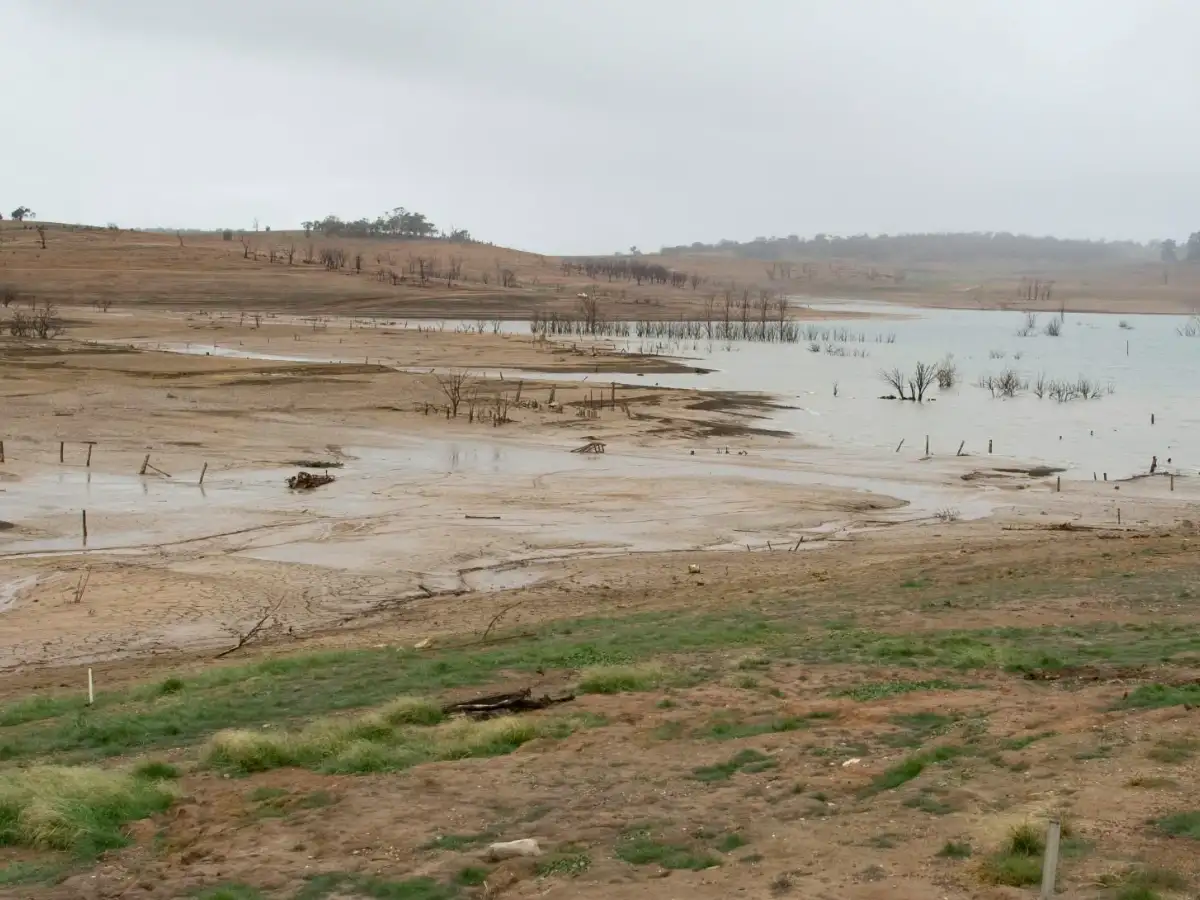
The residents of a small pastoral town in Australia were warned by a government engineer to get rid of a whole building, just in time, a few months before it was drowned by a wall of water. It was no rogue attack or plot from a disaster movie, but this was what happened to a town called Adaminaby nestled in the Snowy Mountains of New South Wales, in the middle of the 1950s. Over one hundred buildings, two of which were churches, were physically moved up a hill and reconstructed, one brick at a time, to keep a community alive as their valley flooded. According to Heritage NSW's records, 102 buildings were moved between 1956 and 1957, prior to the damming of the Eucumbene River forming Lake Eucumbene. It is like a legend, but unfortunately, it is all true.
A dam that was so big that a whole new town was needed