Closing summary
Stock markets are falling, while oil prices have increased as Donald Trump’s deadline approaches for Iran to make a deal and reopen the strait of Hormuz.
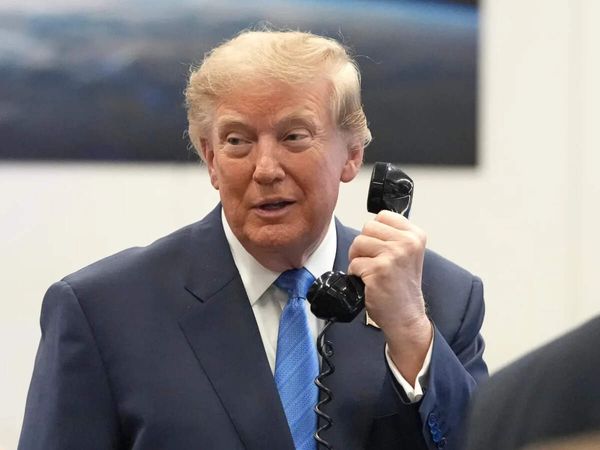
The US president has given Tehran until 8pm in Washington (1am London time), and warned in his latest post on Truth Social today:
A whole civilization will die tonight, never to be brought back again. I don’t want that to happen, but it probably will. However, now that we have Complete and Total Regime Change, where different, smarter, and less radicalized minds prevail, maybe something revolutionarily wonderful can happen, WHO KNOWS?
We will find out tonight, one of the most important moments in the long and complex history of the World. 47 years of extortion, corruption, and death, will finally end. God Bless the Great People of Iran!
Investors are growing increasingly anxious as Trump has stepped up his threats against Iran, demanding that it reopen the key shipping route as part of any deal to stop the war.
Brent crude, the international benchmark for oil prices, was up 0.88% at $110.75 a barrel in mid afternoon trading in Europe, while New York light crude rose 3.8% to $116.66 a barrel.
Wall Street stocks fell at the open, with the Dow Jones down 0.5%, the S&P 500 faling 0.7% and the Nasdaq losing 1%. The FTSE 100 index in London traded 0.8% lower at 10,354, down 81 points. Major European markets declined between 0.6% (CAC, Ibex) and 1.4% (Dax).
The oil and gas crisis triggered by the blockade of the strait of Hormuz is “more serious than the ones in 1973, 1979 and 2022 together”, the head of the International Energy Agency (IEA) has said.
Fatih Birol, the executive director of the IEA, told Le Figaro newspaper that the impact of the Middle East conflict on the oil market was larger than the combined force of the twin oil shocks of the 1970s and the fallout from Russia’s invasion of Ukraine.
Birol also said the countries most at risk were developing nations, which would suffer from higher oil and gas prices, higher food prices and a general acceleration of inflation, while European countries, Japan and Australia would also feel an impact.
Our other main stories :
Thank you for reading. We’ll be back tomorrow. Take care out there! – JK
Updated
Demand for US durable goods declined in February from January, according to delayed data published by the US Commerce Department.
Total orders for durable goods, which comprise goods meant to last three years or more, were $315.5bn in February, down 1.4% from January. This was worse than the 1.1% fall expected by economists. The January figure was revised downwards, showing a 0.5% decline from December.
Transportation equipment drove February’s decline, down 5.4%. Excluding transportation, new orders increased by 0.8%, the Commerce Department said.