Get all your news in one place.
100's of premium titles.
One app.
Start reading
The Economic Times
The Economic Times
Debaroti Adhikary

Oil Price Today (June 29): Crude oil rises after renewed US-Iran strikes. What lies ahead?

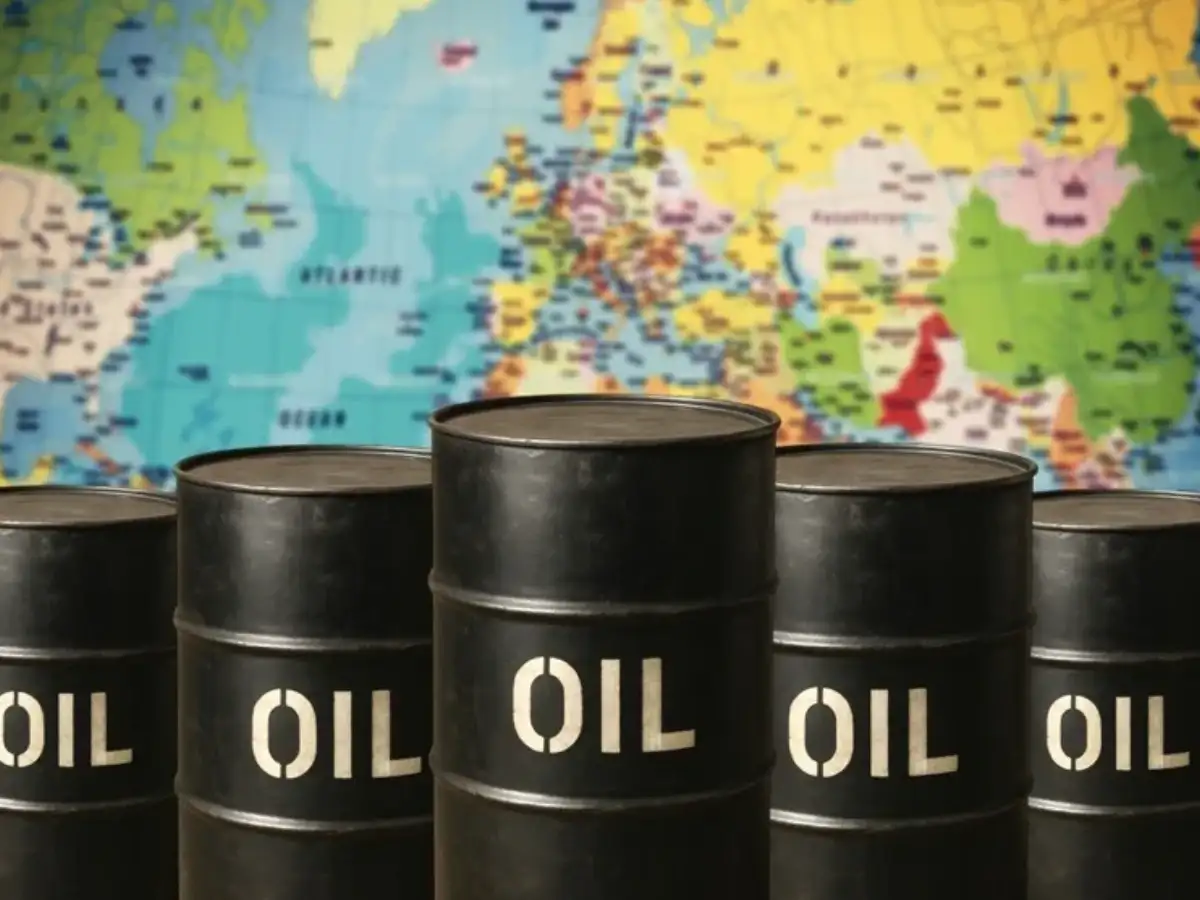
Oil prices inched higher on Monday after US and Iran's tit-for-tat strikes over the weekend spooked investors about the fragility of their interim peace deal and slowed down shipping in the Strait of Hormuz.

Brent crude futures climbed over 0.8% to $72.58 a barrel while US West Texas ‌Intermediate (WTI) crude futures ⁠gained nearly 1.3% to $70.11 per barrel, as seen at 7.18 am on Monday. This came after Brent crude fell nearly 11% last week to mark its third week of loss after crude shipments through the strait rose to their highest level since the US-Israeli conflict with Iran began earlier this year.

However, traffic has slowed again in the region following renewed attacks on ships in the Strait starting Thursday, marking the worst escalation since the US and Iran signed an interim peace deal.

Trump says 'Iran would no longer exist' if US resumes war

US President Donald Trump said on Saturday that Iran would "no longer exist" if the US were "forced" to resume the war. "United States aircraft just struck Iranian missile and drone storage locations, and coastal radar sites, for violating the Cease Fire Agreement, AGAIN!" Trump wrote on Truth Social.

Also read: Donald Trump threatens to wipe out Iran, America strikes at missile, drone storage facilities, coastal posts, claim IRGC

Early on Sunday, US Central Command (CENTCOM) said it had attacked 10 Iranian military targets over "continued Iranian aggression against commercial shipping".

Iran carries out retaliatory strikes

Iran responded by saying that it had carried out retaliatory strikes against US bases in Kuwait and Bahrain.

"Any attempt to adopt new or separate arrangements compared to what is underway by the Islamic Republic of Iran, will only lead to more complicated situations and delays in the reopening of the Strait of Hormuz, and will increase the tensions," Iranian Foreign Minister Abbas Araghchi said. "I urge all parties... to adhere to the memorandum of understanding and not to allow this MoU to deviate from its course,” he further said.

Iran's Revolutionary Guards said that they were taking measures to control traffic in the critical waterway and that vessels in violation of those measures would be dealt with more firmly than before. Israel meanwhile launched strikes in Lebanon as Hezbollah's leader Naim Qassem rejected a deal to end that conflict.

Also read: Tehran attacks Bahrain, Kuwait following US strikes; threatens to end talks to end the war

All these developments further spook investors about shipping through the Strait of Hormuz, a narrow 33-kilometre waterway connecting the Persian Gulf with the Gulf of Oman that handles over 20% of the world’s daily oil and gas shipments. Its closure earlier this year had pushed oil prices as high as above $120 per barrel.

What lies ahead?

"Despite the ⁠U.S.-Iran deal marking an inflection point for oil markets, physical flows are constrained by tanker backlogs, damaged infrastructure and production shut-ins," Reuters quoted ANZ analysts. "It could take the remainder of the year before supply is near pre-conflict levels,” they further said.

"The market is likely to re-evaluate its assumption of a quick recovery of oil supply from the ⁠Persian Gulf," they further said.

Also read: Markets poised for a cautious start as GIFT Nifty trades flat

(With inputs from agencies)

(Disclaimer: Recommendations, suggestions, views and opinions given by the experts are their own. These do not represent the views of The Economic Times)

Sign up to read this article
Read news from 100's of titles, curated specifically for you.
Already a member? Sign in here
Related Stories
Top stories on inkl right now
One subscription that gives you access to news from hundreds of sites
Already a member? Sign in here
Our Picks
Fourteen days free
Download the app
One app. One membership.
100+ trusted global sources.