Get all your news in one place.
100's of premium titles.
One app.
Start reading
The Economic Times
The Economic Times
Veer Sharma

Oil Price Today (July 7): Crude oil snaps 2-day fall as projectile hits tanker in Hormuz. Where are prices headed?

Oil prices edged higher on Tuesday after reports that a tanker in the Strait of Hormuz was struck by a projectile. However, the gains remained limited as investors weighed the impact of improving Middle East supply against concerns over rising production and the global demand outlook.

Crude oil price on July 7
Brent crude futures rose 28 cents, or 0.39%, to $72.29 a barrel, while U.S. West Texas Intermediate (WTI) crude gained 29 cents, or 0.26%, to $68.84 a barrel. Both benchmarks had settled close to their pre-Iran war levels on Monday.

A southbound tanker was hit by a projectile on its port side around 8 nautical miles east of Limah, Oman, sparking a fire, the UK Maritime Trade Operations said. No casualties were reported, Bloomberg reported.

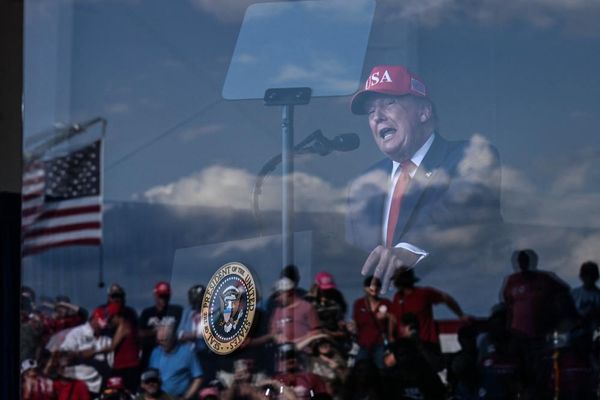
Fresh uncertainty also emerged after U.S. President Donald Trump said on Monday that Washington would either reach a deal with Iran or "finish the job," renewing the threat of military action.

Also read: Donald Trump's deal-or-devastation doctrine returns for Iran as talks hang by a thread

The Strait of Hormuz, a critical route connecting Persian Gulf oil producers with global markets, has partially reopened after being almost completely shut during the US-Iran conflict. A convoy of at least eight Japan-linked vessels has recently passed through the waterway. While traffic has picked up, shipping volumes are still below pre-conflict levels.

The United Arab Emirates increased crude production to more than 3.8 million barrels per day in June, its highest level since April 2020 and above pre-Iran war levels, after exceeding its OPEC+ production quota in May, according to Reuters estimates.

Read more: Tanker ablaze after strike in Strait of Hormuz

Meanwhile, the Organization of the Petroleum Exporting Countries and its allies, including Russia, agreed on Sunday to raise output targets by another 188,000 barrels per day from August. The move follows similar production increases announced for June and July.

Saudi Arabia also lowered the August official selling price (OSP) of its flagship Arab Light crude for Asian buyers to $1.50 a barrel below the Oman/Dubai average. The cut was $11 from the previous month, marking the biggest reduction in more than two decades, according to a Saudi Aramco pricing statement released on Monday.

Where are prices headed?

Macquarie Group has sharply lowered its Brent crude price forecasts for both 2026 and 2027, saying oil supplies from the Middle East are likely to normalise faster than it had earlier expected. Following the interim peace agreement between the United States and Iran, which has allowed oil shipments from the Persian Gulf to resume, the bank now expects Brent to average $77 a barrel in 2026, down from its earlier forecast of $89. Its 2027 estimate has also been reduced to $64 a barrel from $74.

In a research note, strategists Peter Taylor, Vikas Dwivedi and others said that while several factors could slow the recovery in regional production, Middle Eastern producers are still likely to restore output more quickly than markets currently anticipate.

Traffic through the Strait of Hormuz has also started improving. U.S. Vice President JD Vance said oil flows had returned to pre-war levels, although he did not provide supporting data.

Some experts, however, believe the waterway will take longer to fully return to normal. They said restoring regular operations would require coordinated vessel movements, restarting oil wells, repairing damaged infrastructure and reaching agreements on de-mining efforts. Several shipowners also remain reluctant to resume operations in the Strait of Hormuz and the wider Persian Gulf.

Analysts said global oil inventories were depleted during the prolonged disruption to shipping through the strait and will need time to rebuild. They expect inventories to stay under pressure until additional crude supplies from the Gulf begin reaching international markets.

Last month, Saudi Aramco Chief Executive Officer Amin Nasser warned that any prolonged disruption in the Strait of Hormuz could delay the return of stability to global oil markets until 2027. According to him, extended disruptions could affect nearly 100 million barrels of oil supply every week. Saudi Aramco is the world's largest oil producer.

Sensex, Nifty today: Catch all the LIVE stock market action here

(Disclaimer: Recommendations, suggestions, views and opinions given by the experts are their own. These do not represent the views of The Economic Times)

Sign up to read this article
Read news from 100's of titles, curated specifically for you.
Already a member? Sign in here
Related Stories
Top stories on inkl right now
One subscription that gives you access to news from hundreds of sites
Already a member? Sign in here
Our Picks
Fourteen days free
Download the app
One app. One membership.
100+ trusted global sources.