Closing post
Time for a recap:
Global energy, bond and equity markets have been rattled by the outbreak of war in the Middle East last weekend.
The Brent crude oil price is up 6.3% in late trading in London, at $77 a barrel, on concerns that supplies through the strait of Hormuz are being disrupted following the US-Israel war with Iran.
UK and European gas prices have surged by around 40% today, after Qatar’s state-run energy company shut down liquefied natural gas production at the world’s largest export facility after it was targeted in an Iranian drone attack.
Economists warned that higher energy prices could drive up inflation, hurting hopes of cuts to interest rates.
The money markets now indicate there is only a 51% chance that the Bank of England lowers borrowing costs this month, down from 80% last week.
Inflation fears hit the prices of sovereign debt today, pushing up government borrowing costs.
Global stock markets have fallen, with airlines, cruise operators and banks among the fallers.
In London, the FTSE 100 share index fell 1.2%, its biggest drop since November. There were steeper losses across Europe, with Germany’s DAX down 2.4%.
Stocks fell at the start of trading in New York, but have now partially recovered, with the Dow Jones industrial average down just 0.2%.
Investors are anticipating that the conflict could last for weeks.
Economists at Investec say:
The big question now is what happens next. Indeed there is a total lack of clarity over the medium-term, given that President Trump has not coherently articulated the US’s exact ultimate goal or how to achieve it. But there are two main US areas of interest.
Firstly, Trump has loosely called for regime change by calling on ordinary Iranians to rise up against the Tehran government, but there appears to be little in the way of a plan, at least publicly, on how that might be achieved. Whilst we are only on day three, even with the death of Ayatollah Khamenei and a number of Iran’s leadership figures, the Iranian establishment appears to still be very much in control.
Secondly, addressing Iran’s nuclear programmes had clearly been a focus running up to this weekend, so dismantling this and some of Iran’s other missile capabilities are also likely to be an aim. But whether this can be achieved through air power alone remains to be seen. In the aftermath of last June’s Midnight Hammer operation that saw US bombers strike Iranian nuclear enrichment facilities, President Trump claimed the mission a complete success and that Iran’s nuclear capabilities had been obliterated. However as later assessments had judged, capabilities were degraded, but not destroyed, raising questions over whether this latest operation will be any different.
More cynically Trump’s goals could include attempts to control Iranian energy assets, similar to what has happened in Venezuela or to distract attention from domestic issues.
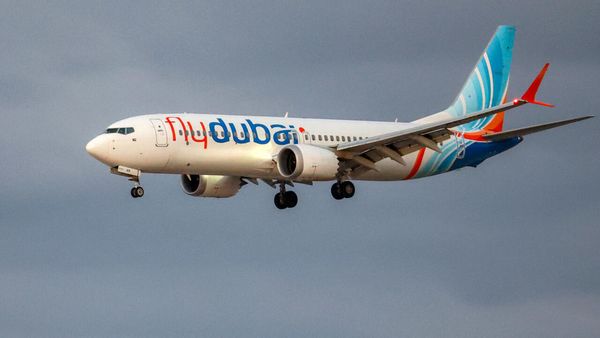
Thousands more flights were cancelled on Monday as the turmoil in global air travel caused by the US-Israel war on Iran continued, with hundreds of thousands of passengers stranded.
UKMTO: Two killed in attacks on Gulf of Oman
Two people have been killed attacks on five ships in the Gulf of Oman, the UK maritime trade operations centre has said in a situation report on the critical security situation in the last 24 hours.
An Indian national, who was in the engine room at the time was confirmed dead after an attack on the crude oil tanker, the MKD VYOM. A fire on board is now under control with plans to tow it to safety.
A second person was killed on the US flagged tanker Stena Imperative berthed in the Port of Bahrain after it was struck in a drone attack just before 3am GMT on Monday.
Three others carriers came under attack, UKMTO said.
It reported three attacks on oil infrastructure in the last 24 hours including an attack on the Jabal Ali port in Dubai and the Tanura refinery in Saudi Arabia following a drone attack.
And they reported traffic in the Strait of Hormuz, a critical pinch point for oil cargo, had dropped 80% in the last 24 hours.
“While no official legal closure has been confirmed … multiple reports indicate Iranian forces are issuing VHF hails claiming the waterway is restricted. Mariners are reporting severe GNSS/GPS interference and disruptions to AIS and communication systems,” it said in its situation report.

Inflation fears as UK gas prices sure
The cost of gas in the UK has also surged today, after Qatar was forced to shut down production at the world’s largest export facility for LNG.
The day-ahead contract for gas in the UK is up 40% in late trading, at 110p per therm, an extremely sharp increase (although still below the highs hit in 2022).
👀By my reckoning, today's rise in UK gas prices is the single biggest one-day jump (in percentage terms) since Russia invaded Ukraine in Feb 2022.
— Ed Conway (@EdConwaySky) March 2, 2026
The overall LEVEL of prices is (thankfully) much lower. But the lurch upwards is nearly unprecedented... pic.twitter.com/o6rSeW0MiW
Thomas Pugh, chief economist at audit, tax and consulting firm RSM UK, fears the spike in UK gas prices today will push up inflation:
“The primary way events in Iran will impact the UK economy would be through energy prices. The immediate and most direct effect is the jump in global oil prices to $80, however if sustained the impact on natural gas could have a greater impact on the UK economy.
“The UK imports 50−60% of its natural gas, with 20−25% of UK natural gas coming from liquefied natural gas (LNG), a large share from Qatar. If supplies of LNG are disrupted, then we could see a significant rise in gas and electricity prices, like we saw when Russia invaded Ukraine, since gas prices still tend to be the marginal setter of electricity prices.
“Since natural gas and electricity make up about 3% of the CPI basket, a sustained 10% rise in energy prices would add an additional 0.3ppts to inflation.
“The good news is that UK inflation has already dropped to 3% and was heading to 2% in April as friendly base effects and policy measures announced in the Autumn Budget weighed on inflation. The bad news is that a rise in energy prices may offset some of that positive downward trend.
“At the time of writing, UK natural gas futures have risen by around 50% since Friday. That would directly add around 1.6ppts to headline inflation through higher household utility bills and potentially even more as firms pass on increased production costs to consumers. But, because of the energy price cap, movements in wholesale energy prices feed into bills with a lag. That means the impact of higher wholesale gas prices wouldn’t be felt until July at the earliest. The impact of higher oil prices would be felt much quicker. Ultimately, it depends on how high oil and natural gas prices go and how long they stay there for.
Iranian news agencies are reporting that the country’s Revolutionary Guards say a fuel tanker burning in strait of hormuz after being hit by two drones (via Reuters).
IRAN'S REVOLUTIONARY GUARDS SAY FUEL TANKER BURNING IN STRAIT OF HORMUZ AFTER BEING HIT BY TWO DRONES- IRANIAN NEWS AGENCIES
— First Squawk (@FirstSquawk) March 2, 2026
FTSE 100 records biggest loss since November
Britain’s stock market has recorded its biggest daily loss in three and a half months, as the Middle East crisis hammered shares in airlines, luxury goods makers and banks.
The blue-chip FTSE 100 share index has closed down 130 points, or 1.2%, at 10,780 – away from the record highs seen last week.
That’s its biggest daily fall, in percentage terms, since 18 November 2025.
British Airway’s parent company, IAG, were the top faller today, down 5.5%, followed by Standard Chartered (-5.3%), the bank focused on Asia-Pacific markets.
Other top fallers included Burberry (-4.7%), and Intercontinental Hotels (-4.1%).
Updated
Aviation analytics firm Cirium said at least 1,560 flights have been cancelled on Monday, meaning more than 4,000 flights have been cancelled since Saturday.
That figure is likely higher given incomplete data collection, Cirium added.
The surge in gas prices today underlines the need to embrace renewable energy sources, says Greenpeace.
Paul Morozzo, senior climate campaigner for Greenpeace UK, said:
“The Strait of Hormuz is the pinch point for global gas supplies, and the UK’s energy bills. European gas prices have already surged by 50% in response to Qatar restricting supply, and there are predictions that the attack on Iran could lead to them increasing by 130%.
If your energy system uses gas then your energy bill is at the mercy of unstable regimes, in the Middle East and elsewhere, and oil profiteers. The UK’s gas supply, including the little remaining in the declining North Sea basin, is sold to us at market rates by those multinational oil majors.
The only way the UK can be secure and self-sufficient in energy production is by using fuel supplies that can’t be disrupted - sunshine and wind.”
After a jolting start, Wall Street has recovered some of its losses.
Stocks are still in the red, though – the Dow Jones industrial average is down 229 points, or 0.47%, at 48,748, recovering around half of its earlier losses.
How US crude oil could hit $90 a barrel
US crude oil, or West Texas Intermediate (WTI) has jumped by 6.6% today, to $71.60 a barrel – the highest since last June.
Fiona Cincotta, senior market analyst at City Index, suggests WTI could be pushed to $90/barrel by supply worrries, if traffic through the strait of Hormuz doesn’t resume.
“Oil prices are rising on Monday and could remain elevated for the coming days as the market assesses the impact of the escalating Middle East conflict on supplies through the Strait of Hormuz.
This is a key oil checkpoint, with more than 20% of global supply passing through it. Vessels are building up around the Strait after Iran warned Vessels not to pass through, and as insurance firms struggle to reprice.
Should tensions remain, WTI could rise towards $80.00, or even $90.00, a barrel in the coming week, much of this made up by the risk premium surrounding oil supply.
Any sense of de-escalation in the region could bring oil prices back towards $70 a barrel. Any signs of Iran allowing passage through the Strait of Hormuz could reduce the risk premium and ease oil prices further.
These latest developments came after an OPEC+ meeting over the weekend, where they agreed to an increase of 206,000 barrels per day starting in April. However, given the geopolitical developments, these changes may take some time to be felt.”
Today’s Wall Street losses come after President Donald Trump told the Daily Mail that strikes on Iran could go on for the next four weeks.
Adam Turnquist, chief technical strategist for LPL Financial, said that market losses are relatively contained, explaining:
“The market is taking it relatively well just given where oil is and the likelihood this is going to play out for four weeks - it’s not another weekend event.”
Bond prices hit, driving up yields
Sovereign bonds are selling off sharply today, as fears of an inflation spike grow.
With prices falling, the yields (interest rates) on government debt is rising.
The yield on UK 10-year and 30-year bonds are both up by around 6 basis points (0.06 percentage points); bad news for the UK Treasury as it nudges up the cost of borrowing.
Kathleen Brooks, research director at XTB, says:
Far from acting as havens, sovereign bonds have sold off sharply and 10-year Gilt yields are higher by 6bps in the UK, 7bps in France and 8bps in Italy.
US Treasury yields are also higher by 8bps so far today, and Canada is also facing sharply higher yields. Fears that a large spike in energy prices will cause another wave of inflation around the world is the latest macro risk emanating from the conflict.
UK natural gas prices are spiking too, as Sky News’s Ed Conway shows here:
UK natural gas futures spiking following the news about the shutdown of Ras Laffan.
— Ed Conway (@EdConwaySky) March 2, 2026
The UK had been hoping to get roughly 10 billion cubic metres of LNG from Qatar this year. Whether that now happens is suddenly in doubt https://t.co/9xyeeLmIoO pic.twitter.com/yEBgnGw5CJ
US defence company stocks are rallying, though.
Northrop Grumman, which makes defence missile systems, and military aircraft including the B-2 Spirit “stealth bomber”, are up 4% in early trading.
Lockheed Martin, the defense and aerospace manufacturer behind the F-35 Lightning II fighter jet, are up 3.8%.
Shares in cruise operators are dropping in New York.
Norwegian Cruise Line (-10.8%), Carnival (-10.1%) and Royal Caribbean Cruises (-6%) are among the top fallers on the S&P 500 share index.
The cruise industry faces disruption to trips in the Middle East, while the jump in gas prices will make it more expensive to operate LNG-powered vessels.
Wall Street opens in the red
The US stock market has opened, with a bump!
With fears of a protracted conflict in the Middle East swirling, the Dow Jones Industrial Average (which tracks 30 large companies) is down 488 points, or 1%, at 48,489 points.
Paint and coatings company Sherwin-Williams (-3.1%) are the top faller on the DJIA, followed by athletic footwear firm Nike (-3%) and Walt Disney (-2.8%).
The broader S&P 500 index is also down 1%, while the tech-focused Nasdaq Composite fell by 1.53% at the opening bell.
That follows losses across Europe, and Asia-Pacific markets today, and on several Middle East bourses yesterday after the US-Israel war with Iran began.
Updated
Britain’s FTSE 250 share index of medium-sized companies, is also sliding today – down 1.5%.
But oil producers Harbour (+6.5%) and Ithaca (+5.5%) are the top risers, along with shipping services provider Clarkson (+5.3%), and Avon Technologies (+3.8%), who make protective clothing for ilitary, law enforcement and fire personnel.
Chances of a March cut to UK interest rates have plunged
The chance of a cut to UK interest rates later this month have tumbled today.
A quarter-point cut to interest rates is now seen as just a 48% chance, down from 80% last week when falling inflation and rising unemployment made it much more likely.
City traders are now anticipating that the Bank of England is less likely to support a cut at its next meeting on 19 March, as higher oil and gas prices will drive up inflation.
Last month, the BoE was split 5-4 when a narrow majority of policymakers voted to leave Bank Rate at 3.75%, rather than cutting to 3.5%.
Updated
European stock market selloff deepens
Stocks are falling more sharply across Europe now.
The UK’s FTSE 100 share index is now down 1.6%, or 172 points, at 10,738, a level last seen on Wednesday.
That would be its biggest one-day fall since Donald Trump’s “Liberation Day” tariffs rocked the markets in April 2025.
Germany’s DAX index is now down 2.7%, France’s CAC 40 has lost 2.2% and Italy’s FTSE MIB has fallen by 2.4%.
Reuters: QatarEnergy to declare force majeure on LNG
QatarEnergy is set to declare force majeure on shipments of liquefied natural gas (LNG), after halting production following attacks on its facilities (see earlier post), Reuters are reporting.
That will allow QatarEnergy to avoid fulfilling its contractual obligations, by citing unforeseeable or uncontrollable events.
BoE policymaker: We shouldn't raise rates to fight energy spike
A Bank of England policymaker has said the central bank should not raise interest rates to contain a spike in energy prices.
Speaking after the US attack on Iran and the shutdown of major oil and gas production across the region, Alan Taylor said energy price shocks “move faster than inflation-targeting central banks can respond”.
Taylor, a member of the nine-member monetary policy committee (MPC) has spent the last year concerned that high interest rates have held back the economic recovery.
He has voted to cut rates at a faster pace than a majority on the MPC, who have preferred to bring down the cost of borrowing more slowly.
Several analysts have said the Bank will delay cuts to interest rates this year should the middle east conflict persist.
Taylor said policymakers needed to recognise that “central banks can never fully solve every type of inflation problem, including the big shocks of recent years”.
He added:
“As an economic historian, I think when future scholars look back at the macroeconomic shocks of last fifty years and not just the past five, one of their main takeaways will be the outsized role of energy shocks in causing disruptive spikes in overall inflation.
“Prices are set in markets, and price shocks disturb that system and its dynamic equilibrium. Large energy shocks move faster than inflation-targeting central banks can respond, and after they propagate into the system, they leave an imprint, even if we can do better to contain them (now versus the 1970s, for example).
“No amount of tweaking in central bank mandates will fully insulate us from these [external] risks, which as of now derive from the present and very time-specific nature of our dependence on energy and the patterns of geopolitical risk. Tackling those issues requires thinking and actions well beyond the domain of central banking.”
Taylor said he was concerned that interest rates may need to remain high if the UK cannot recover its productivity mojo. Without a rise in productivity, there will be little scope for wage rises without causing inflation to increase, he said.
But this was a separate issue to a rise in oil and gas prices, that the UK central bank could do little about,” he added.
European natural gas prices have “gone stratopheric” after Qatar halted its LNG production, says Neil Wilson, investor strategist at Saxo UK.
Wilson fears that QatarEnergy’s move could being potentially huge disruption for European energy flows.
With the European benchmark contract up around 40% today, Wilson says:
QatarEnergy announced a stop to its LNG production and associated products following attacks on its operating facilities in Ras Laffan Industrial City and Mesaieed Industrial City.
Qatar is a top three LNG exporter, controlling roughly a quarter of expected supply over the next decade. Looks like Iran’s tactic is to pressure Gulf states so they in turn pressure the US and Israel to back off.
For context, we are a long way off 2022 in terms of pricing yet...but if LNG to Europe is effectively shut via Hormuz for a prolonged period we could see chaos on this contract. I am much more concerned about European natural gas prices than oil prices in terms of seeing a repeat of the 2022 European energy crisis.
Updated
Surging European gas prices
European gas prices have soared, as Qatar’s decision to shut down liquefied natural gas production (see earlier post) raises fears of shortages.
The Dutch day-ahead gas contract is up 39% today at €44.5 per megawatt hour (MWh), up from €32 per megawatt hour (MWh) on Friday.
That’s still lower than in the early months of the Ukraine war, though (it hit €337MWh in August 2022).
Chris Beauchamp, chief market analyst at IG, says:
“The huge bounce in European natural gas prices threatens to upset the more positive outlook for UK inflation and consumer spending.
Hopes that pricing pressures would ease and consumers could spend more could be dashed as a price spike similar to 2022 causes a major headache for both policymakers and consumers, potentially disrupting the plan for more UK rate cuts.”
Deutsche Bank: “Only” the 38th largest oil spike since 1990
A little earlier today, Brent crude was up 8.4% this session.
Although that’s a sharp move, it’s only the 38th biggest daily gain over the last 36 years, according to Deutsche Bank market strategist Jim Reid.
He explains:
So even though it’s a big move, to get into the top 20, 10 and 5 it would need to be up +9.6%, +13.6% and +13.9% respectively. There were huge moves around the GFC [Great Financial Crisis] and Covid-19 turmoil, whilst the Gulf War in 1990-91 also saw several double-digit gains.
Going forward, much will depend on the Strait of Hormuz. It seems it’s not officially closed but passage through it would be hazardous at the moment with self-imposed restrictions from virtually all that normally travel through it.
Gold, silver and aluminium prices follow oil higher
Investors are closely watching developments around shipping in the Strait of Hormuz, an important commodities trade route disrupted by Iranian attacks on US military bases in the region.
Most of the concern in Europe, China, India and Japan relates to the transport of oil and liquid natural gas (LNG) as US and Israeli strikes in Iran fuel concerns about prolonged conflict in the Middle East.
Industrial metals prices tend to be slower to react to global events.
Nevertheless, aluminium prices rose to their highest in more than a month on concerns that the region, a major producer of the metal, will suffer from a prolonged war.
The benchmark aluminium price on the London Metal Exchange was up 3.1% at $3,236 a metric ton at 10.50am after touching $3,254 for its highest since January 29.
Neil Welsh at Britannia Global Markets, said.
“Base metals are largely higher this morning as aluminium climbs on concerns that a critical supply route for Middle Eastern producers will be disrupted by conflict in a region responsible for a significant chunk of global output.
“The region accounts for about 9% of the world’s aluminium production capacity and prices have typically been sensitive to spikes in regional tensions.”
Increases in metals prices are expected to reverse should the war become protracted and result in a rise in energy prices that in turn hit global growth.
“We should expect global investment sentiment to falter, undermining industrial metals demand growth - including copper,” said Panmure Liberum analyst Tom Price.
Copper nudged higher at 0.2% to $13,370 a ton, zinc gained 1% to $3,351, lead rose 0.6% to $1,974 and tin lost 1.1% to $57,105. Nickel retreated by 1.1% to $17,645.
Of the metals, gold is almost purely sentiment driven and the best indicator of investor worries.
“Gold is the sum of all fears,” said Ross Norman, the chief executive of Metals Daily
“But is also a very small lifeboat, which means the price soars in times like these.”
The gold price was up 3% in early trading to £5,405.90 , which Norman said was an indication traders view the curent conflict in the middle east as a “strong, but limited event so far.”
“Gold is a safe haven asset, but there is a caveat to today’s rise, which is that event-driven rallies rarely last,” said Norman.
Silver prices on international markets also increased, though by a more muted 1.7% at $95.36 per ounce.
QatarEnergy halts LNG production due to attacks
QatarEnergy, the country’s state-owned petroleum company, has halted production of liquefied natural gas (LNG) and associated products at two sites.
The shutdown is due to military attacks on facilities in Ras Laffan (north of Doha) and Mesaieed (south of Doha), it says.
🚨🚨🚨BREAKING: QatarEnergy stops LNG production pic.twitter.com/XFtaHKktmQ
— Javier Blas (@JavierBlas) March 2, 2026
VIX fear index hits highest since November
Wall Street’s ‘fear index’ has hit its highest level in three months.
The VIX index, which tracks volatility in the markets, is up 16% so far today, to its highest level since November 2025.
Lukman Otunuga, senior market analyst at global broker FXTM, says:
“The Iran crisis has entered a dangerous new phase, and markets are reacting accordingly. With oil surging, volatility spiking and investors rushing into traditional safe havens, we could see heightened turbulence over the coming days and weeks. Much will depend on whether diplomatic channels reopen quickly, but for now, risk sentiment remains fragile.”
Shippers are once again avoiding the Suez Canal, Bloomberg report, as the US- Israel war with Iran dashed hopes of an imminent revival for the key global trade route.
A.P. Moller-Maersk, Hapag-Lloyd and France’s CMA CGM have all said they’re suspending passage or routing services away from Suez, reflecting fears that Iranian-backed Yemeni rebels might resume attacks on vessels in the southern Red Sea.
If the oil price hits $100 a barrel, or more, it would push up inflation and weaken growth.
According to Maurizio Carulli, global energy analyst at Quilter Cheviot, a $10/barrel change in the oil price can add 30-40 basis points (0.03 to 0.04 percentage point) to consumer inflation indexes, and shave off 10-30 basis points from global GDP growth.
Today, Brent crude has gained $5.50 to $78.42 per barrel.
Carulli says:
“Oil supply and demand fundamentals until Friday had pointed at a surplus in 2026, however, that is quickly changing as events in the Middle East play out. Recent weeks had seen the oil price rise from $60/bbl at the beginning of January to $72/bbl on Friday, with it climbing further today to $80/bbl as markets factor in the increased geopolitical risk.
“Depending on how, and for how long, the current military action will continue, the oil price will adjust quite quickly. So, if the situation will calm down over the next few weeks, as it is well possible, the price is likely to revert to $60-65/bbl, given oil production is in excess of demand, and Opec+ has some spare capacity to increase production further. And, vice versa, if the situation precipitates into a wide-spread and prolonged Middle East war, with shipping across the Strait of Hormuz halted, then the oil price could feasibly rise to $100/bbl and above.”
Christian Schulz, chief economist at AllianzGI, says markets face a significant – but not yet destabilising – shock after the US and Israel launched strikes against Iranian military targets.
Much depends on whether the conflict spills into broader regional or domestic instability, Schulz says, adding:
US and Israeli airstrikes and Iranian attacks in retaliation have raised the risk of a full-scale Middle East war
The death of Iran’s supreme leader raises the chances of regime change along with protracted instability in Iran and may reduce the risk of a sustained regional conflict.
Markets will likely demand a higher premium, at least temporarily, until clarity emerges on Iran’s internal stability and the intentions of its geopolitical partners.
We think oil prices will likely rise even if a sustained closure of the Strait of Hormuz remains unlikely for now; in broader financial markets, US Treasuries, the US dollar and gold may gain, while equities may see a sharp but potentially short‑lived sell-off.
RAC: How higher oil prices could hit drivers
RAC head of policy Simon Williams has crunched the impact on higher oil prices at petrol and diesel pumps:
“While the conflict in the Middle East undoubtedly has the potential to push up pump prices in the UK, it’s not a certainty. The oil price would have to rise significantly and stay that way for some time to have a dramatic effect.
“Forecourt prices were already on the rise due oil trading nearer to $70 a barrel in the last few weeks. Regardless of the current situation, petrol rose by a penny a litre in February and is likely to go up by another penny in the next week or so to an average of 134p a litre.
“If oil were to climb to and stay at the $80 a barrel mark, then drivers could expect to pay an average of 136p for petrol. At $90, we’d be looking at over 140p a litre and $100 would take us nearer to 150p, but it’s all too soon to know.”
The losses in London, Frankfurt, Paris, Milan and Madrid today have pulled the pan-European Stoxx 600 share index down to a two week low.
The Stoxx 600 is down 1.4% so far today, at 624.94 points, falling away from the record highs seen last week.
The eurozone is the major economy that is most exposed to the Iran crisis, Dutch bank ING says.
In a new research note, ING explain that military action in the Middle East could have significant implications for the global economy and markets.
Those “macro consequences” will hit hardest in Europe, where the timing could not be worse.
They write:
The eurozone was finally emerging from its long period of stagnation, with tentative green shoots of recovery emerging – though recently, these have been undermined by new uncertainty regarding tariffs. Now the region could face an energy shock on top of a trade shock.
Europe imports essentially all of its oil and a significant share of its LNG. A surge in energy prices and potentially even energy supply disruption could bring back memories of the energy cost crisis from late 2021 to 2023. There are currently two important differences compared with the situation back then: Europe doesn’t have to ‘derisk’ from a single important energy provider; and the oil price crisis comes at the end of the winter, not the start.
This puts the European Central Bank in “a genuine dilemma”, ING add:
Services inflation is still sticky, and an oil shock would push headline inflation higher – yet the growth outlook is simultaneously deteriorating under the combined weight of tariffs, uncertainty, and now energy costs. Back in December, an ECB analysis showed that a 14% increase in oil prices would push up inflation by 0.5ppt and could reduce GDP growth by 0.1ppt.
However, this would only be the price effect, not the supply chain disruption effect. Given the still relatively fresh memories of the recent inflation surge, the ECB is unlikely to see any new oil price-driven inflation spike as transitory or even deflationary. However, to see a rate hike, the eurozone economy would have to show clear resilience.
Benchmark European diesel refining margins rose nearly 25% on Monday, to their widest since November 20, as the U.S.-Iran conflict disrupted supplies in the Middle East, Reuters reports.
Margins traded at $30.75 a barrel this morning, up by nearly $6, after hitting a session high of $33.76 earlier.
Analysts at ABN Amro predict that the rise in the oil price will have a bigger impact on inflation rather than growth.
They have drawn up three inflation scenarios, covering Brent crude at $80/barrel (roughly its current level), $100 and $130 per barrel.
In the latter scenario, US inflation approaches 4% this year – double the Federal Reserve’s target.
ABN Amro say:
Already facing above target inflation, higher oil prices put the Fed in an even more difficult situation. Headline inflation will rise substantially, while core inflation, which excludes energy prices, barely moves. The usual policy response, which remainsthe most likely for now, is therefore to look through the oil price shock, seeing as it’s a one-off inflationary impulse.
In the current setting, things are more complicated, because the scenario of oversupply with falling energy prices provided a tailwind in headline inflation, which could be used to argue in favour of rate cuts. Higher energy prices, and a resurgence of inflation,could very well tilt the already fragile balance in the FOMC towards holding rates, on the fear of inflation expectations becoming de-anchored, even if the shock is temporary. For our base case to alter, we would need to see, or expect, sustained higher oil prices. Signs of inflation de-anchoring would put a nail in the coffin for rate cuts this year.
Turning to the eurozone, in the mildest scenario(Brent $80), inflation goes from being well below the ECB’s 2%target to moving broadlyback to target and staying there. Even in the mostsevere (Brent $130) scenario, while eurozone inflation is boosted by1.3pp in 2026, the lasting impact is relatively mild, with 2027 inflation only 0.2pphigher.
Updated
UK manufacturing kept growing in February
British manufacturers enjoyed another strong month in February, according to a closely-watched survey, with firms reporting a rise in new business both at home and abroad.
The S&P’s purchasing managers’ index, which measures activity in the private manufacturing sector, came in at 51.7 in February, which was a very slight fall from 51.8 in January, but still one of the best readings since August 2024. Any reading above 50 represents growth.
The monthly survey of about 650 manufacturers showed new export orders rising at the quickest pace in four-and-a-half years in February, while optimism about the year ahead stayed close to January’s recent high, with close to three-fifths of all companies expecting to expand production during the coming year. Factories reported receiving a higher volume of orders from mainland China, the EU, Middle East and the US.
However, several firms remained cautious, citing uncertainty regarding future government policy and “ongoing geopolitical and global trade tensions.” The survey was conducted before the US-Israel war with Iran began and concerns about exports and cost inflation are only likely to increase next month.
Job losses were also registered for the sixteenth successive month, although at the smallest level during that sequence, and input costs rose to a six-month high, which manufacturers passed on to customers in the form of higher prices, with average output charges increasing for the third month in a row.
Professor Costas Milas, of the management school at the University of Liverpool, says the rise in oil price means the Bank of England will probably maintain interest rates at their current levels for longer, rather than cutting.
Here’s why:
Rachel Reeves and the BoE are (still) hoping for inflation to revert back to the target before May. The latest geopolitical developments might challenge this. From the plot below, CPI inflation correlates positively with global supply pressures.
Global supply pressures precede CPI inflation which, unfortunately, is already happening! Both global supply pressures and an (imminent) increase in the price of oil are exogenous factors with strong predicting power for UK inflation.
Since the BoE can do nothing about these exogenous sources of inflation, it looks more likely than not that (as things stand) Bank Rate will remain at 3.75% for longer.
Reuters are reporting that cruise operator MSC is keeping its Euribia ship in the port of Dubai, due to the Iran conflict.
MSC CRUISES: FOLLOWING GUIDANCE OF REGIONAL U.S. MILITARY AUTHORITIES TO KEEP MSC EURIBIA SHIP IN PORT OF DUBAI
— CGTN Europe (@CGTNEurope) March 2, 2026
MSC add that they are actively in contact with embassies and foreign offices to ensure they have relevant information about their nationals on board and to understand any repatriation plans being developed.
UK mortgage approvals hit two-year low
Away from the Middle East, the UK’s housing market slowed at the start of 2026, new data shows.
The Bank of England has reported that 59,999 new mortgages were approved in January, the lowest since January 2024.
That slowdown came despite a drop in the ‘effective’ interest rate on new mortgages, which fell to 4.09% in January from 4.15% in December.
Net borrowing of mortgage debt by individuals decreased to £4.1bn in January, down from £4.5bn in December, and below the previous 6-month average of £4.5bn.
Gold, a traditional safe haven in times of turmoil, has hit a one-month high today.
Gold is up 2.2% at $5.392 an ounce, having hit its highest level since 30 January this morning.
Susannah Streeter, chief investment strategist at Wealth Club, says:
Precious metals prices have ratcheted up again, with gold and silver increasingly sought after in these turbulent times. Gold has reached a one-month high, after recording its seventh consecutive monthly gain in February - the best winning streak since 1973. Back then, a severe oil shock led to a flight to safe havens. While oil prices have increased sharply, this is not yet mirroring the 1970s surge, when prices effectively quadrupled in just a few months after Gulf countries retaliated against US support for Israel in the Yom Kippur War.
However, with tensions escalating and uncertainty so high, it is far from clear how this current conflict will evolve, and prices could climb even higher. This time around, other worries are also colliding to push up precious metals prices, including high debt levels, concerns over the Federal Reserve’s independence, and questions about the sustainability of the artificial intelligence boom.
Travel company shares across Europe are falling sharply, as the US-Israel war with Iran disrupts flights and deters people from travelling to the region.
Shares in TUI, Europe’s largest travel company, dropped 7% in early trade, while British Airways-owner IAG are now down 5.5%, having initially lost 9%.
Lufthansa and Air France-KLM both fell 7%, while in London cruise operator Carnival is down 7.1%.
Wall Street is on track for losses when trading begins in New York in under six hours.
Victoria Scholar, head of investment at interactive investor, says:
“US futures are pointing to notable declines at the open on Wall Street with Nasdaq futures down around 2% and S&P and Dow futures down around 1.5% each.”
Europe’s bank stocks are down 3.9% so far this morning, on track for the biggest one-day drop since Donald Trump announced sweeping tariffs in April 2025.
Generali Investments: A fast escalating Gulf crisis may lead oil to above $100 a barrel
Paolo Zanghieri of Generali Investments also fears that “a fast escalating Gulf crisis” may push oil above $100 a barrel.
Currently, Brent crude is up 9.5% today at $79.85 a barrel.
Zanghieri says reopening the strait of Hormuz to traffic is the key to preventing prices spiking higher:
“The coordinated attacks by Israel and US on Iran are explicitly aimed at regime change and will likely last much longer than the limited action seen in 2025, when Brent briefly exceeded 80US$/barrel.
Iran has retaliated by targeting Israel, US bases in Gulf states, and closing the Strait of Hormuz, while Houthi rebels pledged renewed attacks in the Red Sea. This escalation is meant to pressure Gulf states to seek de-escalation. Iran’s Kharg Island oil terminal was attacked, but Gulf states’ infrastructure remains untouched.
Closing Hormuz could cut around 15–20% of global oil output. OPEC+ decided to boost supply by 206,000 b/day, and spare capacity (just under 3 million b/day) could theoretically offset lost Iranian exports (1.6 million), while OECDE reserves are well within the normal range. Yet, preventing oil prices from breaching US$100/b depends on reopening Hormuz.
The Iranian navy is likely too weak for a full blockade, but partial disruption obtained through sporadic attacks to ships and mining the Strait could push prices to US$90 or above. Direct strikes on Gulf oil facilities would sharply raise prices but also compromise Iran’s already weak regional ties and upset China.”
UK gilt yields rise as Middle East conflict rages
UK government borrowing costs are rising today, as investors trimmed their expectations for Bank of England interest rate cuts.
The yields, or interest rates, on short- and longer-dated gilts have risen by between 3 and 4 basis points in early trade.
India and Canada agree deals over uranium and critical minerals
Over in New Delhi, India and Canada have agreed deals covering critical minerals and uranium supply.
The pacts, which also covered technology and promoting the use of renewable energy, were announced after talks between India’s prime minister Narendra Modi and Canada’s Mark Carney.
Both leaders hailed a fresh start in the relationship between their nations.
Modi said:
“Our ties have seen a new energy, mutual trust, and positivity.”
Carney was also upbeat, saying:
“This is not merely the renewal of a relationship. It is the expansion of a valued partnership with new ambition, focus, and foresight, a partnership between two confident countries charting our own course for the future.”
The surge in the oil price may make it harder for central banks to cut interest rates as quickly as hoped.
The odds of a Bank of England rate cut in March have dropped to 68% this morning, down from 80% last week; higher energy prices will make it harder for the BoE to bring inflation down to target.
Updated
European stock markets drop
Stock markets across Europe are sliding at the start of trading.
The main indices are firmly in the red:
Germany’s DAX: down 2.2%
France’s CAC 40: down 2.3%
Italy’s FTSE MIB: down 2.3%
Spain’s IBEX: down 2.4%
Emma Wall, chief investment strategist, Hargreaves Lansdown, says there is a flight to safety that is helping gold and US dollar to rally:
“Events in the Middle East over the weekend – the US-Israel strikes on Iran, and subsequent retaliations across the region – have added uncertainty, and volatility, to an already choppy market. Global equities, buffeted by AI disruption fears and ever-changing tariff policy over recent months, are now digesting the likelihood of significantly higher oil prices, supply chain concerns, and the potential for subsequent higher inflation.
Investors have reacted by turning ‘risk-off’, buying in to the perceived safe havens of gold, the US dollar and the Swiss franc. Initial equity market reaction was mixed. Middle Eastern markets trading yesterday fell – but only by 2-4% as key oil producers listed in the region provided a counter to wider losses.
Investors globally are broadly selling equities to fund the risk-off pivot, but the energy sector looks set to gain. US treasury bonds and UK gilts are also expected to benefit.
Updated
BAE Systems shares jump
Shares in weapons producer BAE Systems have jumped 7% at the start of trading in London, as investors pile into defence stocks.
Rivals across Europe are rallying too, including Swedish aerospace and defense company Saab (+5.9%) and Italy’s Leonardo (+4.8%).
Updated
IAG, the parent company of British Airways, are down 9.5% at the start of trading – the biggest faller on the FTSE 100.
FTSE 100 drops 1% at start of trading
London’s stock market has just opened, and investors are reacting to the US-Israel war on Iran by selling shares in travel companies and banks, and piling into oil producers
The FTSE 100 share index has dropped by 1% in early trading, down 111 points to 10,798 points.
Budget airline easyJet (-6.2%) and Intercontinental Hotels (-5.8%) are among the fallers, as traders anticipate loss of business in the Middle East, as thousands of flights are cancelled.
Informa, the conference organiser, are down 6.2% – they hold many events in the Middle East, including Gulf Print & Pack which should begin at the end of March.
But the surge in the crude price today is pushing Shell (+5.7%) and BP (+6.3%) to the top of the FTSE 100 risers.
Updated
Pound stumbles as dollar soars
The US dollar is strengthening this morning as investors seek out the safety of the US dollar.
The dollar, which traditionally does well in times of crisis, has strengthened by 0.8% this morning.
The pound is down 1%, or 1.3 cents, at $1.3346.
But in the long run, the Iran attacks could spur the slow decline of the dollar’s global dominance…
European gas prices surge
European natural gas prices have surged today, as the US-Israel war on Iran sparks fears of a major disruption to global energy supplies.
Benchmark futures climbed as much as 25% — the biggest increase since August 2023 — Bloomberg report, after tanker traffic through the strait of Hormuz was largely halted over the weekend.
Dutch front-month futures, Europe’s gas benchmark, were 20% higher at €38.44 a megawatt-hour in early trading in Amsterdam.
Analyst: Oil prices could hit $100/bbl as strait of Hormuz traffic halts
Analysts are warning that the US-Israel war with Iran could drive oil prices up to $100 a barrel.
Consultancy firm Wood Mackenzie is warning that higher oil and gas prices are certain, and that oil prices could potentially exceeding $100/barrel if tanker flows through the strait of Hormuz are not quickly restored.
They say tanker traffic has been effectively halted, after Iran warned shipping away from the waterway and insurers withdrew coverage.
In the current scenario, oil prices over US$100/bbl are possible if transit flows are not re-established quickly, according to Alan Gelder, SVP of Refining, Chemicals and Oil Markets at Wood Mackenzie.
Gelder explains:
“The key question is when do vessels re-establish export flows.
“No doubt, tanker rates and insurance will increase dramatically, but these costs would only be a small part of the oil price impact associated with a curtailment of oil flows if they last for more than a few days.”
Even in the optimistic scenario where Iran cooperates with the US, it could take a few weeks for export flows to re-establish themselves, Gelder added, saying:
“During that time, oil prices are heavily risked to the upside.
The most recent comparison is during the early days of the Russia/Ukraine conflict, when the fear of loss of Russian supplies drove the oil price to over US$125/bbl.”
Brent crude last traded as high as $100/barrel in 2022, early in the Russia-Ukraine war.
Updated
Introduction: Geopolitics drives up oil prices and hits stocks
Good morning, and welcome to our rolling coverage of business, the financial markets and the world economy.
Conflict in the Middle East has triggered fresh geopolitical uncertainty, with investors weighing up the prospect of disruption to oil supplies that would hurt global growth and drive up inflation.
The US-Israeli strikes on Iran which began last weekend have sent investors racing to drive up the price of oil and push down stock markets.
Brent crude, the international benchmark, jumped by 13% when trading began overnight, hitting $82 a barrel, a 14-month high. It’s now up 9% at $79.12 a barrel.
This follows reports that Tehran had warned tankers in the strait of Hormuz that no ship would be allowed to pass through. Around 20% of global oil passes through the strait, so any disruption could lead to supply shortages and higher prices.
Insurers have also warned ship owners they would cancel policies and raise coverage prices for vessels travelling through the Gulf and the strait.
Jim Reid of Deutsche Bank explains:
The spike comes as tanker traffic via the Strait of Hormuz has largely stopped with Iran having attacked three oil tankers over the weekend, though Iran’s foreign minister said on Sunday that Iran was not seeking to close the strait.
There is a view that ahead of the mid-terms, the US administration will do what they can to ensure Iran struggles to block the Strait for long. Investors will also be watching the extent of damage to Iran’s oil export facilities.
In Tokyo, the Nikkei 225 fell by nearly 2.4% as traders in Asia responded to the weekend’s developments, before a partial recovery to 1.35% down in late trading
Other markets have fallen too, with Hong Kong’s Hang Seng down 2%.
There were losses on Middle Eastern markets yesterday, with Saudi Arabia losing 2.2%, Bahrain down 1%, and Kuwait suspending trading altogether.
Here’s the latest:
The agenda
7am GMT: Nationwide: February House Price Index
9am GMT: Eurozone manufacturing PMI for March
9.30am GMT: UK manufacturing PMI for March
9.30am GMT: Bank of England mortgage approvals and consumer credit
12.30pm GMT: Bank of England policymaker Alan Taylor speaks at the Norges Bank monetary policy regulation conference
2pm GMT: ECB President Lagarde speaks at the ECB International Women’s day event
Updated