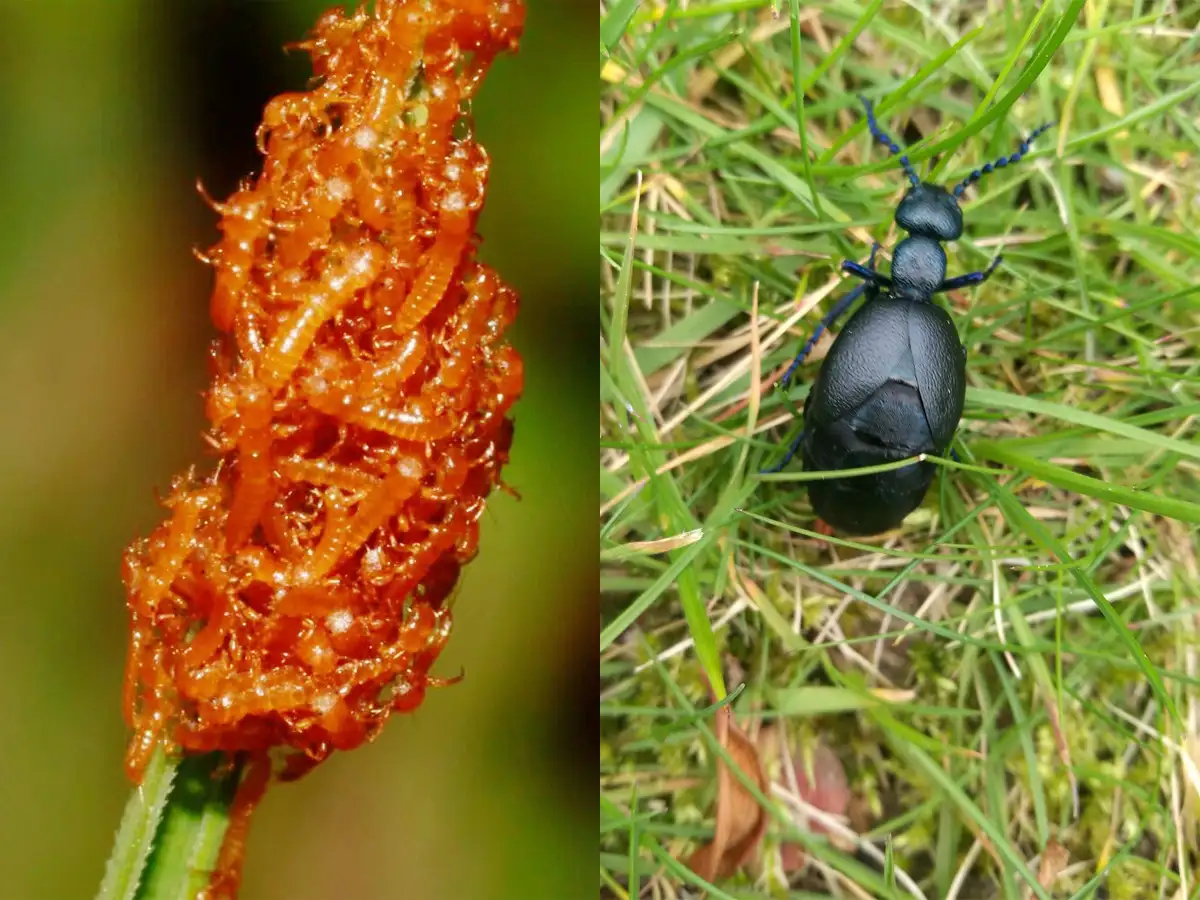
Oil beetle larvae have developed a remarkable way to deceive bees: They smell like flowers. A new study reveals that the tiny larvae of the European oil black beetle can produce floral scents that attract wild bees, helping the parasites hitch a ride back to bee nests. Once inside, the larvae feed on bee eggs and food stores meant for the bees’ offspring. Researchers say the discovery is the first documented example of an animal producing chemical signals that mimic a plant’s identity to manipulate another animal. The findings offer a striking look at how sophisticated chemical deception can become in nature. Instead of simply hiding from their hosts, these beetle larvae appear to exploit one of the most familiar signals in the natural world - the scent of flowers - to get exactly where they need to go.
THE LARVAE USE A FLORAL DISGUISE