Get all your news in one place.
100's of premium titles.
One app.
Start reading
Latin Times
Latin Times
Politics
Miguel Paiva

Oil at $96 a Barrel: What the Hormuz Crisis Is Costing You and Why U.S. May Hold Off Escalating Until Nov. 3rd

NEW YORK, NEW YORK - SEPTEMBER 04: Gas prices are displayed at a Brooklyn gas station on September 04, 2026, in New York City. As millions of Americans take to the road for Labor Day weekend, gas prices continue to rise. According to AAA, the New York state average is $4.26 a gallon, and the national average is $4.13, both among the most expensive on record. (Credit: Photo by Spencer Platt/Getty Images)
  • Iran fired ballistic missiles at a US Navy aircraft carrier and destroyer in the Strait of Hormuz, and Washington answered hours later by disabling three Iranian oil tankers.
  • Tehran announced a future "restricted zone" that would start at the line of the US naval blockade and stretch into the Persian Gulf, though the measure is not yet in effect.
  • Brent crude closed at $96.28 a barrel — its highest level since July 24 — just as the White House tries to hold the conflict in check until the November 3 midterm elections.

An American aircraft carrier dodging Iranian ballistic missiles in the Strait of Hormuz. Three tankers knocked out of commission before nightfall in retaliation. And underneath it all, a number that's already hitting American wallets: the highest diesel price ever recorded in the US. What happened in the Gulf this weekend isn't an isolated flare-up — it's the clearest sign yet that Washington is racing against its own election calendar while the war with Iran keeps slipping further out of its control.
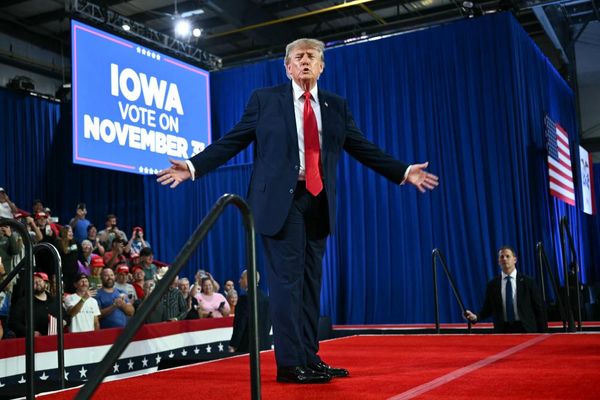
A carrier ends up in the crosshairs

On September 5, Iran's Revolutionary Guard Aerospace Force launched several ballistic missiles at a US aircraft carrier and a guided-missile destroyer sailing through the strait. The Pentagon says both ships evaded the strikes with no injuries; Tehran insists otherwise, a claim no independent source has been able to confirm. Hours later, US Central Command hit back at three Iran-linked tankers — one near Kharg Island, another off Jask, and a third, already empty, in the Gulf of Oman — after ordering their crews evacuated first. Admiral Brad Cooper didn't mince words about what comes next if Iran fires again, as Army Recognition reported: "we will impose an even higher economic cost."

Iran went a step further, claiming it had also struck an unmanned US vessel trying to enter the strait. A Central Command spokesman dismissed the accusation as "a total lie," PBS confirmed. No footage or independent record has surfaced to back Iran's version.

An exclusion zone that doesn't exist yet

Amid the dueling claims, Iran's new national security chief, Mohsen Rezaei, revealed that his country will soon declare a restricted zone starting right at the edge of the US blockade and reaching across the strait into Persian Gulf waters. Any vessel that crosses it, he warned, lands on Iran's sanctions list. Still, the move was framed for "the coming days and weeks" rather than an immediate closure of a passage that carries a fifth of the world's oil.

From Khamenei's death to a deal that didn't survive two weeks

This weekend is only the latest chapter of a war that began on February 28, when joint US-Israeli strikes killed Supreme Leader Ali Khamenei and set off months of Iranian retaliation with a human toll human rights groups have documented extensively. A memorandum signed on June 17 promised a 60-day truce, but it unraveled in barely ten: a commercial ship was hit off Oman on June 25, Washington struck back two days later, and Tehran answered within hours. By July 7, Trump himself was already calling the deal dead, and fighting has effectively continued ever since. The Pentagon's latest count — already disputed after four recent deaths were quietly pulled from the official database — puts US military losses at 18 since February, according to figures compiled by security-focused outlets.

The bill ordinary Americans are already paying

The fallout reaches well beyond the command room. Diesel hit a record $5.85 a gallon, topping the peaks of the 2022 energy crisis, while the US naval blockade in place since April has redirected 87 commercial vessels since July 14 alone, Al Jazeera reported. Public patience is running out fast: just 31% of Americans back the war against 63% opposed, and six in ten say it's made everyday life more expensive.

Why this can wait until November 3 — and why that's exactly the problem

Inside the White House, the reportedly declared strategy is to keep the conflict contained — targeted sanctions, limited strikes, no major buildup — until after the November 3 midterms, when Republicans are defending a razor-thin congressional majority. Vice President JD Vance has even downplayed the fighting in public. But officials who spoke to Al Jazeera admit that once the votes are counted, containment could give way to escalation. With a US carrier already under direct fire, an exclusion zone on the way, and crude oil creeping back toward $100 a barrel, the Strait of Hormuz may not grant Washington the quiet two months it's counting on before Election Day.

Sign up to read this article
Read news from 100's of titles, curated specifically for you.
Already a member? Sign in here
Related Stories
Top stories on inkl right now
One subscription that gives you access to news from hundreds of sites
Already a member? Sign in here
Our Picks
Fourteen days free
Download the app
One app. One membership.
100+ trusted global sources.