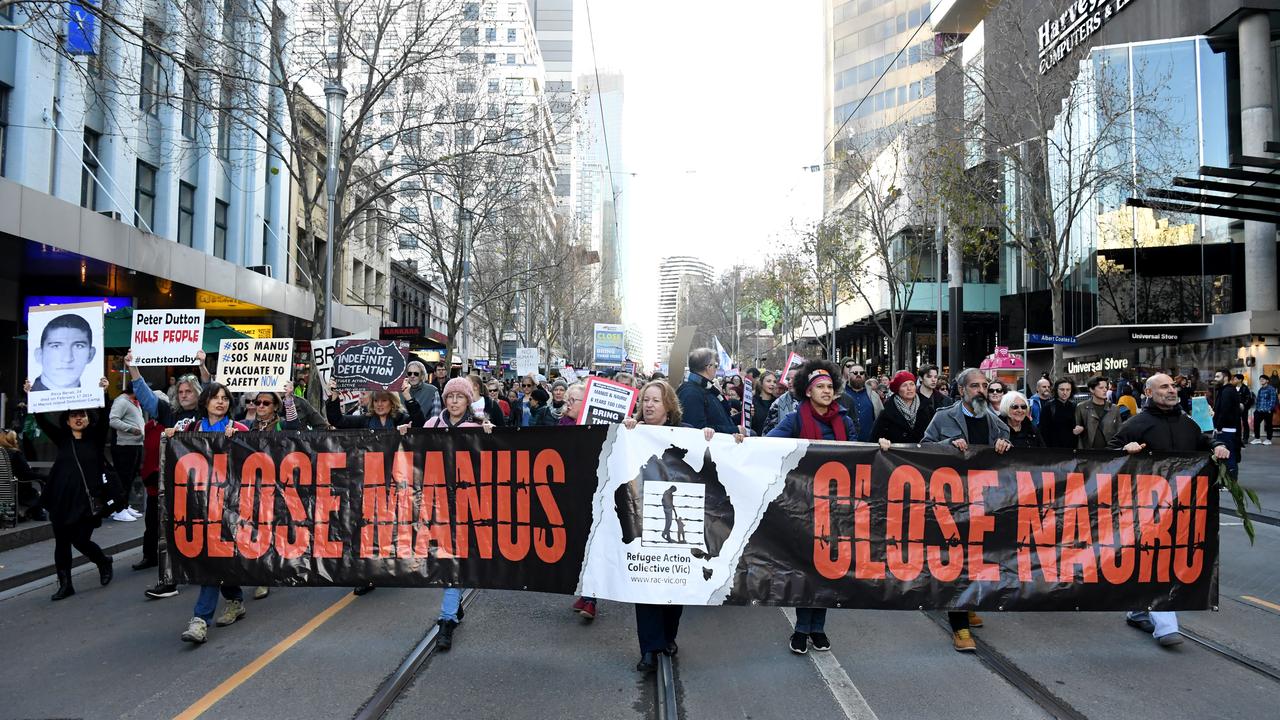
Taxpayers are continuing to foot a hefty bill for offshore detention, with the federal budget revealing an increased annual spend of nearly a billion dollars.
The cost of offshore detention and surrounding policy is estimated to hit $971.6 million in 2025/26 - up from $580.7 million the previous year, with spending totalling more than $14.35 billion since 2012.
In August, the federal government signed a memorandum of understanding to send hundreds of former onshore detainees to Nauru, offering more than $400 million upfront and then $70 million each year.

The agreement would allow Australia to transfer up to 354 former immigration detainees, including convicted criminals, to the tiny Pacific island which has a population of about 12,000.
The budget revealed an additional $85.2 million towards faster and more efficient skills assessments to allow migrants to work, as well as the establishment of a skills migration commissioner.
However, it did not include any increase financial support for asylum seekers in Australia awaiting a decision on their visa application under the Status Resolution Support Services (SRSS) program, which remained below the poverty line at just $44 per day.
"These are political choices, and they reveal a government that is still willing to spend enormous amounts on punishment and secrecy while denying some of the most marginalised people in our community basic dignity and security," Asylum Seeker Resource Centre deputy chief executive Jana Favero said.

Roughly 13,000 people living in the community who are seeking asylum are currently not allowed to work and must live on the SRSS.
Refugee Council of Australia co-chief executive Paul Power said many refugees and migrants coming to Australia faced a significant de-skilling after arrival despite having years of professional experience and a strong motivation to work.
"Improving skills assessment and recognition processes is a useful step, however, we still need further work to reform the accreditation process by domestic bodies for people who are already here in Australia," Mr Power said.
The council criticised a failure to increase the humanitarian intake number for the coming year from 20,000 despite unprecedented global displacement.