When Oasis walked onstage for their first-ever U.S. show at a tiny club called Wetlands in New York City on July 21, 1994, the 250 people crammed into the sweaty dive weren’t quite sure what to make of the youthful Brits. For a start, they weren’t moving. As the band roared through soon-to-be classics like “Live Forever,” “Cigarettes & Alcohol” and “Supersonic,” the five-piece remained defiantly motionless.
“It wasn’t the kind of show Americans were used to,” remembers journalist Jon Wiederhorn, who was reviewing the show for Melody Maker. “In America, grunge was in its heyday and bands were jumping and bouncing all over the place. You didn’t just stand still with your hands behind your back to sing rock songs to a crowd!”
If Oasis were a touch wooden, the Manhattan audience weren’t much better. “F***ing dance, you b******s,” Liam Gallagher implored his audience. “Dance — you’re in New York!” Despite the standoff on both sides, the performance left a lasting impression of Wiederhorn. “The power of the music transcended their lack of motion,” he says. “Their irreverence became a great part of their character and their delivery, and managed to sit hand in glove with those beautiful melodies.”
At the time, the band was still a month away from releasing their incendiary debut album Definitely Maybe. Nevertheless, the world already seemed to be at their feet. In his review, Wiederhorn predicted the young band would conquer the States in short order. “No doubt about it, the Gallagher brothers are here to stay,” he concluded. “Pretty soon we’ll all be eating out of their dry, dirty palms.”
Things didn’t quite work out that way. Definitely Maybe went straight in at number one in the U.K. charts, becoming the fastest-selling debut album in British music history at the time, but in the U.S. it peaked at a lowly 58.
When the band returned in September for their first full U.S. tour, they infamously unravelled at the Whisky a Go Go in Los Angeles after reputedly taking what they thought was cocaine but in fact turned out to be crystal meth. The show was so disastrous that Noel temporarily quit the band and fled to San Francisco — an incident he immortalized on the legendary B-side “Talk Tonight.”
They were young, blinded by success and doing loads of blow
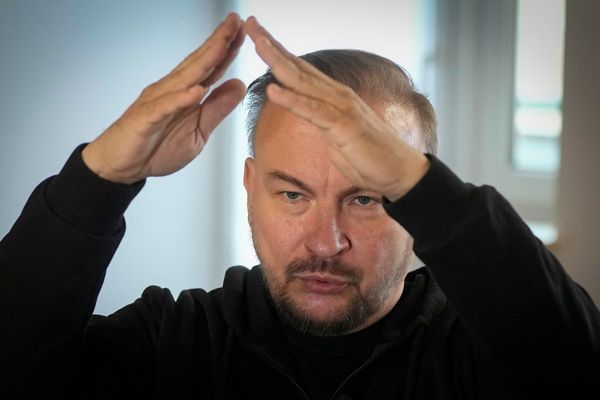
Music journalist Jon Wiederhorn
While the band’s 1995 follow-up, (What’s the Story) Morning Glory?, fared far better Stateside, reaching No. 4 on the Billboard 200, they never translated that success into the kind of stadium-sized live following they enjoyed in Britain. Until their acrimonious split in 2009, Oasis remained largely a mid-sized arena act in America.
“They shot themselves in the foot in the States,” says Wiederhorn, who points to Liam refusing to perform and instead smoking cigarettes and heckling Noel at their MTV Unplugged taping as a moment that undermined their U.S. ambitions. “I guess they were young, blinded by success and doing loads of blow, and the culture that surrounded them, I would say, impaired some of their better attributes.”
It’s that background that makes the success of Oasis Live ‘25 all the more remarkable. When the band finally reunited last year, the feverish anticipation that greeted their return in their homeland spread right across America too. U.S. media heralded the tour as their breakthrough moment. When they landed in Chicago that August, Rolling Stone crowed: “Oasis Finally Conquer America at First U.S. Show in 17 Years,” a sentiment shared by Ultimate Classic Rock’s headline: “Oasis Finally Conquers America.”
Critics were particularly struck by the fact that American fans weren’t just turning up because they’d heard “Wonderwall” on the Girls soundtrack or in a million karaoke bars. Rolling Stone’s Joseph Hudak noted the crowd on that opening night in Chicago were singing along to songs including “Slide Away” and even “Little by Little,” from 2002’s Heathen Chemistry. As Hudak remarked: “The response to the whole of Oasis’ catalog, as well as the remarkable amount of twentysomethings in the crowd, made the case that the band has grown a whole new fan base across the Atlantic.”
That idea is backed up by streaming data. According to Spotify, the number of people listening to Oasis in the U.S. has been steadily climbing over the last decade. In the whole of 2016, the band’s music was streamed 43.7 million times in the U.S. This year, they have already been streamed over 222 million times — and it’s only September.
Interestingly, this surge in the band’s popularity was happening well before they announced their reunion. Streams by listeners aged 18 to 24 increased by 41 percent between 2022 and 2024, while the fastest-growing segment of their listeners is aged 25 to 29. Oasis listenership within that age group has increased by a massive 275 percent on Spotify since 2021.
Unlike in New York three decades earlier, this new generation of American listeners needed no encouragement from the Gallaghers to dance. In Chicago, during “Cigarettes & Alcohol,” the ground shook as fans turned around and jumped up-and-down in the style of the Poznan celebration popularized by the brothers’ beloved Manchester City F.C. “Everybody said Americans wouldn’t do that f***in’ s***,” said Liam from the stage. “Of course they will.”
After opening the tour in Chicago, Oasis played two nights at MetLife Stadium in East Rutherford, New Jersey, before heading to Pasadena for their biggest U.S. shows yet: two nights at the Rose Bowl, drawing around 90,000 fans each. To put that scale into perspective, their biggest American show before the reunion had been in Massachusetts in 2005, when around 23,000 people turned out.
Wiederhorn admits that even he was surprised by the sheer scale of excitement the band managed to generate three decades on from their debut. “My initial reaction was: ‘Good lord, they’re playing two shows at MetLife Stadium?’” he says. “That’s an 80,000-seater. I thought that was insane, and they would never sell out the run.”
In the end, the entire tour was completely sold out. “Young kids discovered them through social media, and their parents probably, so they were able to attract a large following,” says Wiederhorn. “Songs like ‘Wonderwall’ and ‘Don’t Look Back in Anger’ never really lost their appeal, and there was a lot from (What’s the Story) Morning Glory? that had those great Beatlesque melodies. Americans have always been suckers for that British Invasion sound.”
The band’s recent 2027 tour announcement saw them confirm a triumphant return to the States. Next year they’re set to play three nights at Boston’s Gillette Stadium (August 10, 13 and 14) and a further three shows at Allegiant Stadium in Las Vegas (August 20, 21 and 24).
Ever since I was a little kid and singing in the shower I’d dream about one day being in the RnR hall of fame
Liam Gallagher
As if further adulation were required, the band will also be inducted into the Rock & Roll Hall of Fame at a ceremony in Los Angeles this November. Liam Gallagher has previously been vocally dismissive of the institution, once referring to inclusion as a “wank award by some geriatric in a cowboy hat,” but when the announcement was made in April, he claimed, possibly with tongue in cheek, that his earlier pronouncements had been “reverse psychology vibes.”
He added: “I wanna thank all the people who voted for us; it’s a real honour. Ever since I was a little kid and singing in the shower, I’d dream about [one] day being in the RnR hall of fame it’s true what they say anything is possible if you have a dream.”
For Oasis, the dream of conquering the States is now undoubtedly a reality. It may have taken longer than expected, but they finally have America eating out of their dry, dirty palms.