
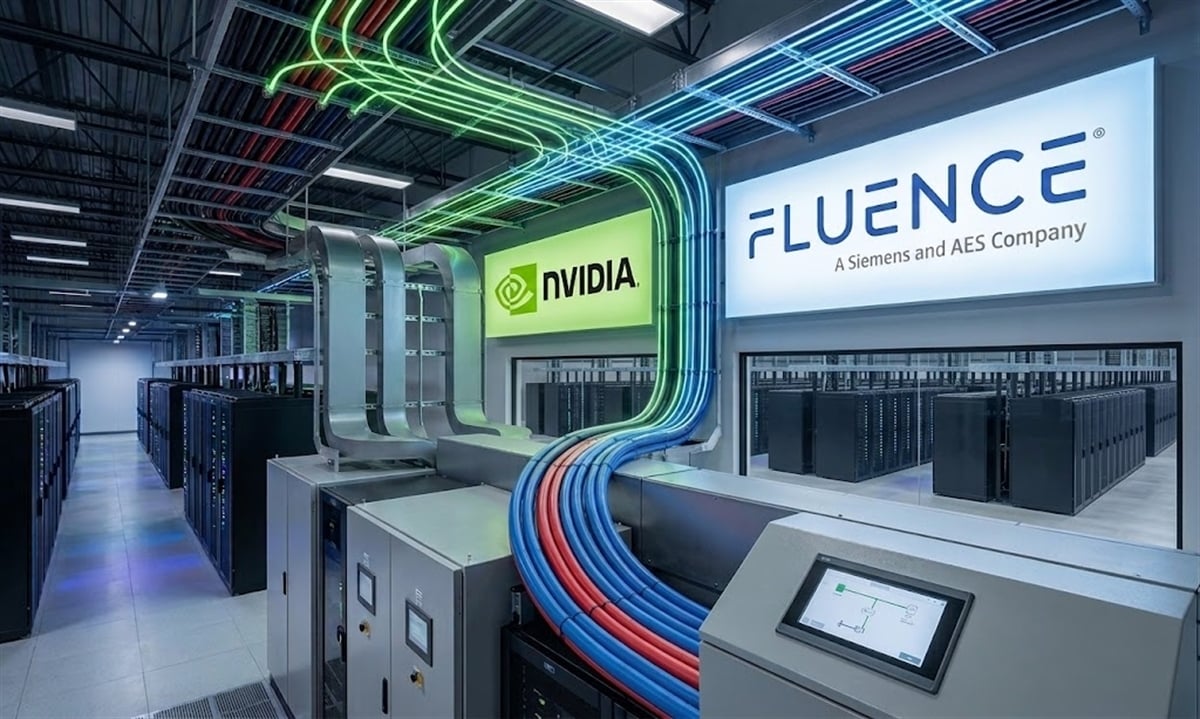
The artificial intelligence (AI) revolution runs on two things: silicon and electricity. While the market remains fixated on the semiconductor designers, the physical constraints of the world's power grids present a far more immediate bottleneck to hyper-scaling AI.
The staggering power density and volatile load profiles of next-generation AI data centers threaten to overwhelm legacy infrastructure. This creates a structural demand for a new class of enabling hardware, and the market is rapidly re-pricing the companies providing the picks and shovels for this build-out.

AI's Dirty Secret: The Power Bottleneck
A standard data center is built for predictable, steady-state power consumption. An AI factory, by contrast, operates at extreme computational intensity, causing massive, dynamic power spikes that can destabilize a local grid.
This is not a problem that can be solved by simply building more power plants; it requires sophisticated, on-site power management and energy storage to smooth loads, stabilize voltage, and provide uninterrupted, clean power to racks of multi-million-dollar GPUs.
Fluence Energy (NASDAQ: FLNC) has abruptly shifted from a conventional renewable energy storage provider to a mission-critical AI infrastructure supplier within this critical niche. Fluence Energy's recent 44% single-day stock price jump was not a speculative move. It was the market digesting a fundamental re-rating of the business, driven by a powerful endorsement from the heart of the AI ecosystem.
How Siemens Put Fluence on the Map
The catalyst that forced this re-evaluation was the unveiling of a new reference architecture by industrial giant Siemens (OTCMKTS: SIEGY). The blueprint details the complete electrical and power infrastructure for a 136-megawatt AI data center built specifically to house the NVIDIA (NASDAQ: NVDA) DSX Vera Rubin NVL72 AI supercomputer. This design is not a theoretical whitepaper; it is an industrial-grade template for the global deployment of hyperscale AI facilities.
Within this critical blueprint, Fluence Energy's SmartStack Battery Energy Storage System is named as the prescribed solution. The system is designed to provide the essential load-smoothing and frequency-ride-through capabilities needed to manage the intense power demands of AI workloads.
The integration specifies battery duration of up to two or three hours, a significant increase from the industry-standard one hour, signaling the unique demands of AI compute.
This endorsement embeds Fluence Energy directly into the technical sales process for NVIDIA's most advanced systems, fundamentally altering its market position and competitive moat.
Following the Institutional Footprints
While the narrative is compelling, Fluence Energy's recent financials require a nuanced view. Fluence Energy reported second-quarter fiscal year 2026 revenue of $464.9 million. While this marked an 8% year-over-year increase, it fell short of the analyst consensus of $622 million. However, the market has chosen to look past this top-line miss, focusing instead on Fluence's forward-looking pipeline.
The bullish case rests on a record $5.6 billion backlog and a newly disclosed 12-gigawatt-hour pipeline specifically for data center projects. This backlog provides significant revenue visibility and suggests that commercial traction is accelerating. Further validating this demand, Fluence Energy has already secured two Master Supply Agreements with major, unnamed hyperscalers, indicating that the need for its BESS technology is both immediate and bankable.
Fluence Energy's dramatic price action was also amplified by technical factors. Prior to the announcement, Fluence Energy had a significant short interest, with 25.19 million shares, or 13.76% of the public float, sold short. The news from Siemens and NVIDIA triggered a short squeeze as bears scrambled to cover their positions, adding mechanical fuel to the rally.
Perhaps most telling is the activity of institutional investors. The stock boasts approximately 53% institutional ownership, and recent 13F filings reveal significant accumulation by sophisticated asset managers. This smart money accumulation signals a high degree of conviction in Fluence Energy's strategic pivot.
Valuing the Gatekeepers of AI Power
The core of the investment thesis is the market's re-categorization of the business. Fluence Energy is no longer being valued solely as a cyclical clean-energy hardware vendor. With a forward price-to-earnings multiple now above 100x, the equity is trading at a premium typically reserved for high-growth technology companies providing critical infrastructure.
Investors must, however, remain pragmatic. The Siemens reference design is a powerful engineering endorsement, but it is not a binding, exclusive purchase order. Management now faces the critical task of converting this technical validation and its broader pipeline into recognized revenue. Execution risk remains the primary headwind.
Nonetheless, the combination of a technical moat blessed by NVIDIA, tangible demand confirmed by hyperscaler supply agreements, and a massive backlog provides a robust foundation for the new valuation. Fluence Energy appears poised to directly monetize one of the most significant and durable tailwinds of the next decade: the build-out of the power grid for artificial intelligence.
For investors, the recent price surge, which pushed the 14-day relative strength index above 70, an overbought level, suggests a period of consolidation may be healthy. Investors bullish on the long-term AI infrastructure theme might view Fluence Energy as a key holding to watch, focusing on the ability to execute on its backlog. The key metric moving forward will be the conversion of its pipeline into tangible, profitable growth, proving it can fulfill its new role as a foundational supplier to the AI revolution.
The article "NVIDIA's New Power Play: Why Fluence Is Surging" first appeared on MarketBeat.