Get all your news in one place.
100's of premium titles.
One app.
Start reading
Tom’s Hardware
Tom’s Hardware
Technology
Mark Tyson

Nvidia Pascal GPUs debuted 10 years ago today, best known for the GTX 1060 and GTX 1080 Ti — architecture kicked off with the Tesla P100

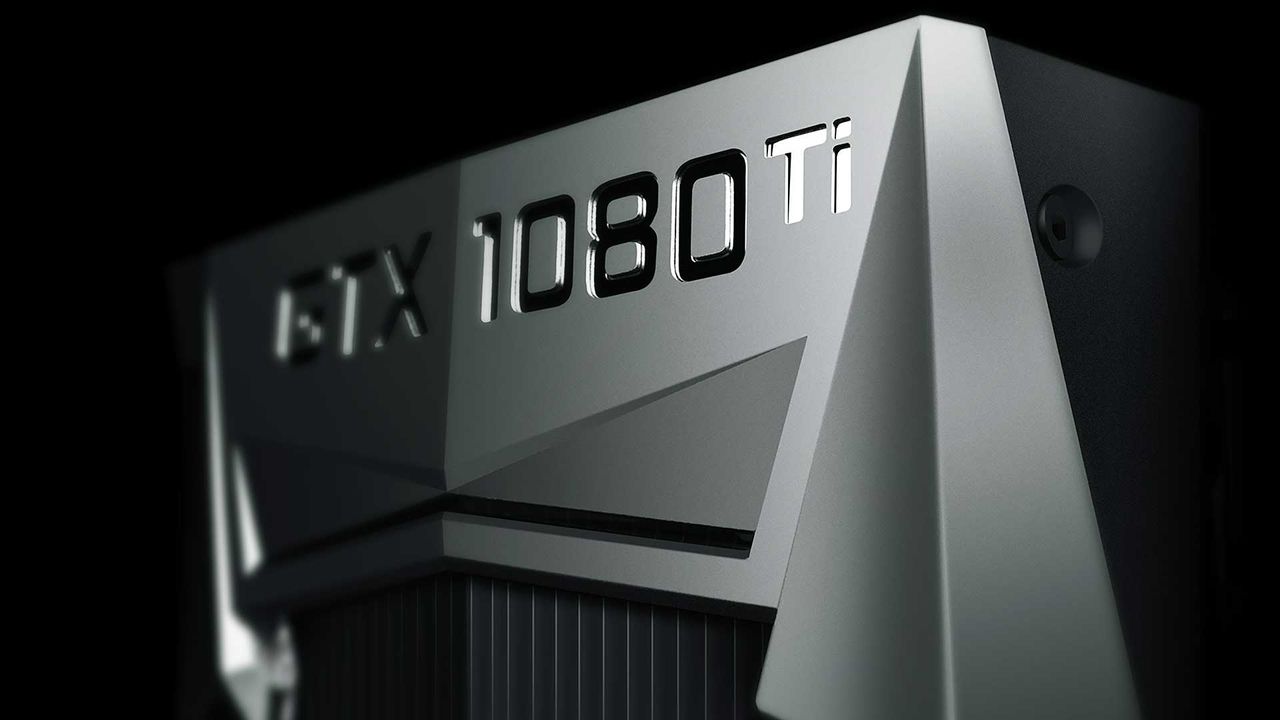
GTX 1080 Ti.

Nvidia delivered “five architectural breakthroughs” with the launch of the Tesla P100 accelerator 10 years ago today. Behind the “most advanced hyperscale data center accelerator ever built” was the new Pascal GPU architecture, probably best known among Tom’s Hardware readers for the GeForce GTX 10 series graphics cards for consumers. The architecture spawned legendary GPUs like the GTX 1080 Ti. It was also the architecture behind the entry/mid-range dominating GTX 1060, which still made the grade as a minimum-level card for 2026’s Crimson Desert.

Go deeper with TH Premium: GPUs
At the P100 accelerator launch, Nvidia spilled the beans on the Pascal architecture. Naturally, it came from the perspective of the hyperscale data center operator, though. Rather than building the foundations for AI slop, Jensen Huang predicted that unleashing this AI processing power would help scientists address “our greatest scientific and technical challenges -- finding cures for cancer, understanding climate change, building intelligent machines.”

The Pascal architecture was undeniably impressive, and in the context of data centers, the P100 was claimed to deliver “over a 12x increase in neural network training performance compared with a previous-generation NVIDIA Maxwell-based solution.”

These new 16nm FinFET Pascal GPUs, featuring 15.3 billion transistors each, could be partnered with CoWoS with HBM2 for 720GB/s memory bandwidth. Moreover, up to eight Tesla P100 GPUs could easily be scaled using the new NVLink.

For PC gamers, the first taste of Pascal came later in 2016, with the debut of the GeForce GTX 1080. You can check out our review of the Pascal GP104-based graphics card at that link. In short, the GTX 1080 was the first consumer graphics card to “deliver next-gen gaming —playable frame rates at 4K or in VR with quality settings cranked up,” noted our graphics card review team.

(Image credit: Nvidia)

However, the majority of GTX 10 Pascal users probably experienced the architecture via the classic everyman card, the GTX 1060. This 6GB card was released with pricing starting at $250 in the summer of 2016. It proved to be a remarkable upgrade for users of previous architectures, and at 120W was capable of coming within striking distance of the prior-gen top-tier GTX 980 (4GB) graphics card for 100s of dollars less. That's what a nice gen-on-gen upgrade looks like.

A year later the king of Pascal GPUs was released, the fabled GTX 1080 Ti with 11GB of VRAM. At the time we noted that it “extended Titan X-class performance to gamers for $500 less.”

When the Pascal GPU architecture was revealed, Nvidia was clearly driving forward with its plans to whittle down its reliance on PC gamers for its revenue. It is indeed good for a business to have a wide user base, and not overly rely on any particular fickle market. However, PC DIYers may feel, 10 years later, that the pivot has gone too far. Now when we watch Nvidia keynotes, we expect hours of droning on about AI and data centers, with only a few occasional morsels thrown to PC gamers and creators.

Pascal GPUs were excluded from the stream of new GeForce Game Ready drivers last October. However, users will continue to get quarterly security updates through to October 2028.

Sign up to read this article
Read news from 100's of titles, curated specifically for you.
Already a member? Sign in here
Related Stories
Top stories on inkl right now
One subscription that gives you access to news from hundreds of sites
Already a member? Sign in here
Our Picks
Fourteen days free
Download the app
One app. One membership.
100+ trusted global sources.