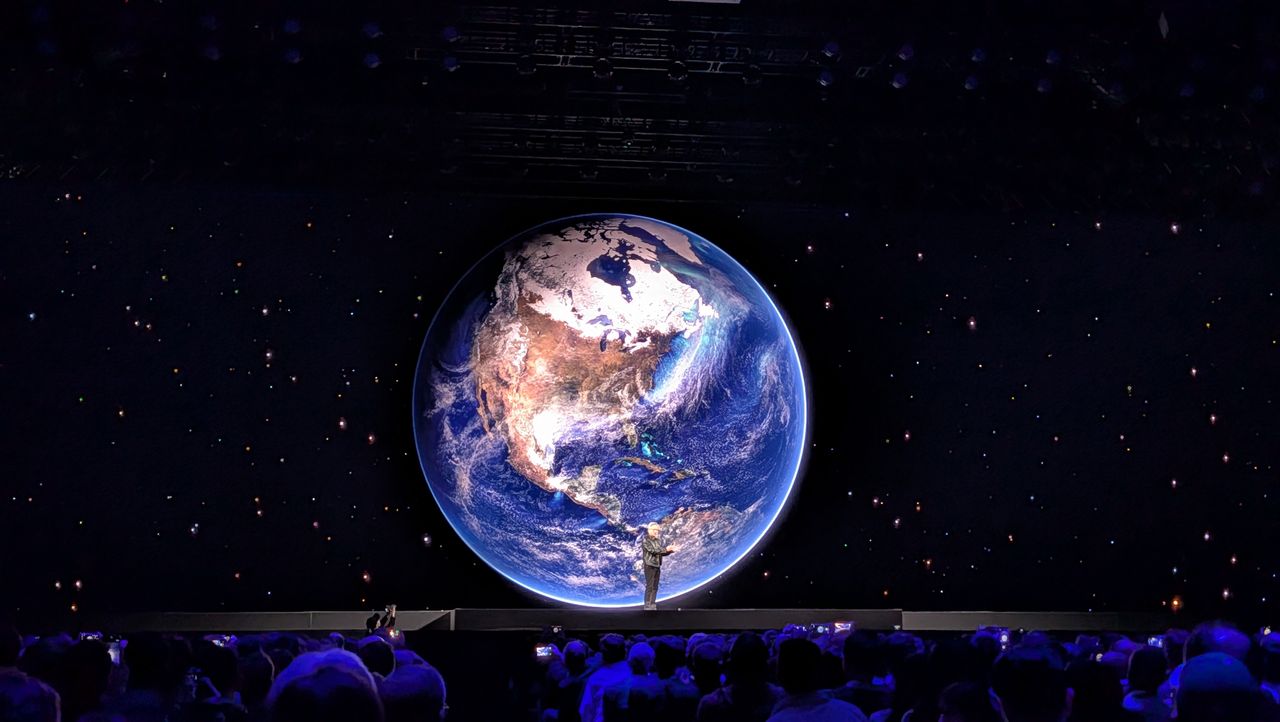
We were live in San Jose for Nvidia GTC 2026, which began as always with the traditional opening keynote from Nvidia CEO Jensen Huang.
As expected, we were treated to a host of news and updates - but if you missed any of the action, read on below to relive it as it happened.
Hello from sunny San Jose! I'm here and ready for the start of Nvidia GTC 2026 tomorrow - come back then for all the build-up to the opening keynote and much more.
Good morning from San Jose - our jet lag has us up very early (it's 6am California time) so there's still a few hours to go until the opening keynote of GTC 2026 - we're off to get some coffee.
So what can we expect from this morning's keynote? Nvidia is undeniably one of the most eye-catching companies in the world right now, arguably leading the way in helping AI development - so be ready for that.
The company has also made several high-profile acquisitions recently, so we may get a look at how these partnerships are helping push the company forward to become the world's richest company right now.
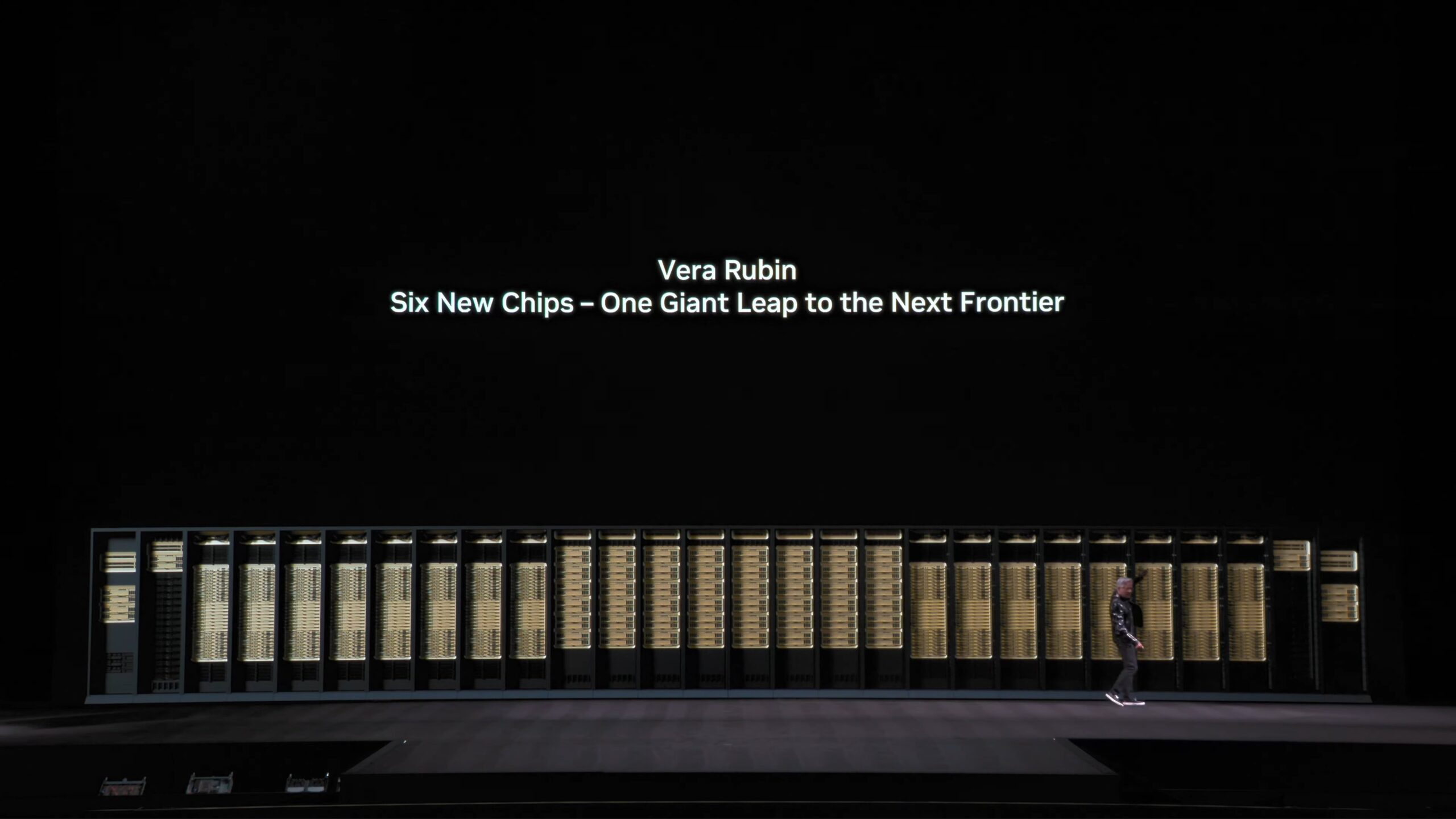
It will be amazing if we don't hear more about Vera Rubin as well - Nvidia's latest AI hardware family has been a major source of interest for the last 12 months, (particularly at CES 2026) so prepare for the next updates there.
Robotics should also be a key focus, as Nvidia has increasingly diversified into this field over the last few years.
At CES 2026, the company revealed a new open source model for autonomous vehicles, improvements to agentic AI models, impressive hardware upgrades for factories, and even some new adorable robotic friends - so expect more of that too.
And finally - probably something completely unexpected. Jensen Huang is one of the biggest showmen in global tech, and he knows how to keep the crowd interested.
We're also intrigued to see which leather jacket he'll be sporting today - will it be a new number, or a tried-and-tested favorite?
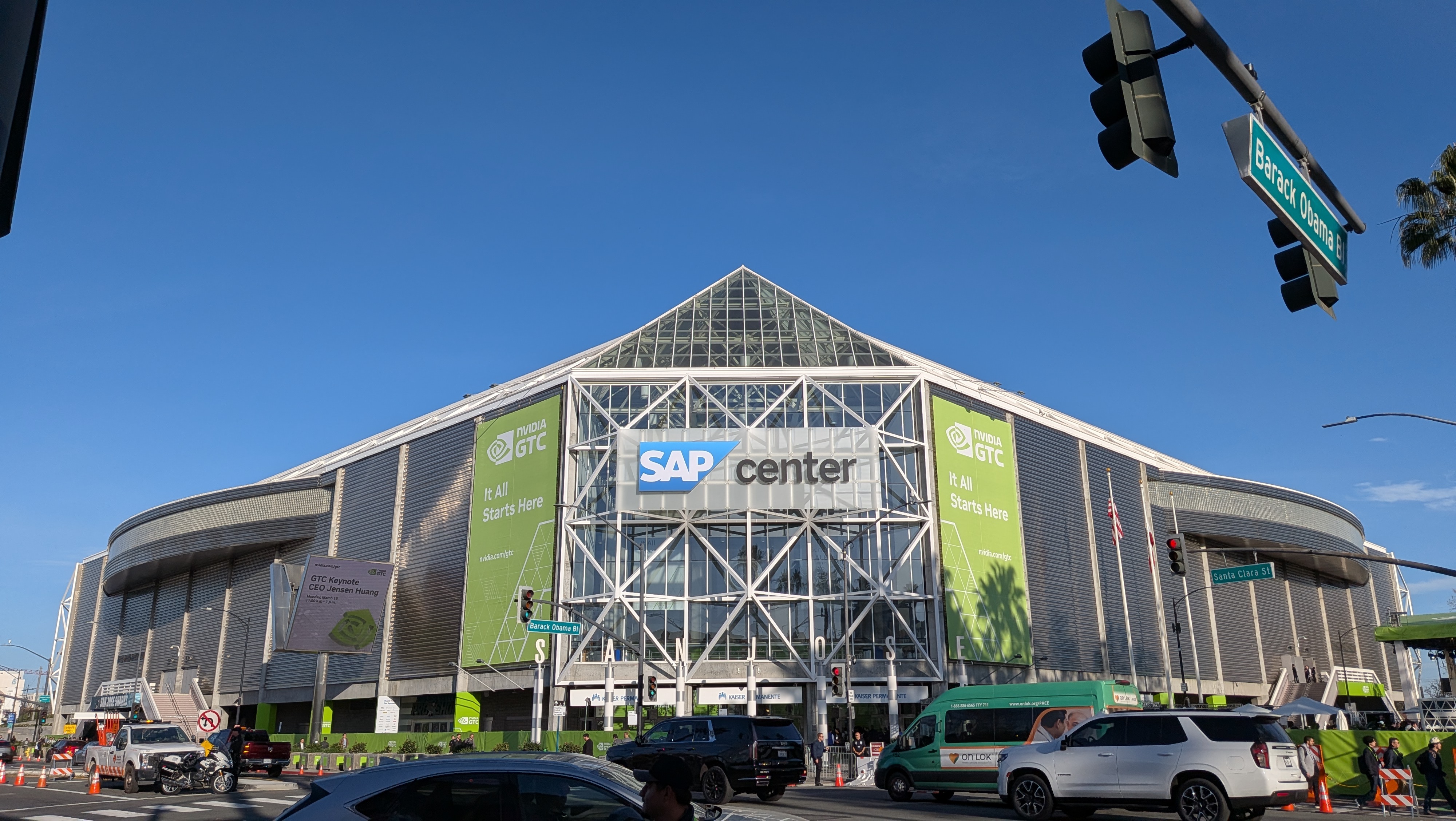
There's just under two hours to go until kickoff, but we've just arrived at the SAP Center - normally the home of the San Jose Sharks NHL team, but today it's the venue for the opening keynote.
Around 10,000 people will be packed in here soon, so we're going to try and grab a seat and get a good spot to see everything unfold.
About an hour to go until now - if you want to watch along, the keynote will be streamed live on the official Nvidia GTC 2026 website.
Things will be kicking off at 11am PT / 6pm GMT - you can also see it via YouTube below.
Jensen Huang just popped up on the "pre-game" video being shown inside the SAP Center, gatecrashing an interview with OpenClaw founder Peter Steinberger.
There's a little exclusive on his sartorial choice - it's the same leather jacket we saw at CES.
"Just like the Internet made everyone busier, AI will make everyone busier too," he says.
Not long to go now - the SAP Center is nearly full, and to get the appetites whetted for the keynote, we're being shown some videos around the potential of AI - all powered by Nvidia tech, of course
It's nearly time...
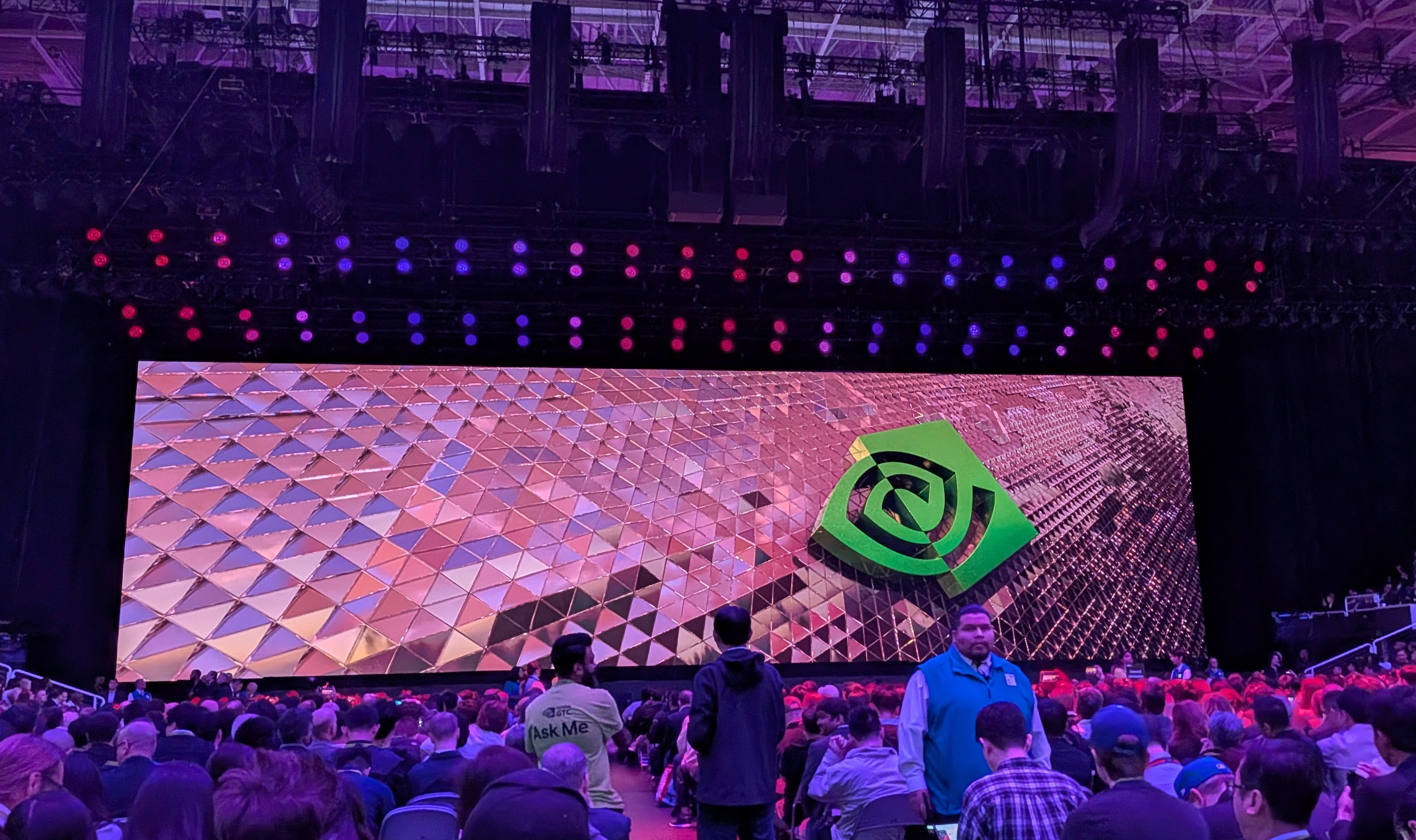
Apparently the technical gremlims which plagued Jensen's keynote at CES 2026 have resurfaced - we're still waiting for the keynote to begin...
Finally - here we go.
After an intro video once again extolling the virtues of tokens, AI and AI factories, the lights come up - and Jensen Huang enters the stage.
"I just want toi remind you, this is a tech conference," he says with a laugh.
We're going to talk about a lot today, he says, including AI, AI factories, hardware and much more.
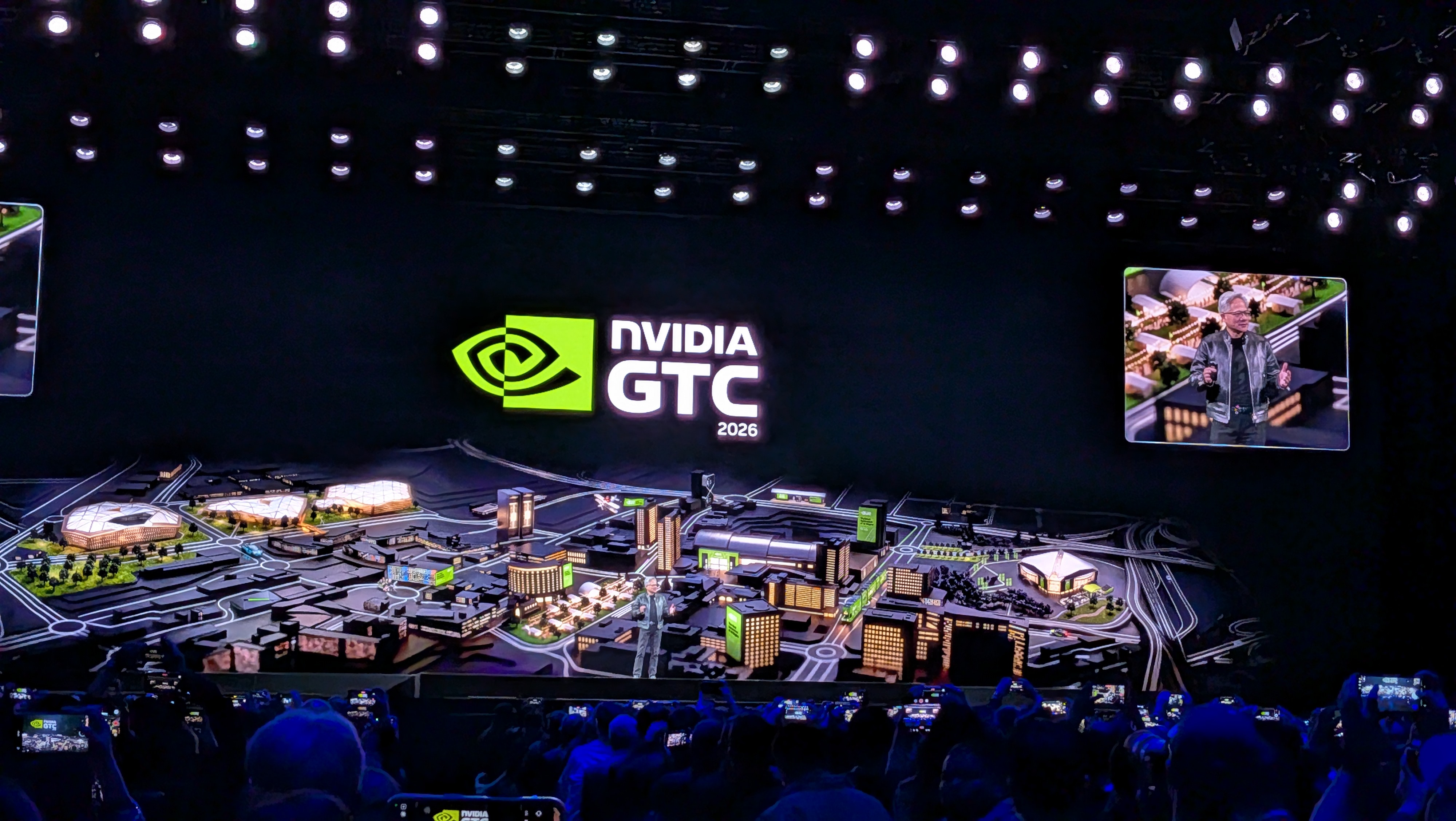
We're taking a look back to start - this is the 20th anniversary of CUDA.
"For 20 years we've been dedicated to this architecture - this revolutionary invention," Huang says.
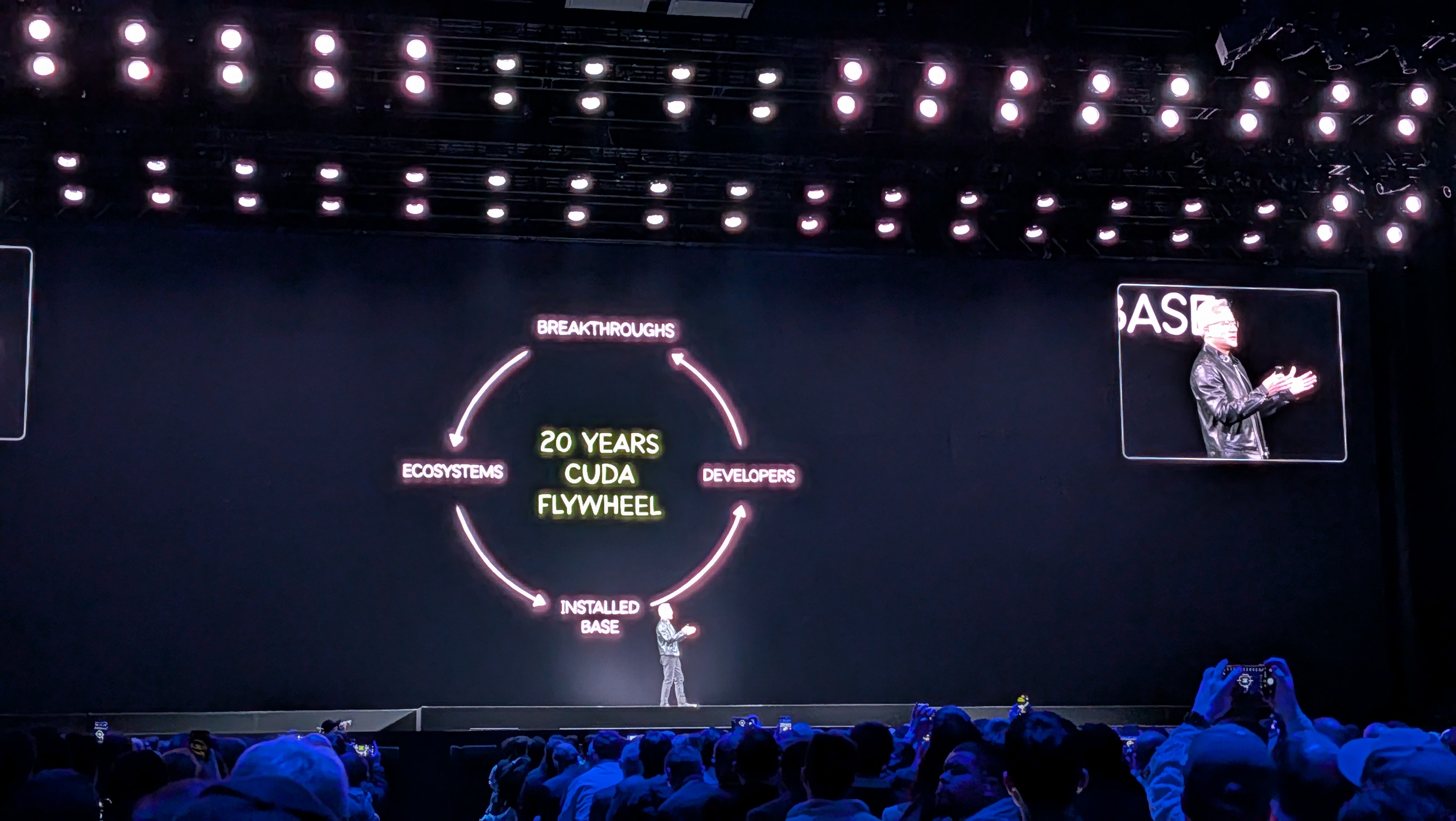
It's also 25 years since the invention of the programmable shader - another major step forward. Huang notes how many of the people in the room may have grown up with GeForce hardware, leading them to become "proper customers" when they became adults.
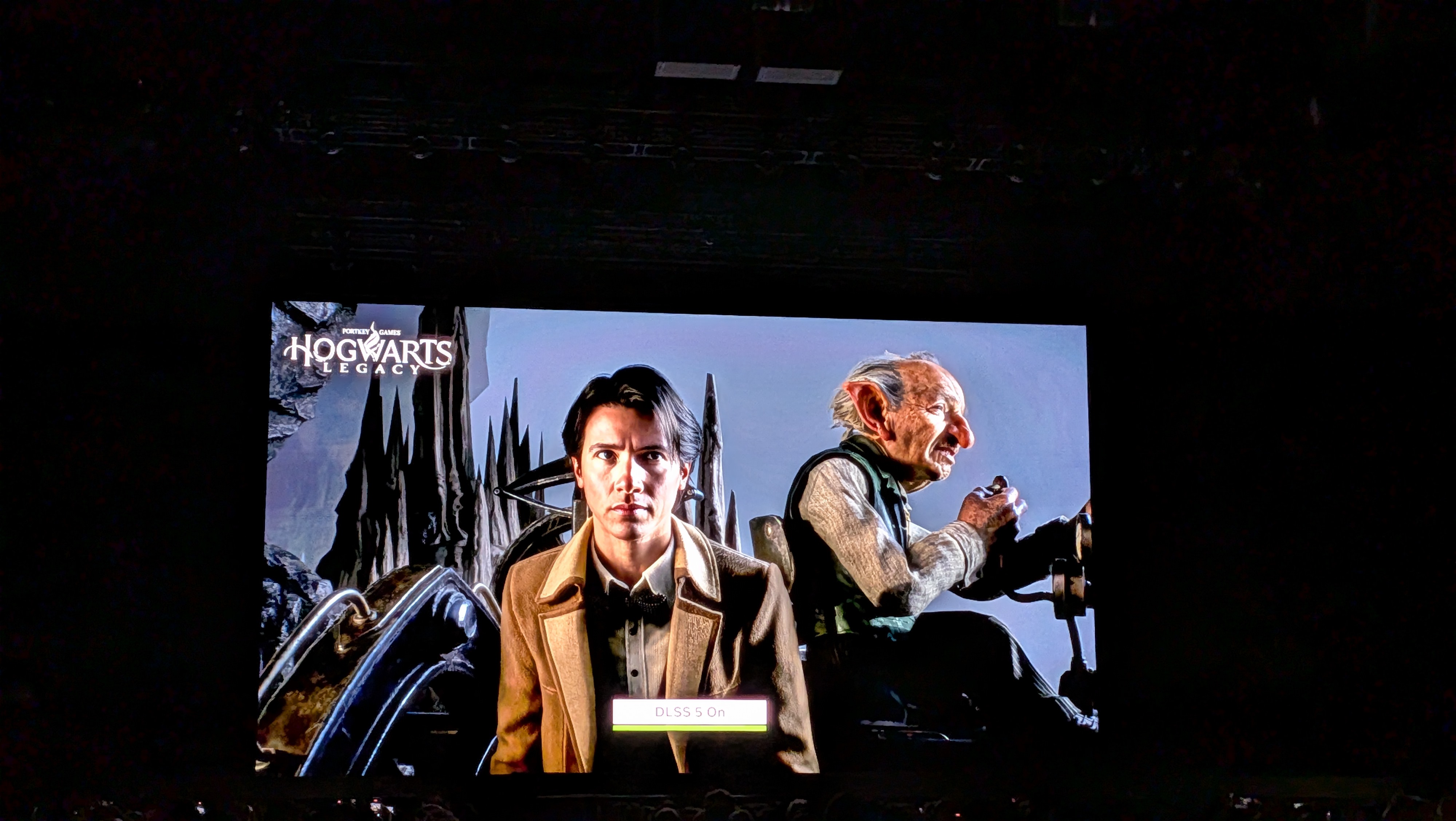
Onto the here and now - Huang starts off with the next generation of graphics rendering - DLSS 5 blends raw computing power and AI to deliver much greater performance than ever.
The new "3D-guided Neural Rendering" blends structured data from generative worlds offers huge steps forward, Huang says - and it won't stop there.
This is a look inside the mind of an Nvidia CEO - Huang jokes his team didn't want to include it, but he says it's the best way to visualize the data world.
"This is the ground truth of business," he notes, "this is the ground truth of AI".
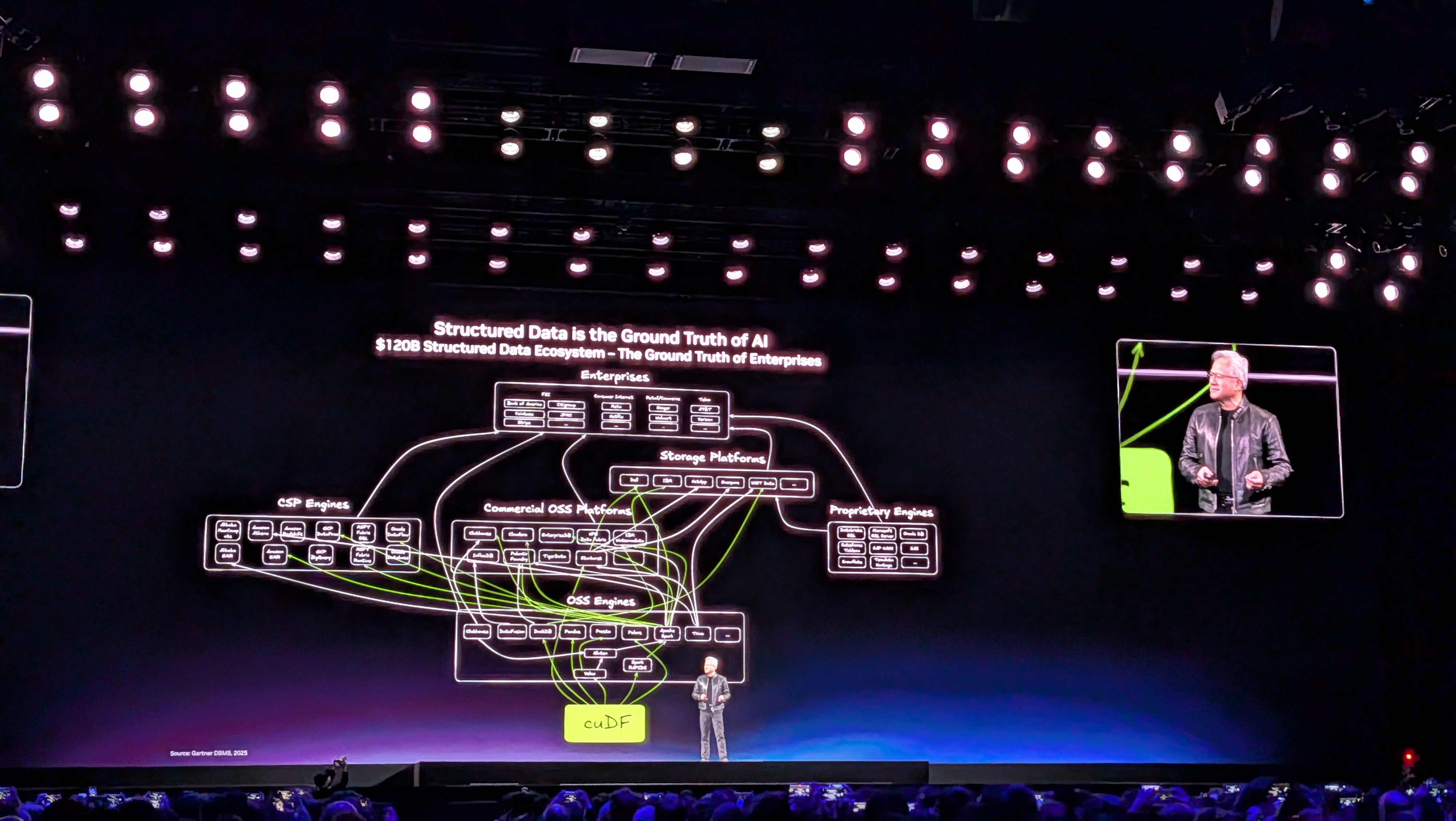
On to some news announcements - Nvidia and IBM are teaming up to accelerate watsonx.data with cuDL, running on Nvidia GPUs.
This will help reimagine data processing for the age of AI, Nvidia says, giving smoother access to larger and smarter data sets.
On-prem isn't being left out - Nvidia is working with Dell Technologies and NTT Data to create a new AI Data Platform for cuDF, and Google Cloud to work across its Cloud AI Hypercomputer.
"When you accelerate data computing, you get the benefit of speed, the beenfit of scale - and the benefit of cost," Huang notes.
Such accelerated computing is conquering Moore's Law, Huang says - "we need a new way of doing things".
"Together, we're able to reach the world."
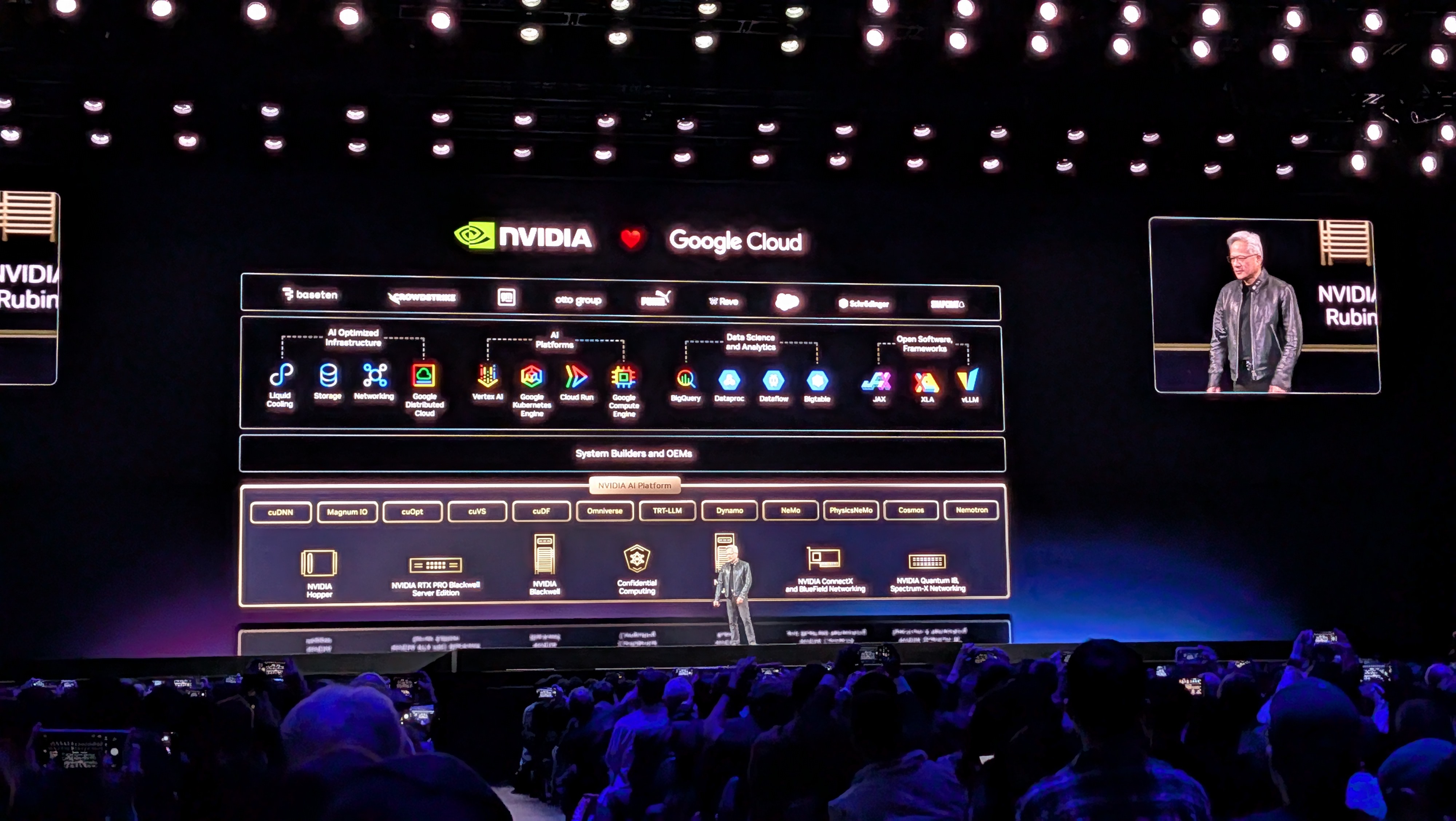
Unsurprisingly, Jensen says "there are a lot of customers" looking for accelerated computing.
"Just please, be patient with us," he chuckles.
After a run-through of Nvidia's work across all the major cloud hyperscalers, it's time to look at what's missing from accelerated computing - applications.
"We are a vertically-integrated computing company - there is no other way," he notes, "and we're horizontally open."
Here's all the verticals Nvidia works across - showing its reach across the whole ecosystem.
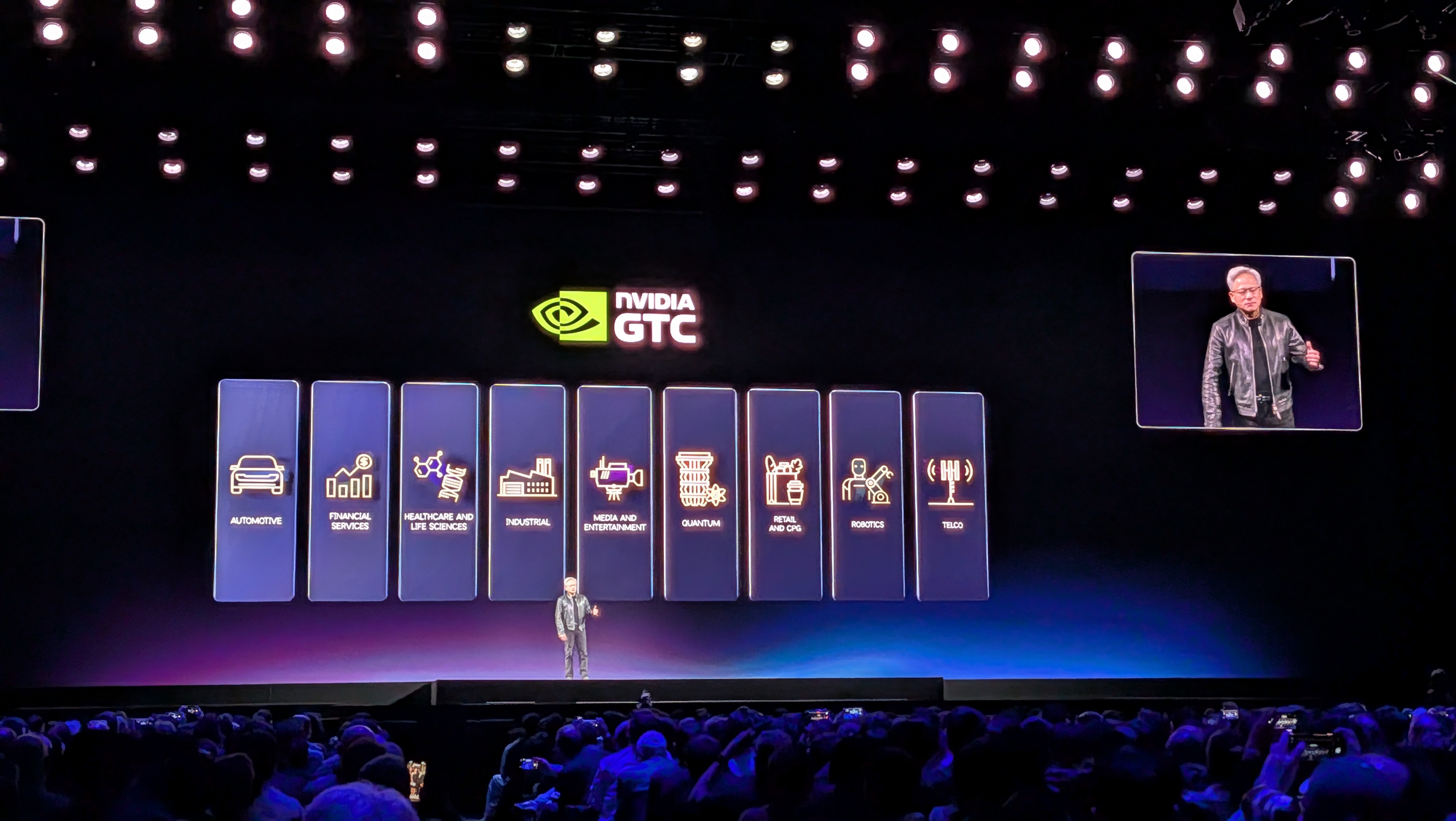
Domain-specific libraries will be the key to solving specific problems across these verticals, Huang notes - from self-driving cars to financial trading, from robotics to video gaming.
We're now looking at CUDA-X, a new type of library to help developers make breakthroughs in the world of AI, from telecommunications to physics.
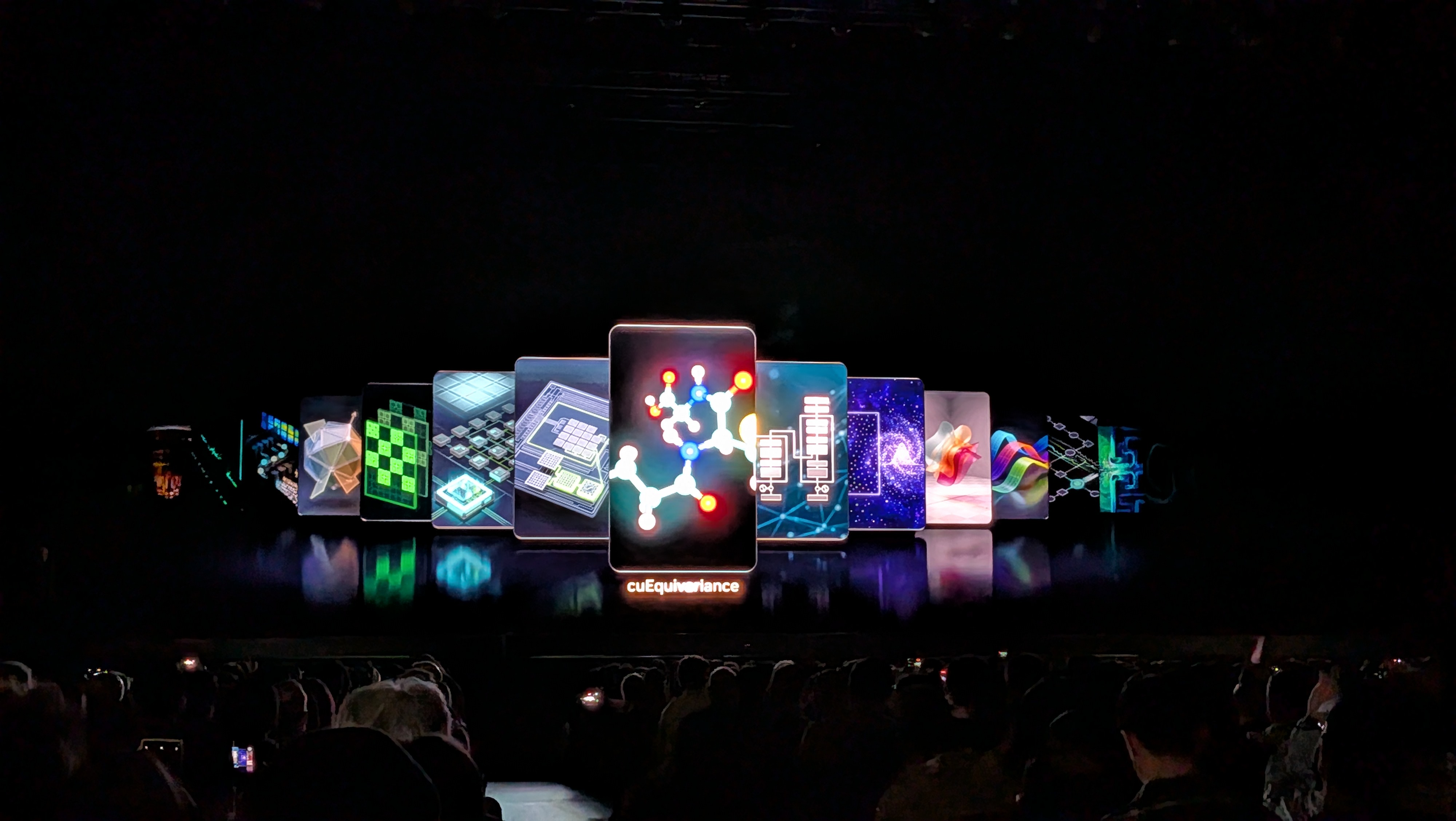
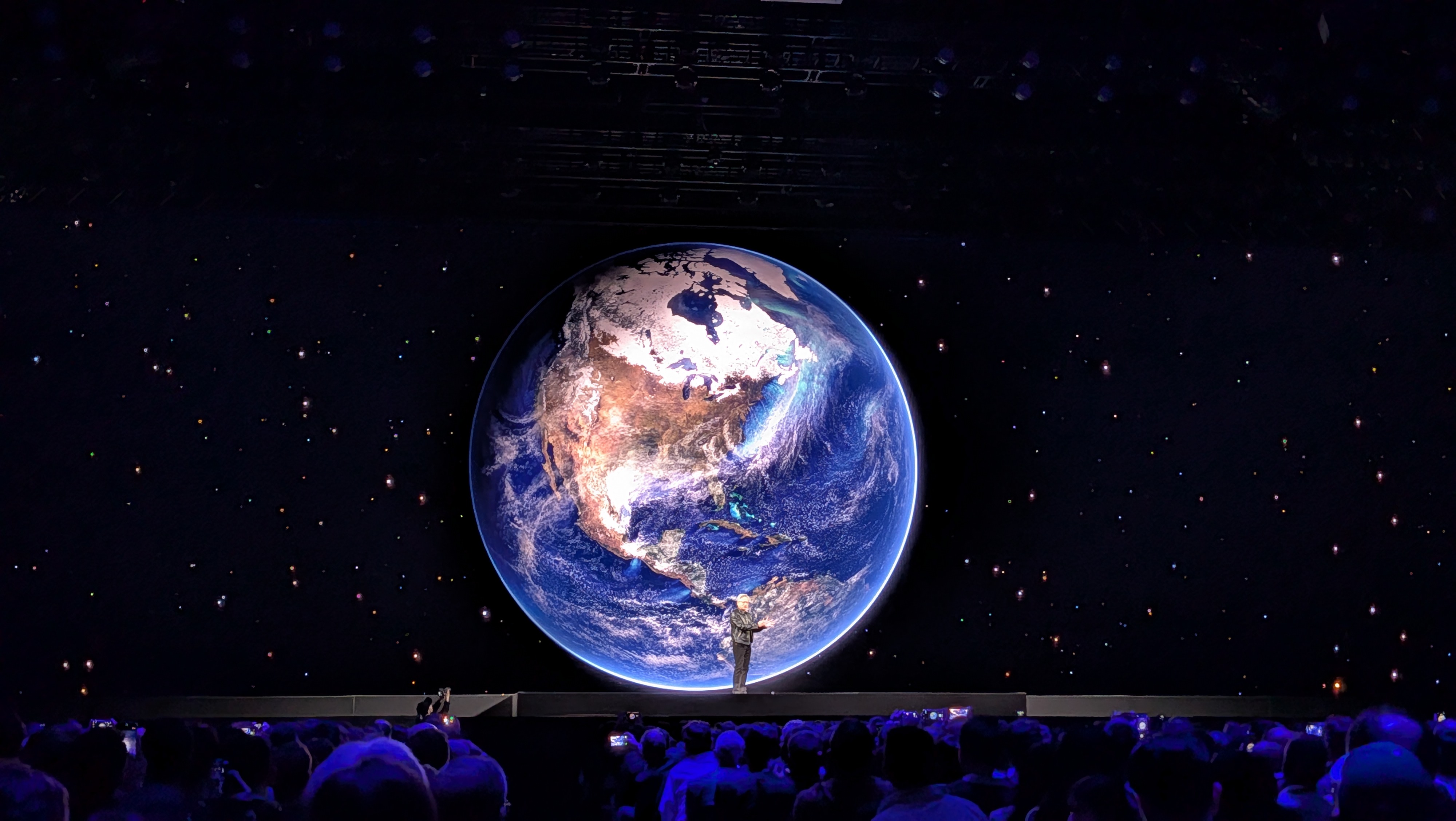
A demo video ends with another massively impressive shot of Earth-2, the company's digital twin of the planet, used for weather forecasting, climate change and more.
Huang then shows us a slide covered in company names - all "AI Natives" - new companies fully embracing the potential of AI, and backed by Nvidia.
Huang notes this moment is one of the highest levels of investement ever seen in human history - mainly because they all need compute power, and tokens.
"This industry is so different in so many ways...but the impact they're making is quite tangible."
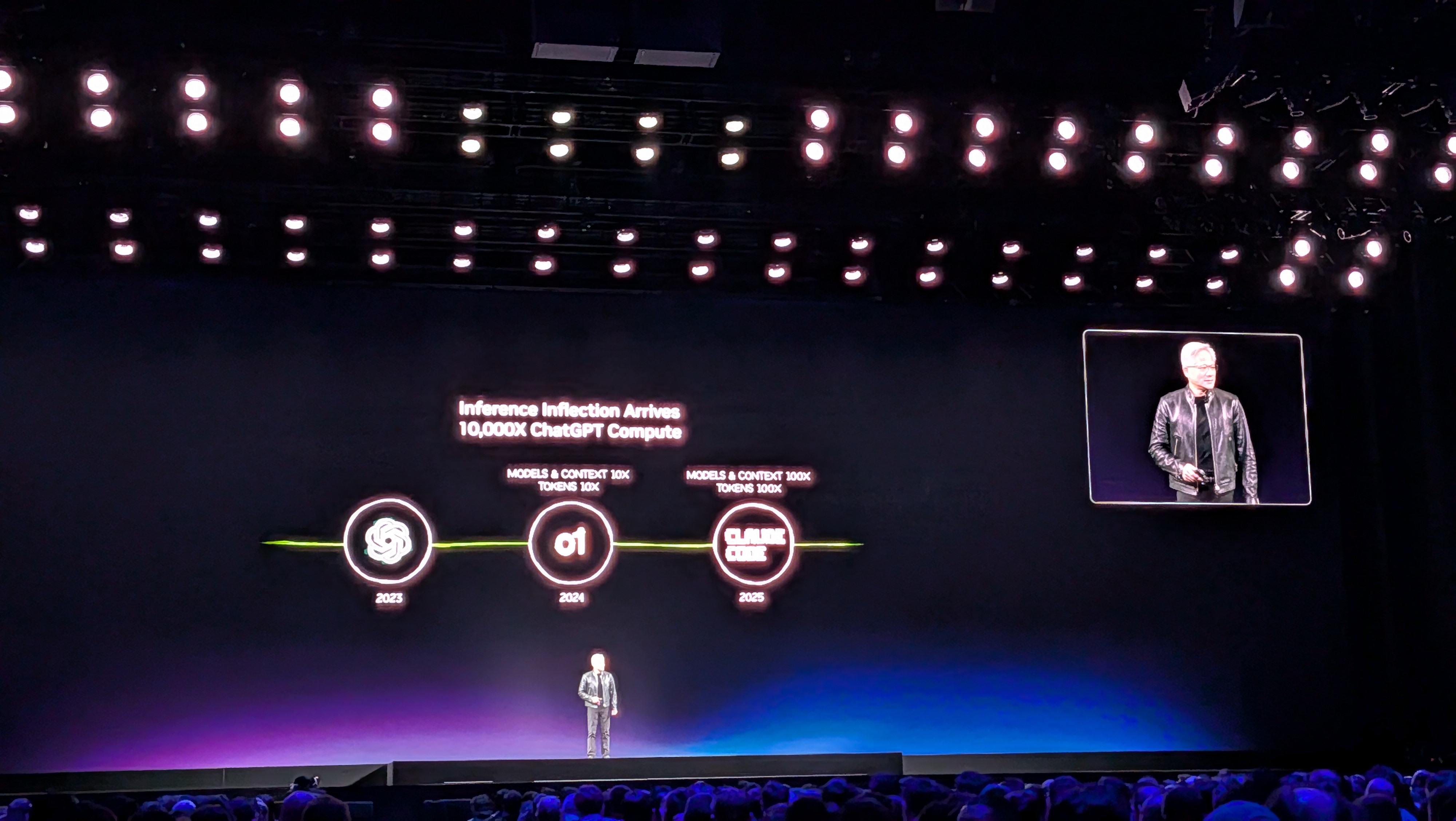
"We are now at the beginning of a new platform shift," Huang continues, noting how the last 2 years in particular have seen an explosion of innovation.
The arrival of ChatGPT has been a huge driver in this, followed by o1 reasoning AI and Claude code, the first agentic model.
"Generative AI...has completely changed how computing is done," he notes.
"There's not one software engineer today that isn't being helped by one AI model, or others," he says.
"You don't ask it when, why how - you ask it to create, do, to use tools...AI is able to do productive work...so the moment for inference inflection has arrived."
Huang says he believes computing demand has gone up by a million times in the last few years - driven by this huge wave of innovation.
"We have reached that moment - the inference inflection has arrived."
Huang estimates around $500 billion worth of orders were expected last year - and this is only set to grow, and right now, "I see through 2027, at least $1 trillion"
Some truly incredible numbers - but will it work out? Huang says he actually believes this may come up short, and demand could be even higher.
He notes how Anthtropic, MSL and other OSS' have come to Nvidia within the last year - with Nvidia running every single domain of AI across every single AI model.
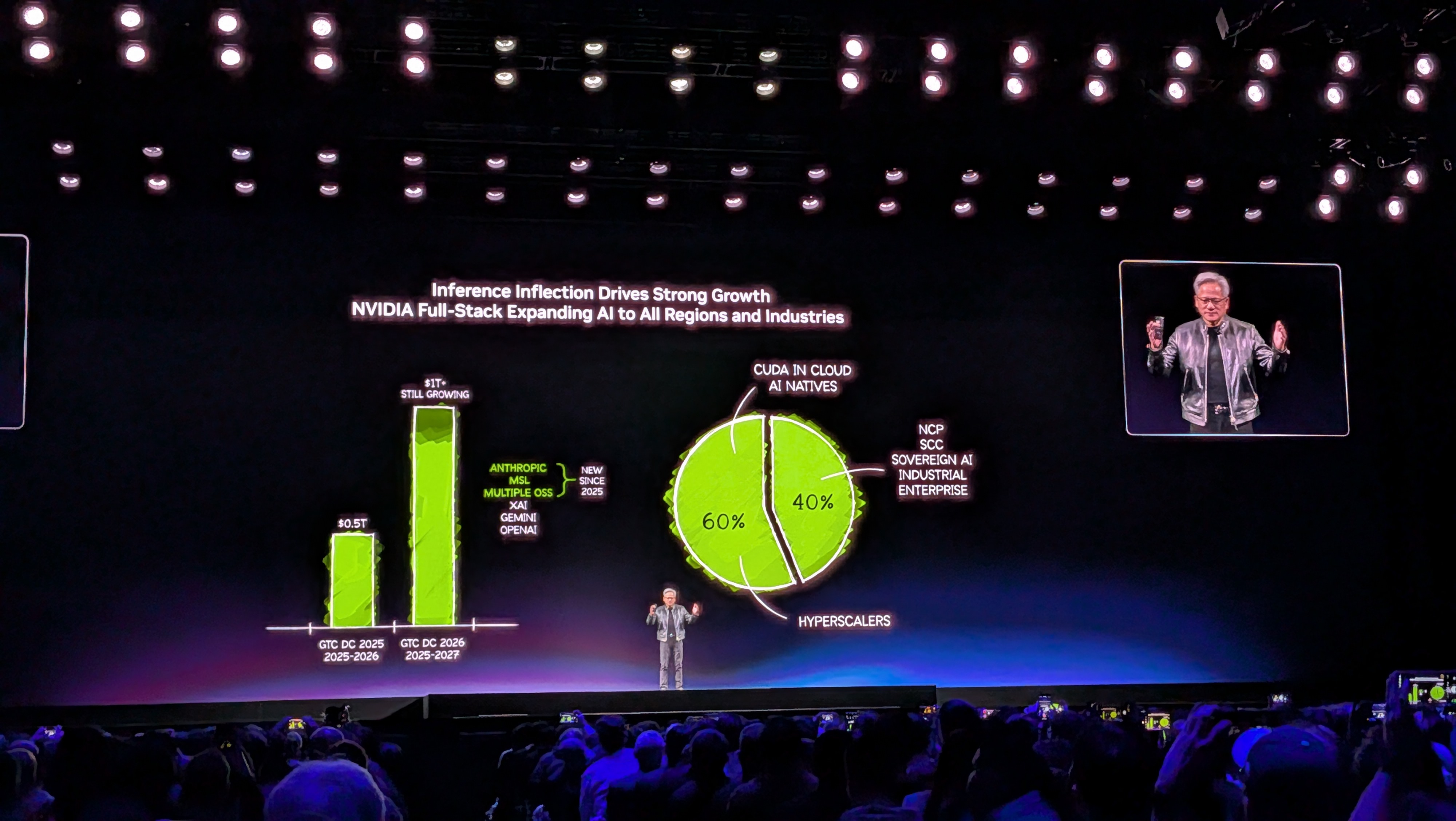
"We are now a computing platform that runs all of AI," Huang declares. "Our job is to continue to advance the technology."
Our first mention of Hopper comes - talking about its restructuring for Grace Blackwell NVLink 72, which even he admits might have been a big risk.
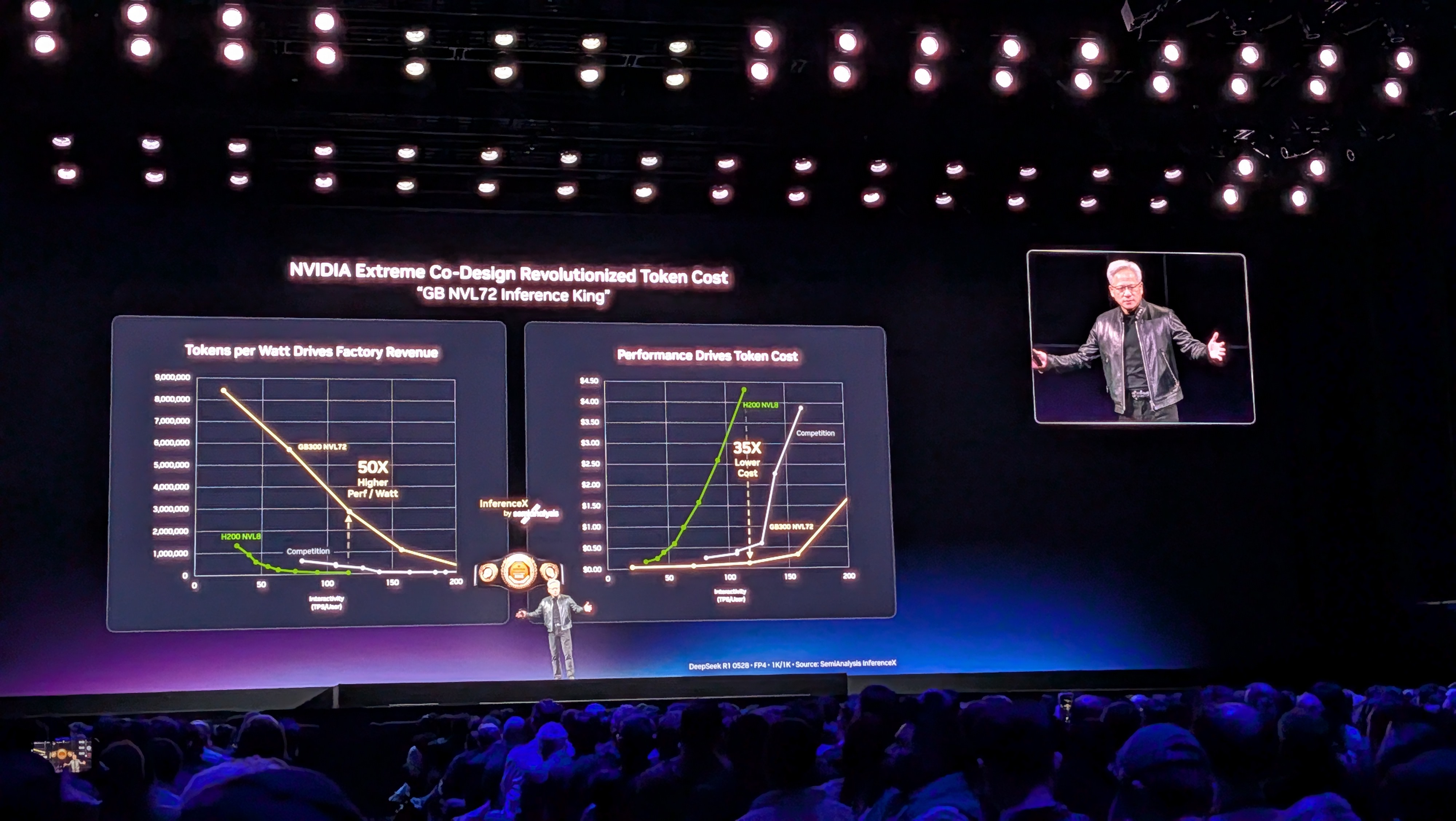
Huang now talks us through which Grace Blackwell NVL72 was a key driver behind AI inference - offering massive leaps in performance, with no effect on speed.
If this is your first Nvidia keynote, you won't know how much Jensen Huang loves a graph, pie chart, line graph and more - and talking us through the lines and findings - and this year is no exeception.
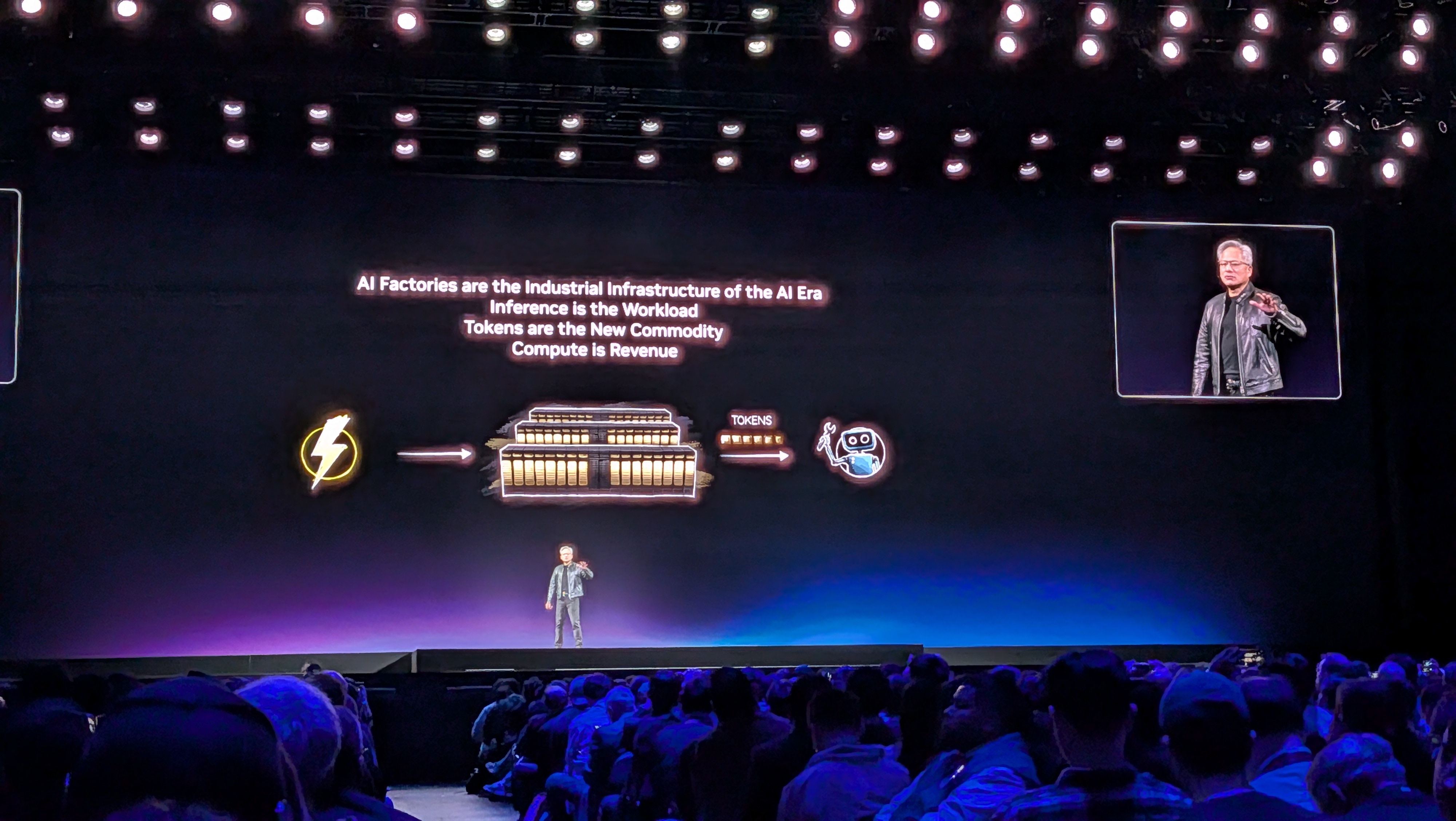
The first mention of AI Factories - which Huang says are "the industrial infrastrcuture of the AI era".
We're then given a run-through of the history of the hardware behind AI Factories - but what's next?
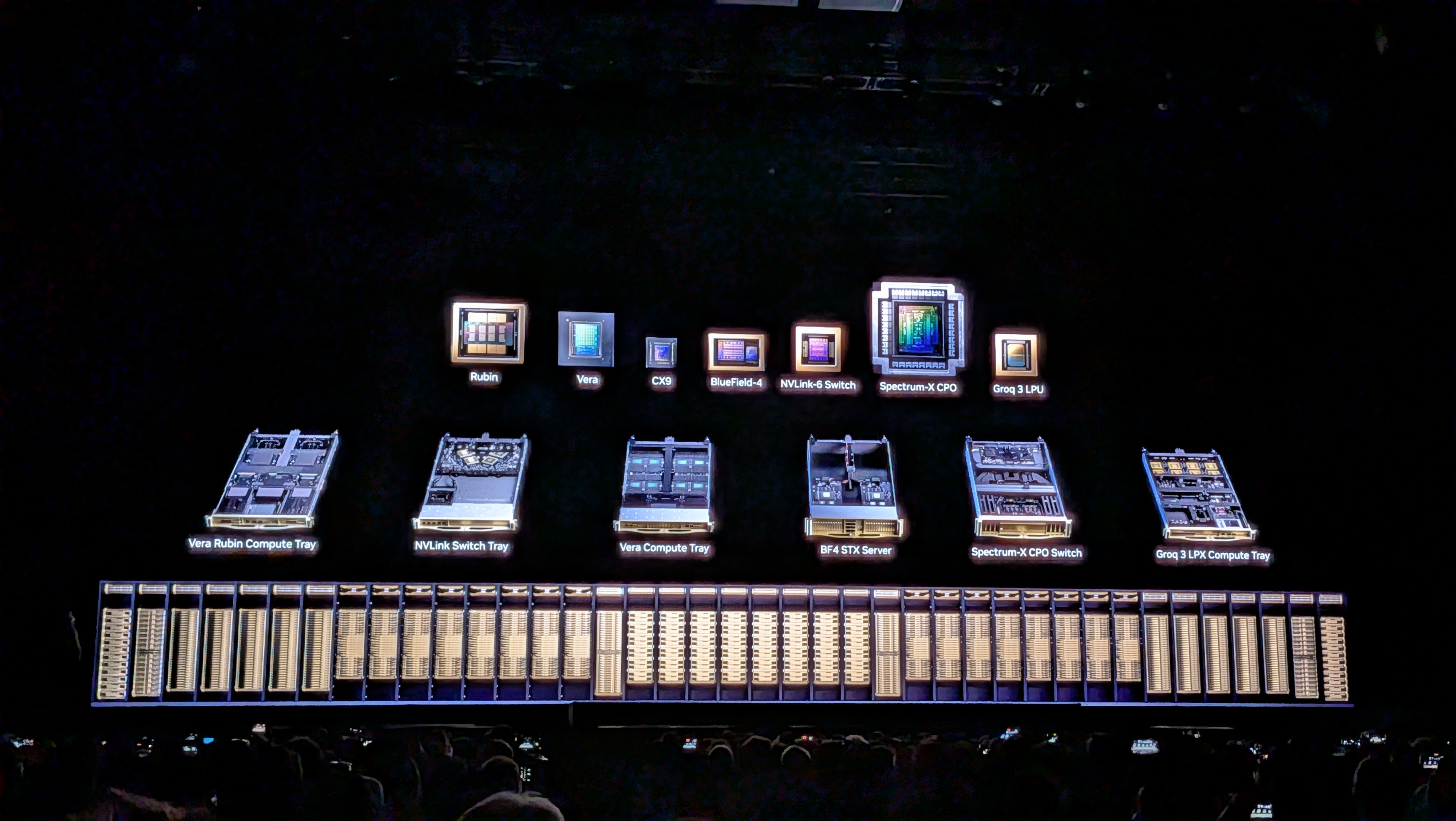
Vera Rubin time - specficially, the newVera Rubin NVlink 72 - "the engine supercharging the era of AI".
The launch represents 40 million times more compute in 10 years - and it's on stage with Jensen.
"We created a brand new CPU designed for super high single-thread AI performance," he notes.
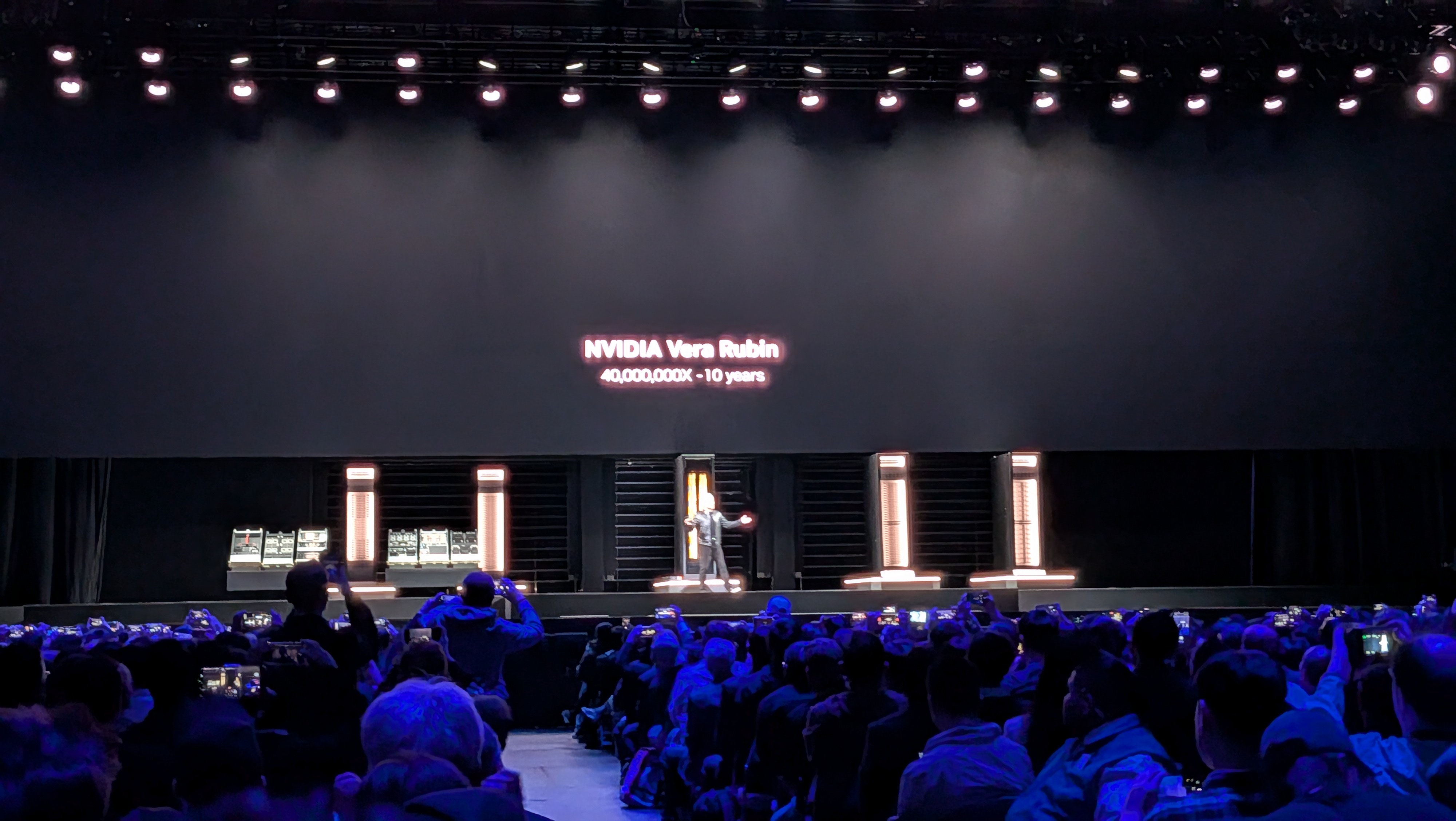
Jensen is now going hands-on with some of the hardware (another trademark of an Nvidia keynote) running us through some of the specifics of the new products.
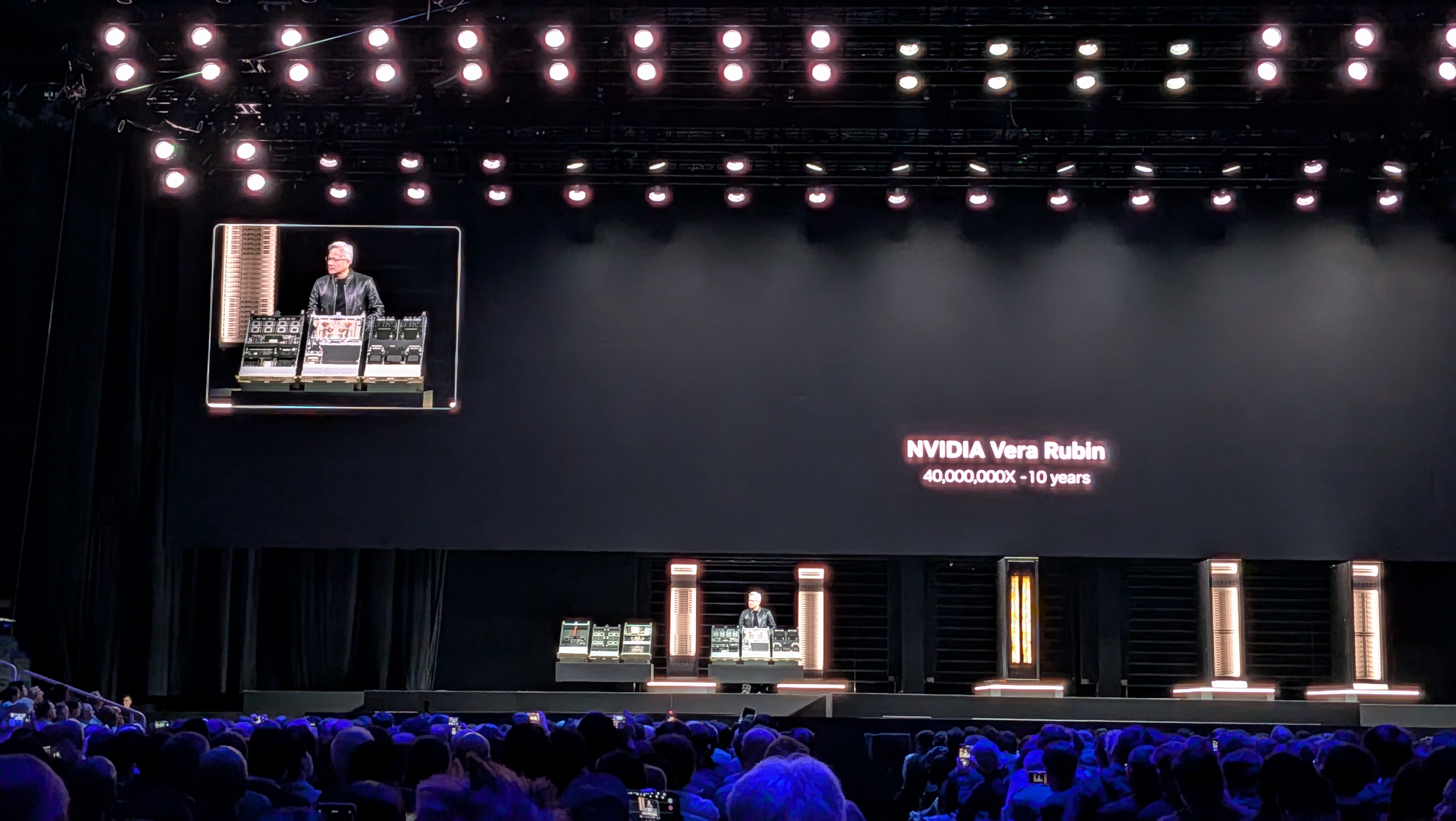
The Vera system offeres twice the performance of any other chip around today, Huang notes, making it a hugely attractive proposition - and one he hopes will be very profitable.
We also see a standalone rack - Jensen says it's heavy, but clearly he's been hitting the gym.
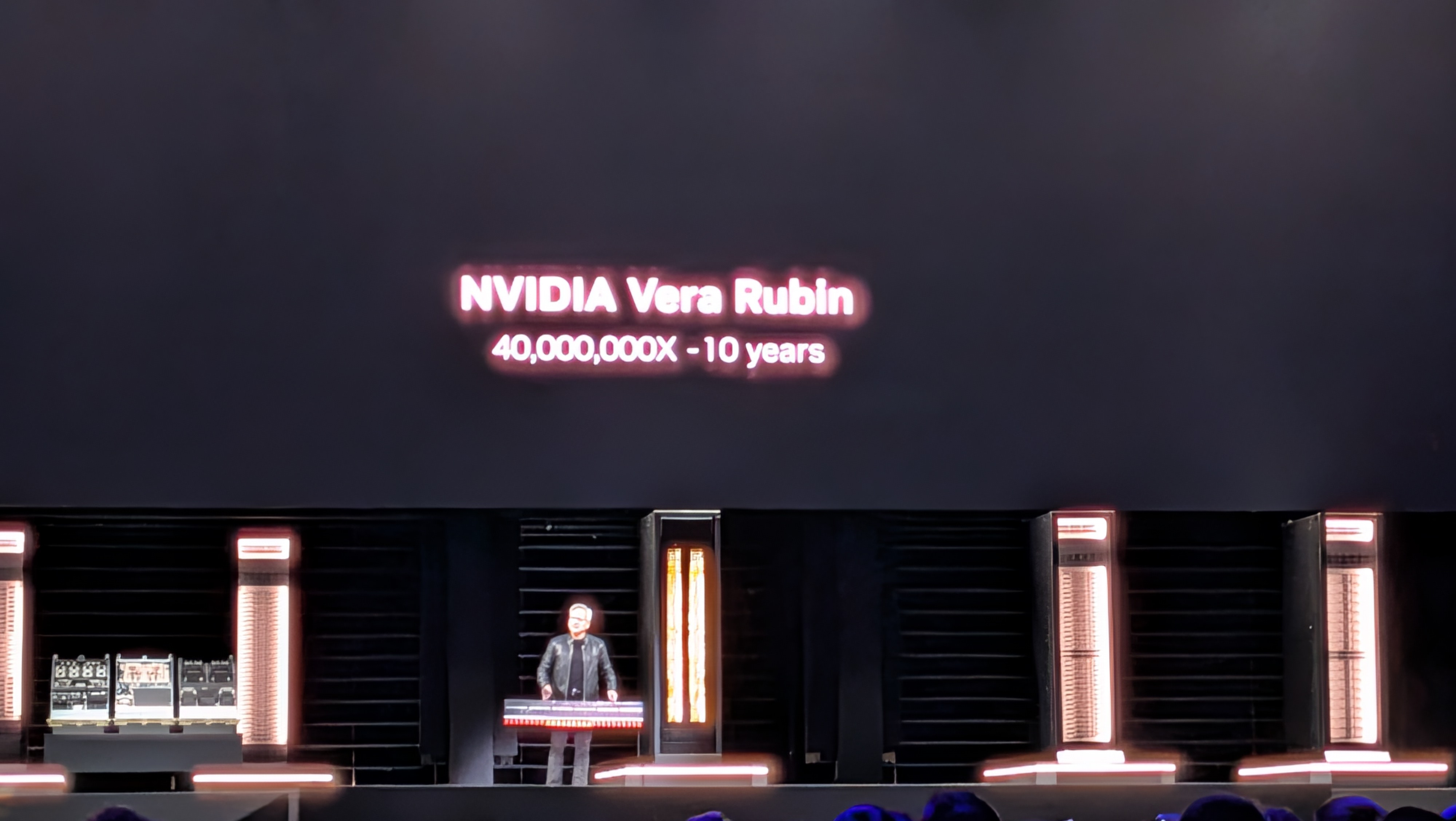
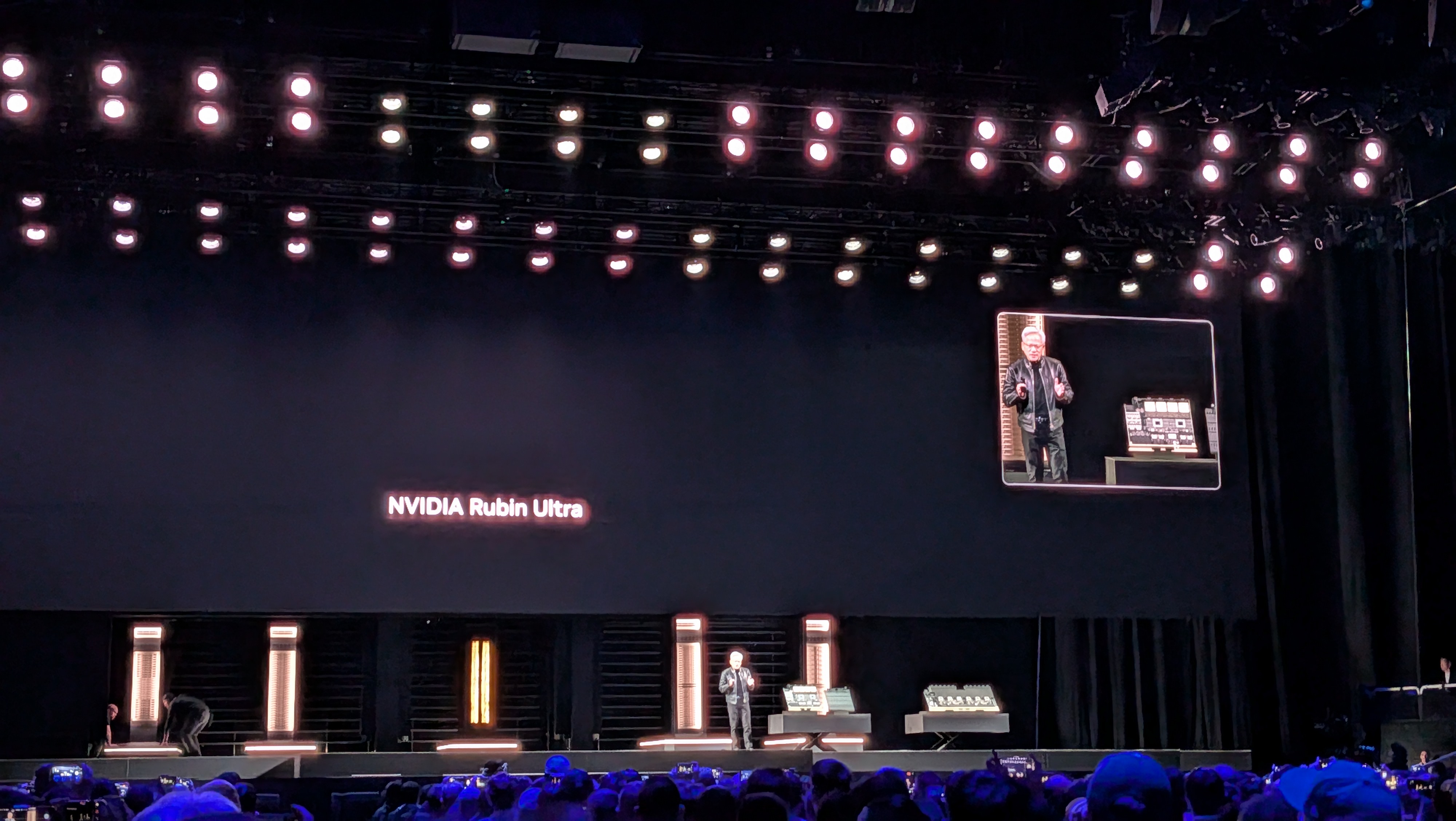
We also get a quick look at Rubin Ultra, which can connect up to 144 GPUs, and is "the new NVlink", Huang notes.
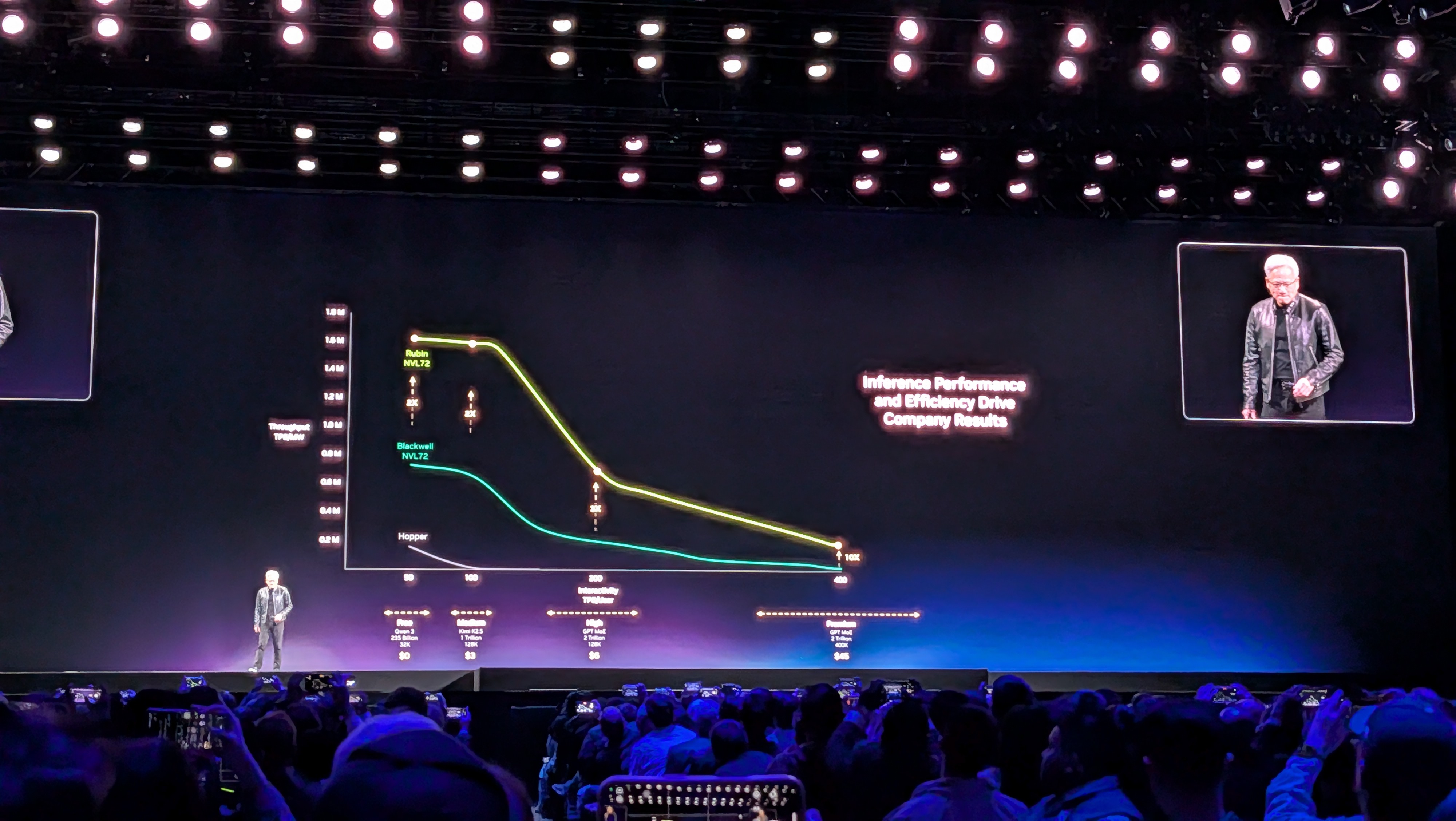
We then have in-depth look at tokens - which Huang describes as "the next commodity" - and how having improved inference performance and efficiency can push company results.
Vera Rubin NVL72 will offer just that - a huge leap from Blackwell, and something which Nvidia says could unlock $150bn revenue opportunity.
"You should get there (to Vera Rubin) as soon as you can," he says.
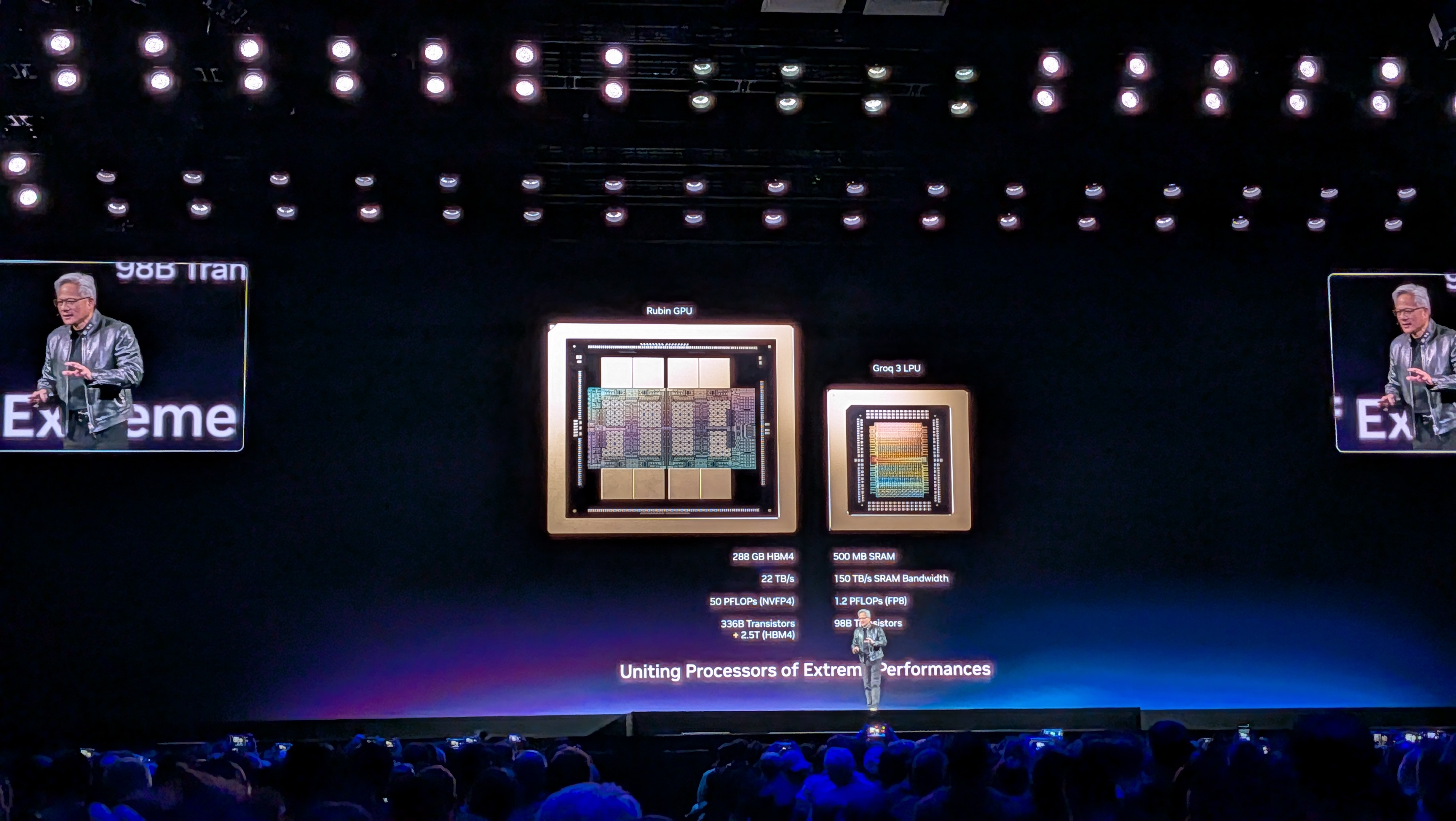
The team at Groq is getting a lot of love from Huang, who extols the value of the work they have done, along with new hardware coming up soon - namely, the Groq 3 LPU, arriving alongside Vera Rubin.
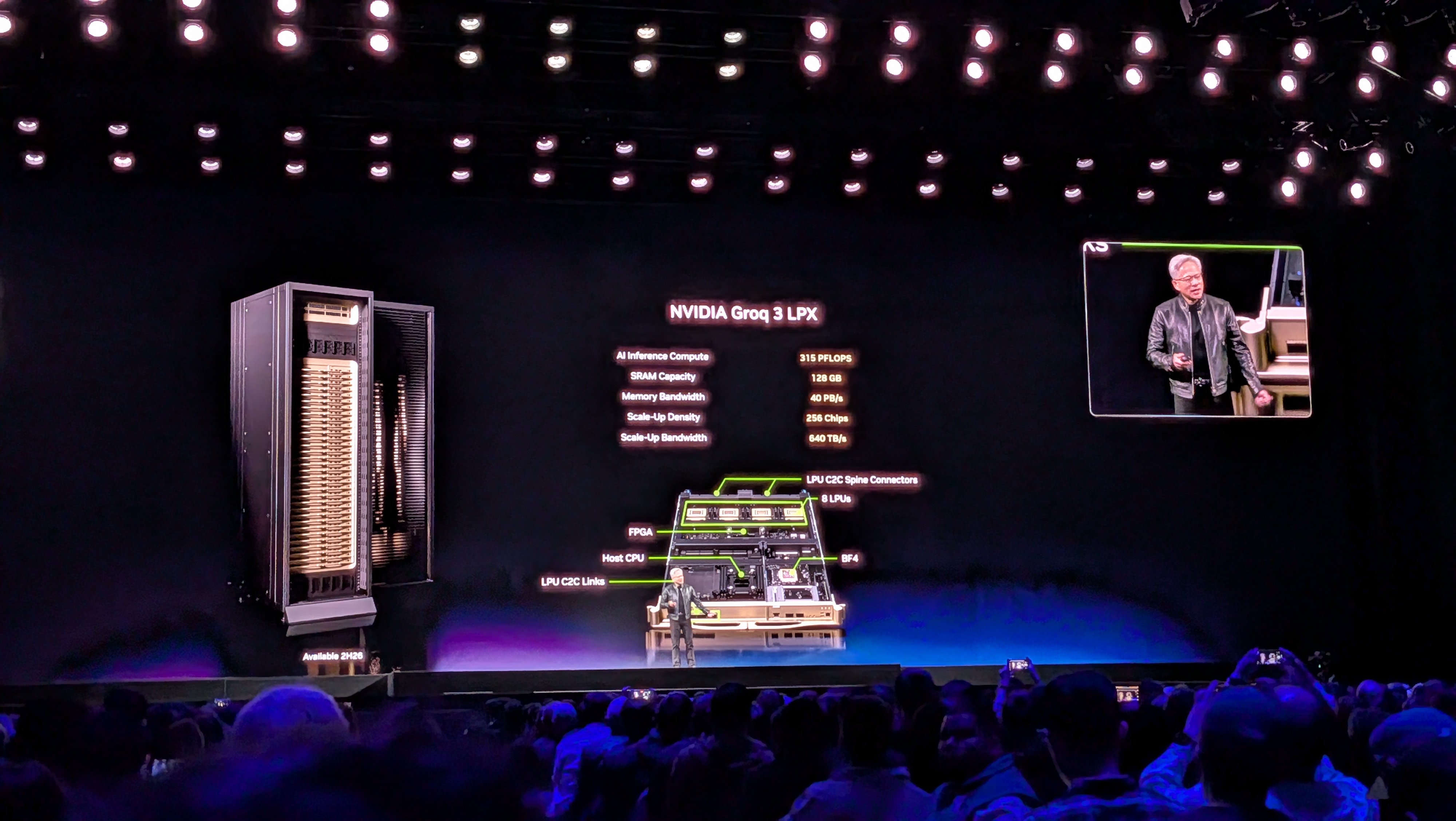
The Vera Rubin systems including Groq looks like a serious piece of hardware, shipping Q3 2026,
There it is - the whole new Vera Rubin family.
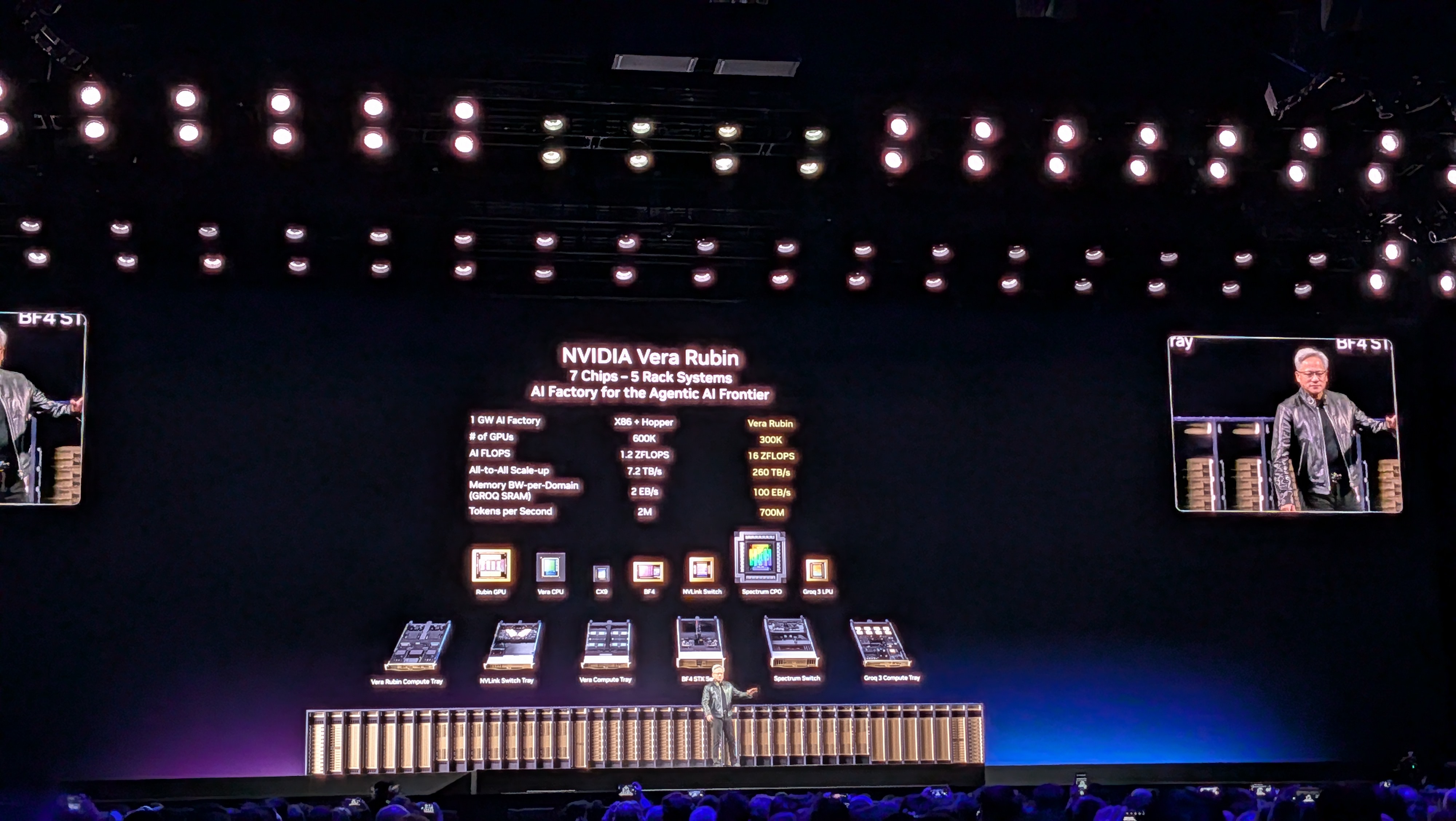
We also get a look at the future roadmap - and for 2028, it's the new Feynman family, offering a new GPU and LPU, a new CPU called Rosa.
Sadly we don't get much more on Feynman yet - but expects to hear a lot more soon...
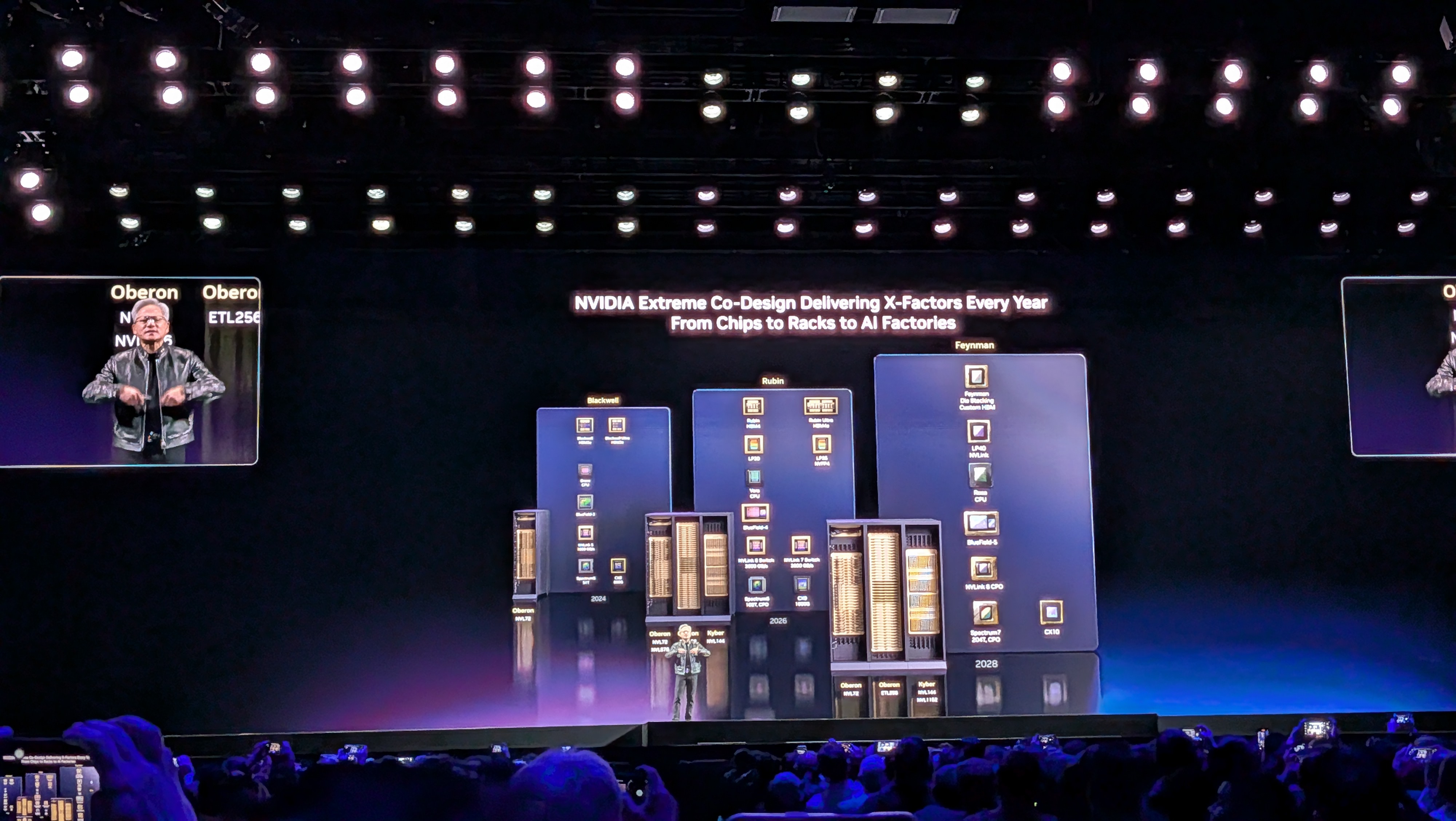
Next, a look at AI Factories - "the largest infrastructure rollout in history", as Huang calls it.
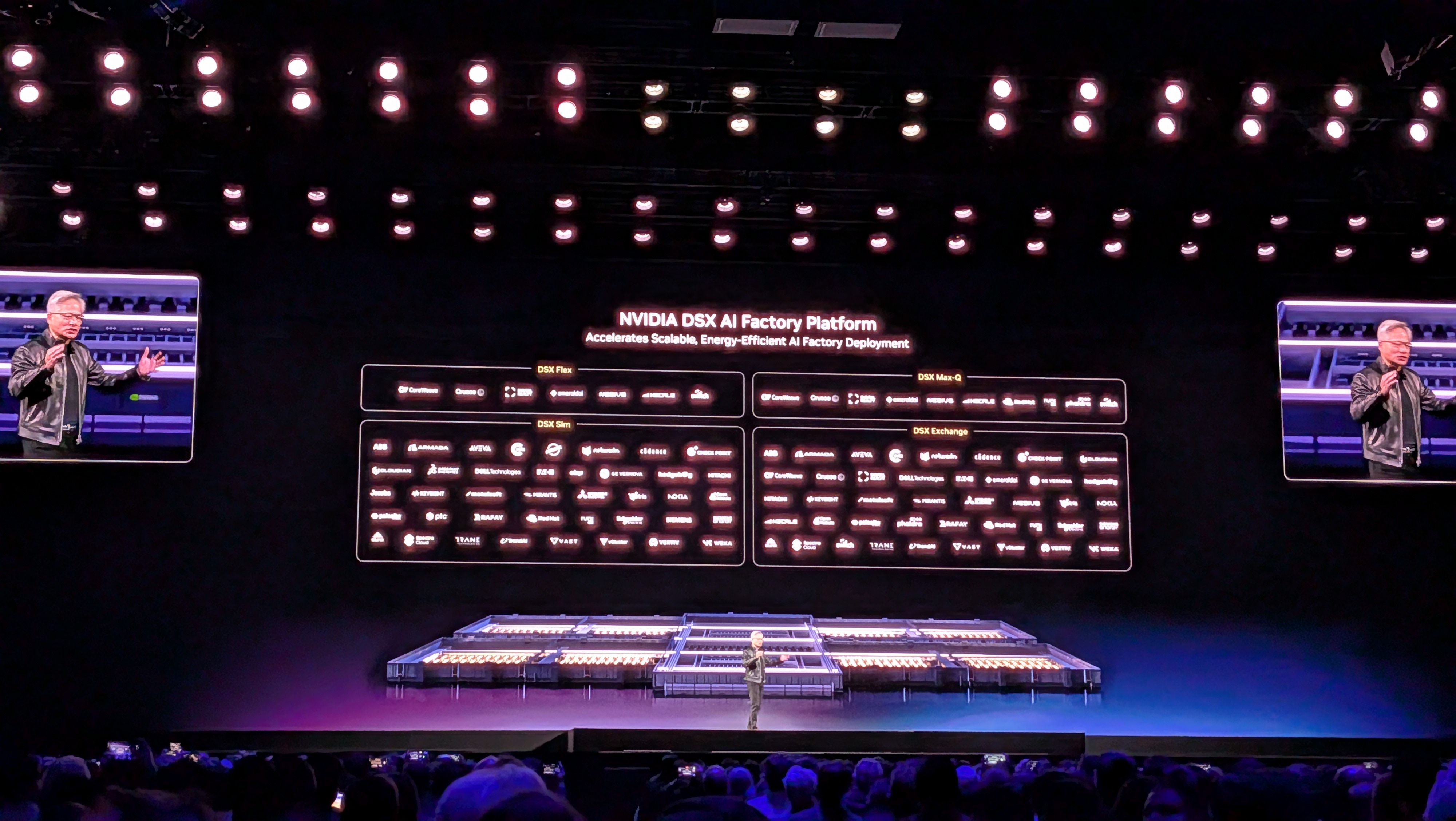
Nvidia DSX is among the new tools aimed at helping companies plan for the new era, letting them automate and simulate the new way of doing things.
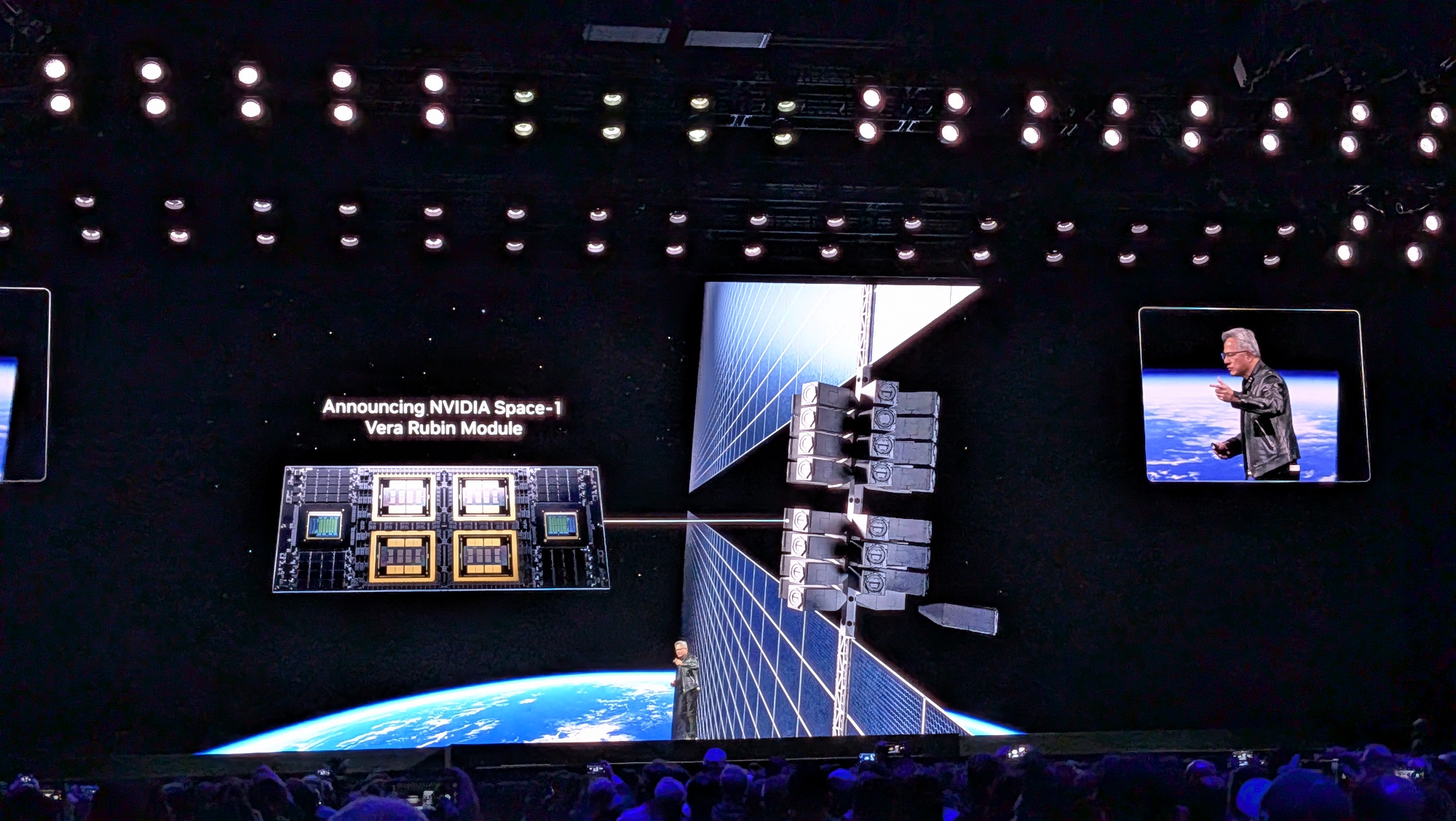
Nvidia is going to space! The new Space-1 Vera Rubin model wants to help take data centers into orbit - sadly, we don't get much more details...
The news is coming thick and fast now - it's OpenClaw time.
Nvidia announced NemoClaw - a new way to get onboard with the hugely popular platform - simply ask, and it will go out and find the info you need.
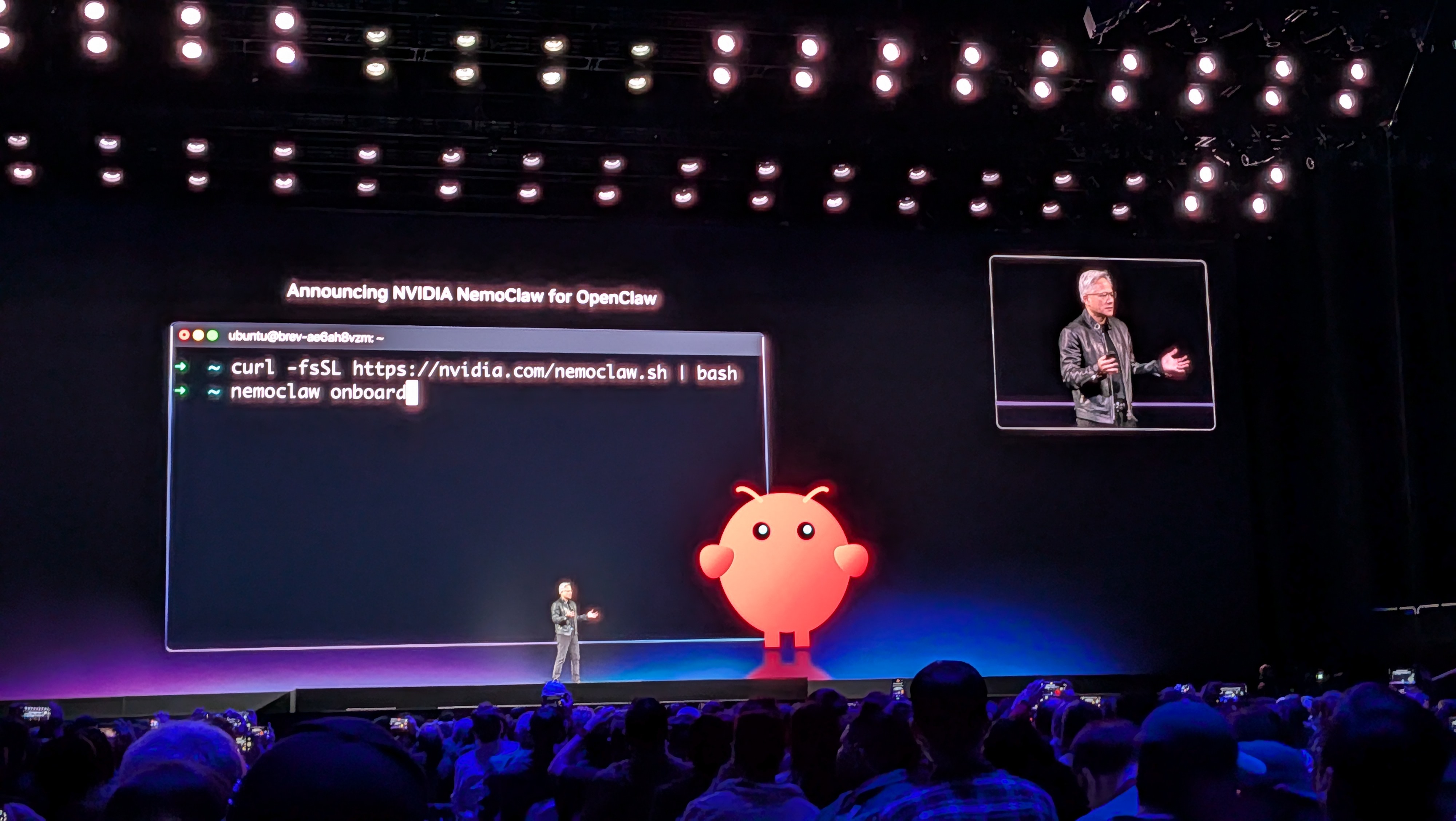
"The implication is incredible," Huang notes on OpenClaw's success, "every single technology company now has to think, 'what's your OpenClaw strategy?'"
"This is the new computer...OpenClaw gave the industry exactly what it needed, exactly at the right time."
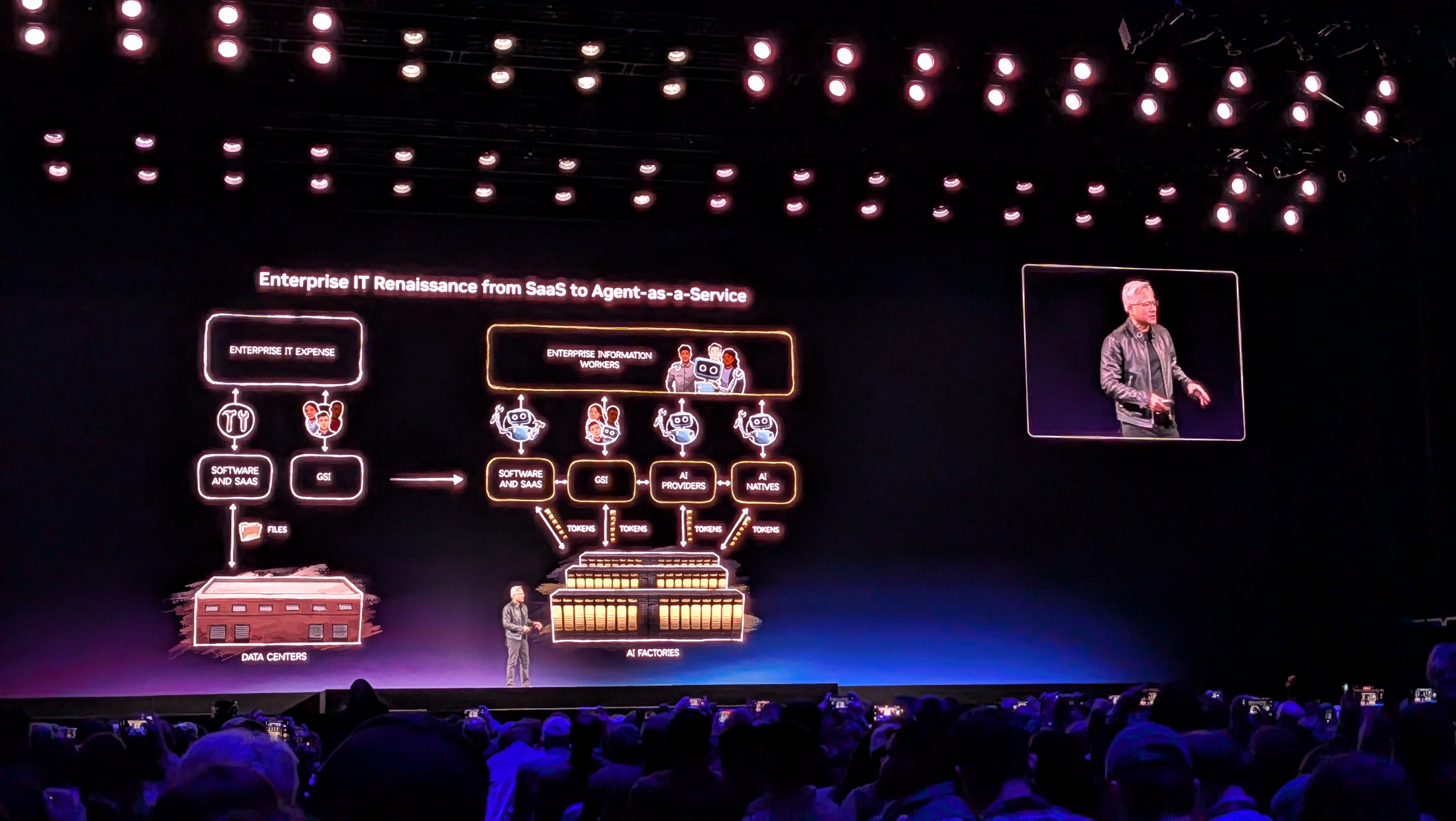
There have been many concerns raised over OpenClaw's security, especially giving it access to company resources.
Huang says Nvidia has worked with OpenClaw to address this - and the new NemoClaw Reference, making it "enterprise-ready".
"As a result, we could protect the claws, and make sure they are deploying safely," he notes.
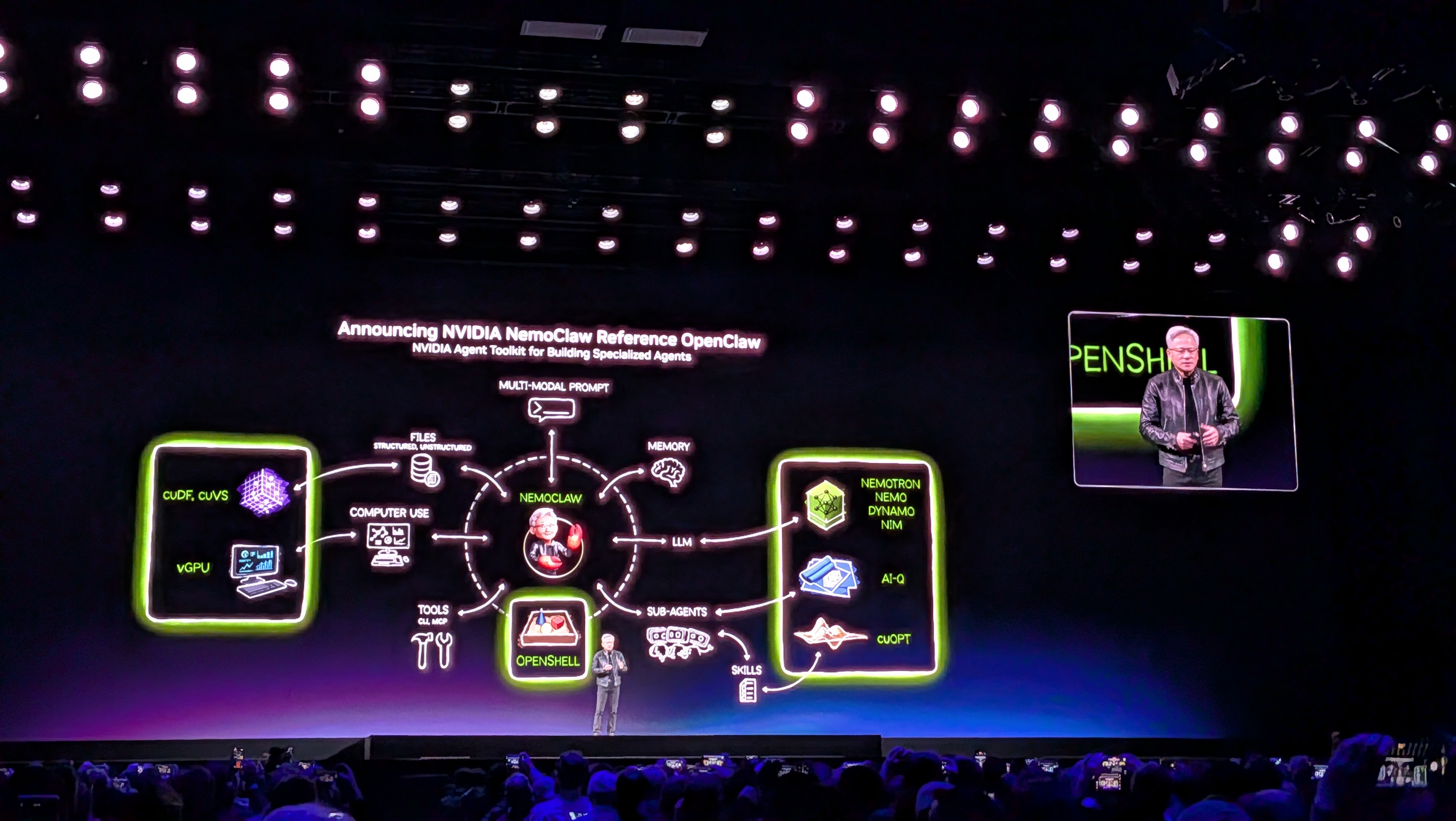
"We are at the frontier of every open model," Huang notes, highlighting again Nvidia's work across a wide range of domains, and its work on open source models.
"Our models are valuable to all of you," he says, "we are not going to give up working on it...so that everyone can join the AI revolution."
"This is our moment - it is a rebirth, a renaissance of enteprise IT..it's going to become a multi-billion dollar industry," he says.
It wouldn't be an Nvidia keynote without robotics - or as Jensen calls them, physical agents.
Every major robotics company in the world is working with Nvidia, Huang notes, and it has the compute and the models to help them.
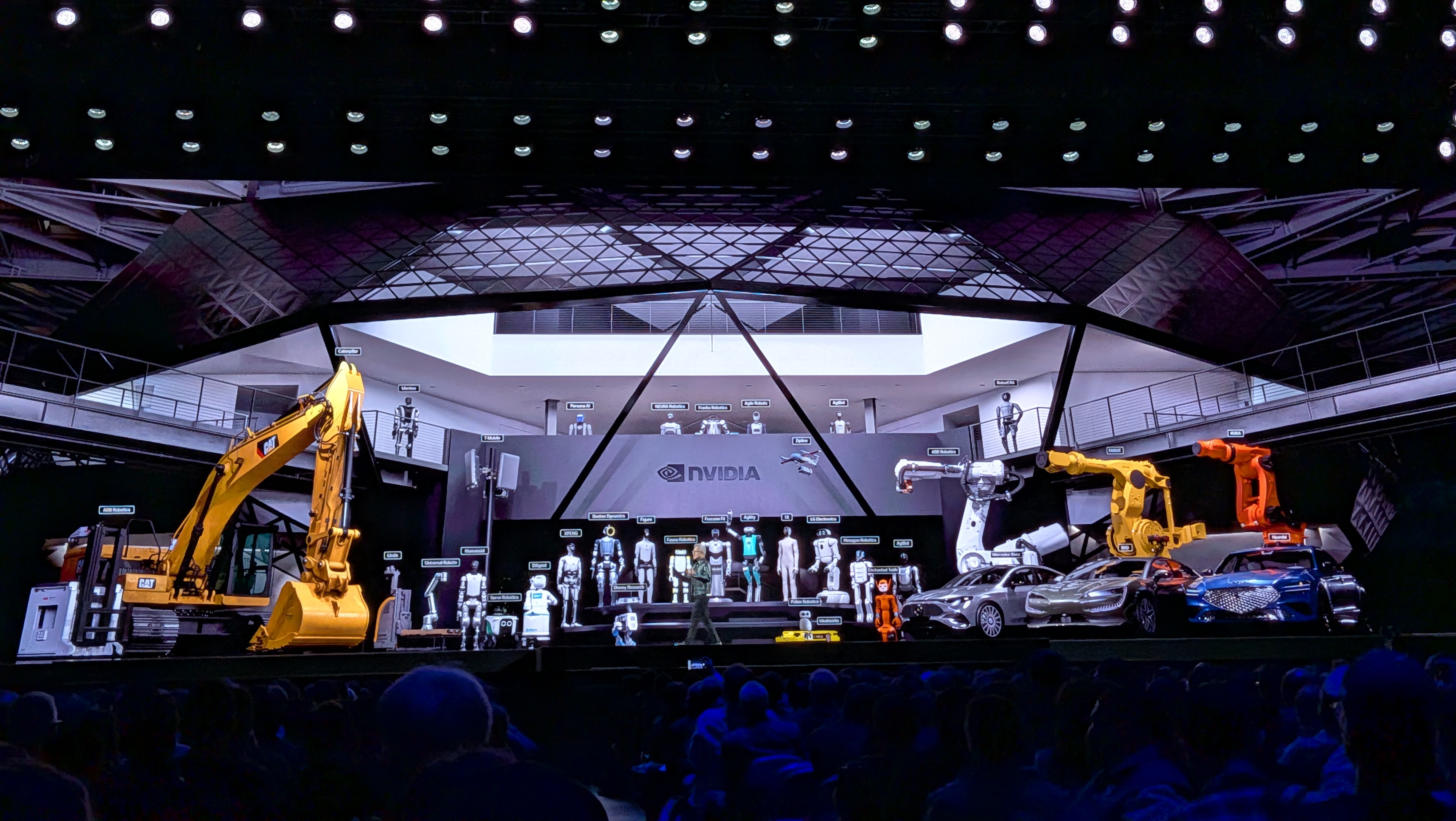
Rushing through the new announcements now, Huang says Nvidia has four new partners when it comes to autonomous cars, as he says "the ChatGPT moment for autonomous driving is here" - as well as a new partnership with Uber.
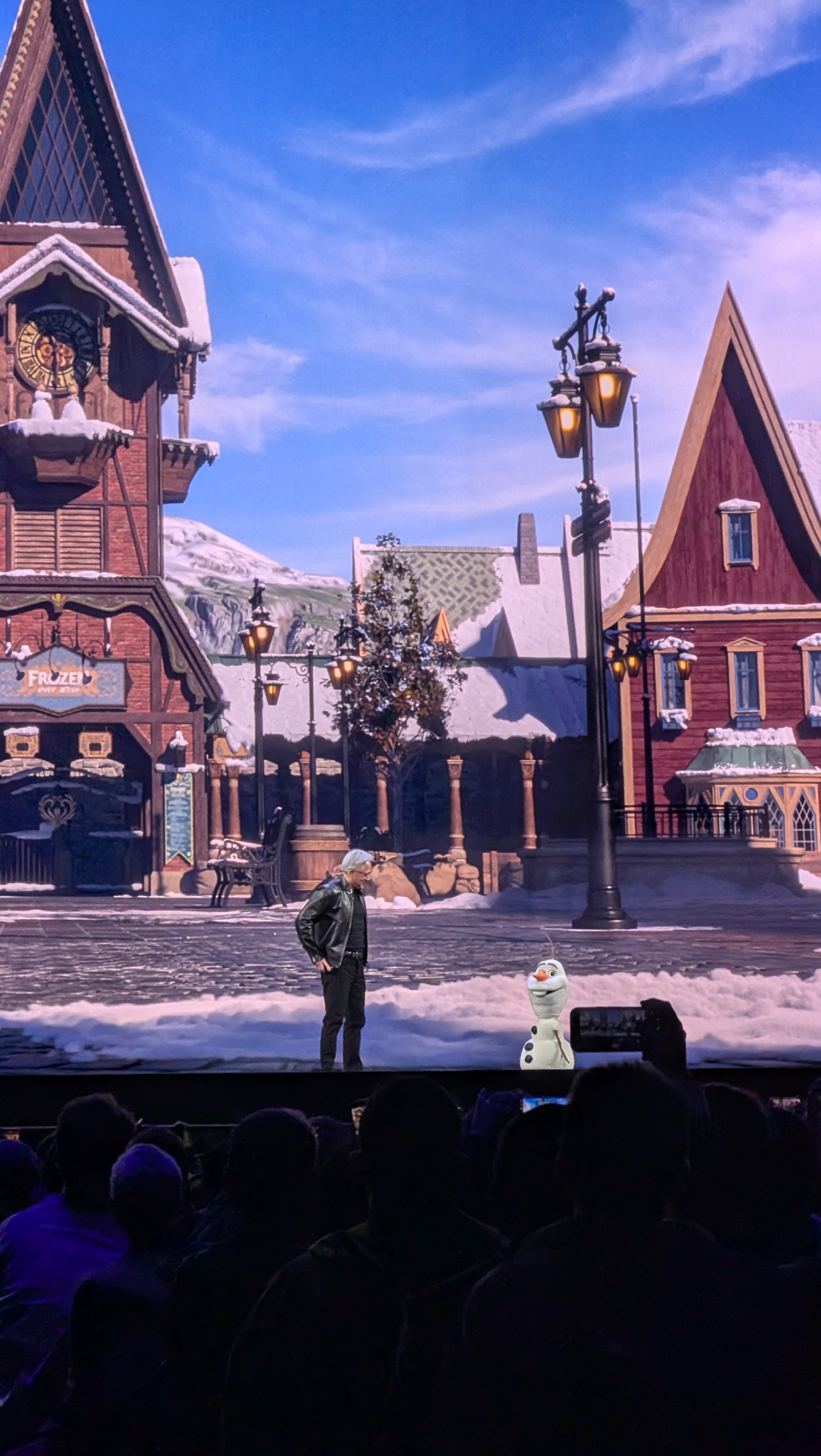
Nvidia and Disney are continuing their partnership too - with a new Olaf robot from Frozen joining Jensen on stage to talk about the company worked to help power it.
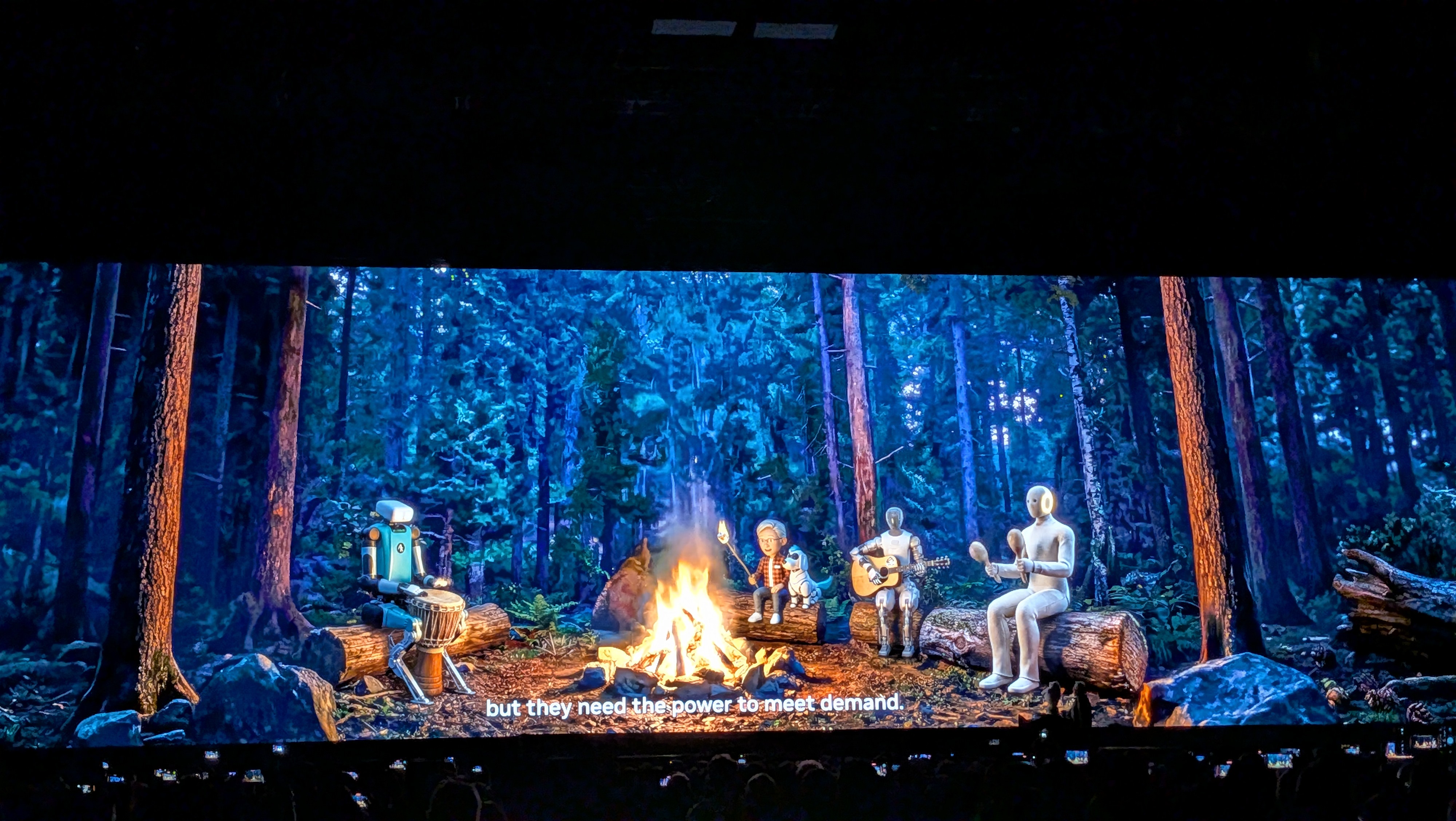
And to wrap up - it's the usual collection of Nvidia-powered robots to cover off everything we've seen - but this time...in song?
It's a great way to close out - who knew open source, AI hardware and robotics could be summed up so tunefully?
And that's a wrap - it's been a packed keynote, and we're now off to see if we can get a look at all the wonderful new announcements. Thanks for joining us for the live keynote coverage, and stay tuned to TechRadar Pro for all the latest Nvidia GTC 2026 news coming soon!