
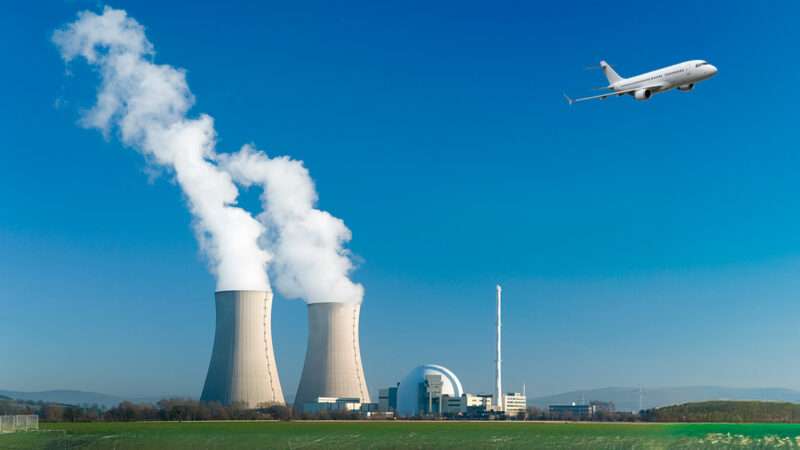
Regulations have made it harder and more expensive to deploy nuclear power in the United States. But in January, the Nuclear Regulatory Commission (NRC) rolled back more than a dozen regulations, including the "aircraft impact assessment." The rule, which was finalized in 2009, required developers of new power plants to demonstrate to the NRC that their reactor core would remain intact in the event of an improbable 9/11-style plane crash.
The rule did nothing to make nuclear power plants safer, since these facilities are already engineered and regulated to withstand natural disasters such as earthquakes, large fires, floods, and hurricanes. The NRC itself acknowledged this at the time, saying that "compliance" with the rule "is not needed for adequate protection to public health and safety or common defense and security." Nor did it do anything to improve disaster preparedness; the agency admitted when it finalized the rule that it's up to the federal government, not nuclear power plant operators, to "prevent the impact of large commercial aircraft."