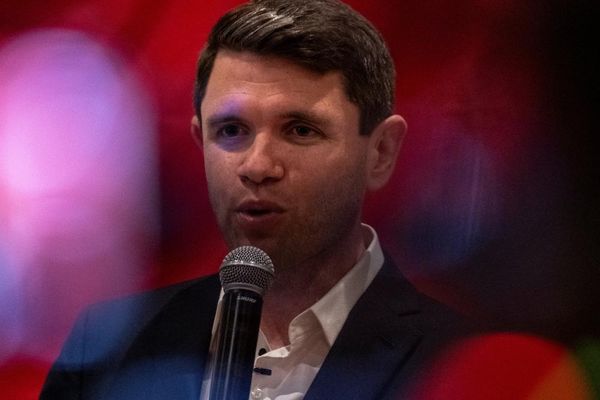
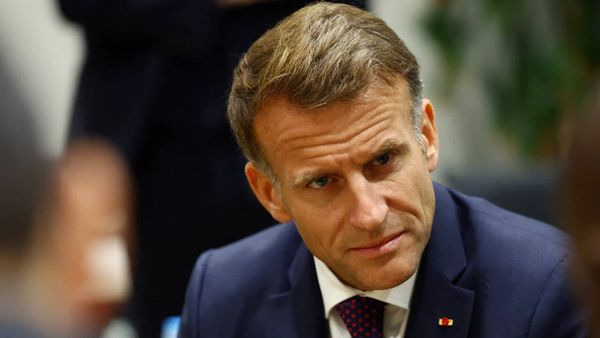
Novak Djokovic believes Jannik Sinner’s three-month doping suspension is a “cloud” that will follow him for the rest of his career.
Sinner twice tested positive for the anabolic agent clostebol in March 2024 but the World Anti-Doping Agency accepted the four-time grand slam champion’s explanation that the banned substance inadvertently entered his system following massages from his then physio.

Wada said Sinner “did not intend to cheat” and the Italian reached a settlement in February that allowed him to return at the next grand slam at the French Open after accepting “partial responsibility”. Djokovic said he believed Sinner “didn’t do it on purpose” but questioned the timing of his ban and suggested he had received preferential treatment.
Djokovic said the fallout from Sinner’s case would hang over the 24-year-old for the rest of his career, and compared it to his deportation from Australia in 2022 after entering the country without a Covid-19 vaccine.
“That cloud will follow him as the cloud of Covid will follow me for the rest of his, or my career in this case,” Djokovic said in an interview with Piers Morgan. “It's just something that, it was so major, and that when it happens, it's just, you know, over time, it will fade, but I don't think it will disappear. There's always going to be a certain group of people that will always try to bring that forward.”
Djokovic said he thought there were a number of “red flags” around Sinner’s settlement with Wada, who have defended their handling of the case. The International Tennis Integrity Agency has also said that there was no preferential treatment.
“There is the lack of transparency, the inconsistency, the convenience of, you know, the ban coming, between the [grand] slams, so he doesn't miss out the others. It's just, it was very, very odd,” Djokovic said.
“And so I really don't like how the case was being handled and you could hear so many other players, both male and female, who had some similar situations coming in, you know, coming out in the media, and complaining that it was a preferable treatment.

“So I think essentially, I want to believe and I knowing and my history with him, I think he didn't do it on purpose. But of course, he is responsible, because those are the rules. You are responsible when something like this happens. And so when you see someone for something very similar or [the] same being banned for years, and then he's banned for original, whatever three months, or whatever it was, it's just, it's not right.”
After winning the Australian Open at the start of the season and before his three-month ban, Sinner reached the finals at all three of the year’s grand slams and won his first Wimbledon title by beating rival Carlos Alcaraz. He lost to Alcaraz in the finals of the French Open and US Open.
Djokovic also praised the manner in which Sinner has dealt with the scrutiny and said he felt a “sense of empathy” for the criticism he has received.
“It's not easy for him,” Djokovic said. “And I think he has handled the storm in the media that keeps on coming back every once in a while. He's handling that very well and very maturely and very steadily and kudos to him for that. It's definitely not easy. And in the midst of all of that, he's still dominating. He's still playing incredible winning slams, winning things.”
Carlos Alcaraz prepared for ‘big day’ as epic ATP Finals win sets up bid for World No 1
Elena Rybakina snubs photo with WTA chief after winning record $5.25m
What is myasthenia gravis? The autoimmune disorder that is difficult to diagnose
Alcaraz v Fritz live: ATP Finals score as Alcaraz wins three-set epic
ATP Finals order of play, results and schedule as Alcaraz and Sinner battle for No 1
Novak Djokovic reveals what he really thinks about Jannik Sinner doping ban