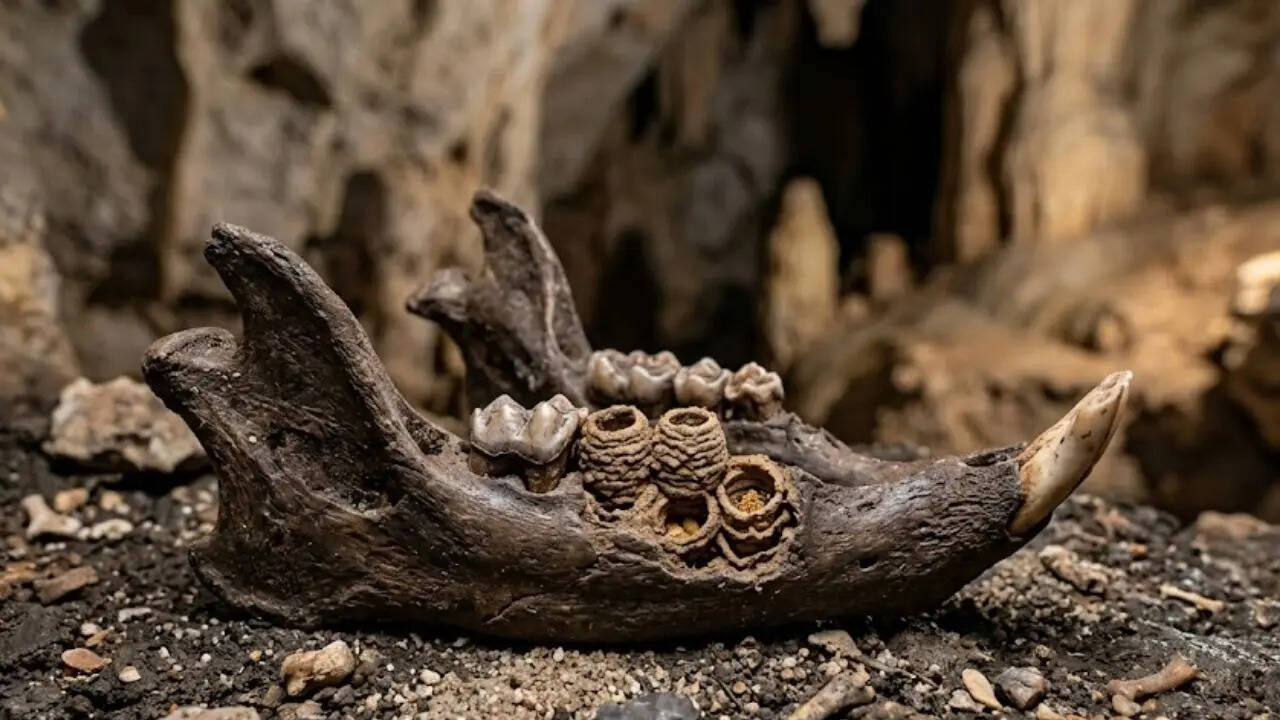
A fascinating study uncovered a unique behaviour in ancient insects. Dating back to the Late Pleistocene, solitary bees used the bones of extinct mammals to create homes for their young. Researchers from the Florida Museum of Natural History were digging in late Quaternary cave deposits in the Dominican Republic, expecting to find typical dental remains in the jawbones of extinct rodents, as noted in a study published in the Royal Society Publishing.
Surprisingly, CT scans showed that these bones contained intricate mud nests instead. These structures have been identified as a new trace fossil called Osnidum almontei. This is the first time anyone has documented bees using unaltered vertebrate remains as nesting spots. Such an adaptation highlights how these bees survived in resource-poor and limestone-rich landscapes of ancient Hispaniola. This discovery provides unprecedented insight into the opportunistic nesting strategies of prehistoric insects within cave environments.