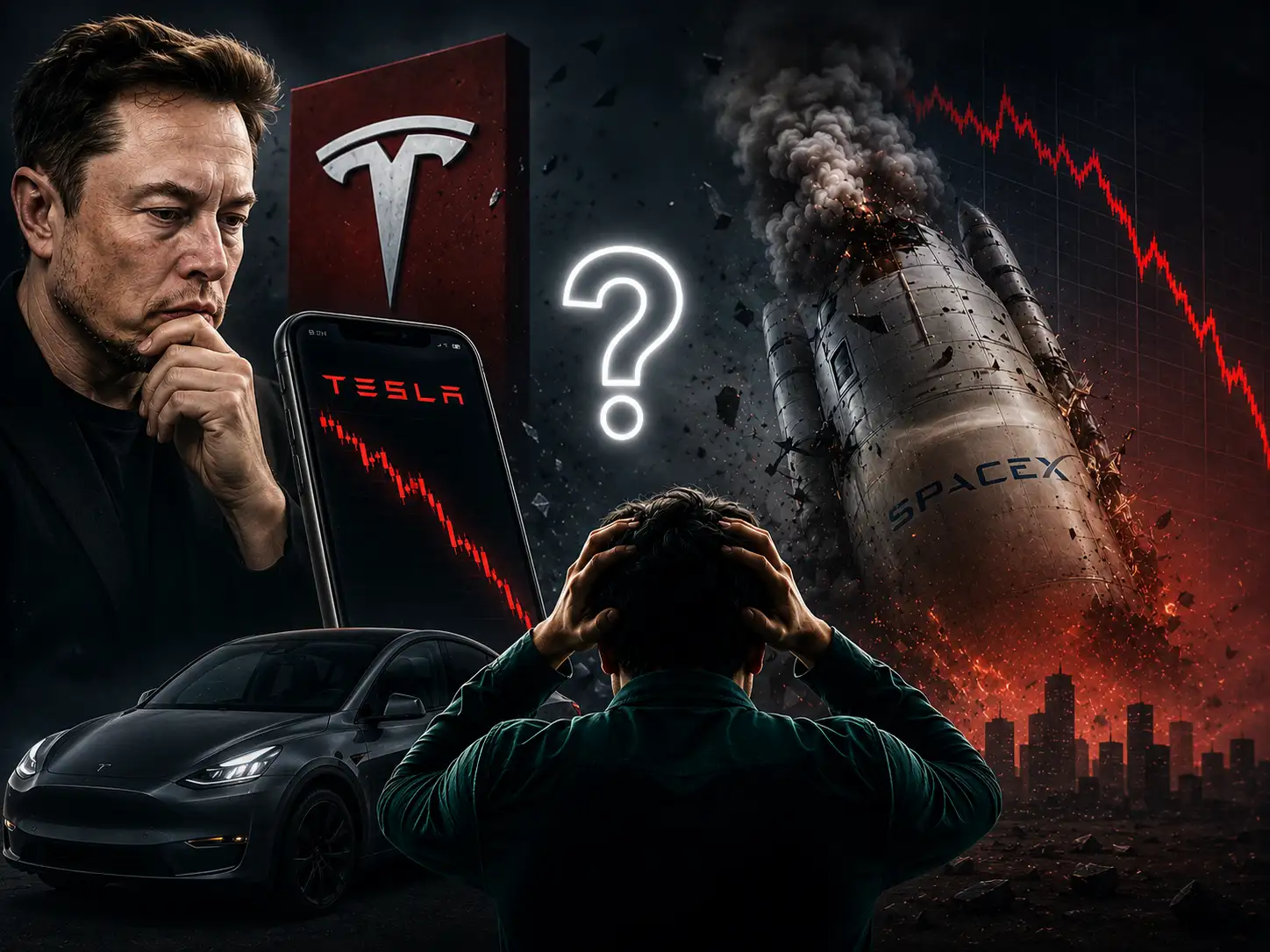
Elon Musk is not the only one feeling the fall in Tesla and SpaceX. A sharp slide in both stocks has hurt many retail investors, including Indians who bought the two names through global investing platforms. Tesla is trading around $393, about 21% below its 52-week high of $498.83, while SpaceX has fallen roughly 30% from its post-listing intraday high of $225.64 to about $157-158. SpaceX listed on Nasdaq on June 12 in a record IPO, opening at $150 a share after pricing the issue at $135.
The fall has also cut Musk’s paper wealth. His net worth had briefly surged after the SpaceX listing, but has since dropped below the trillion-dollar mark as both Tesla and SpaceX corrected. For investors, the bigger question is not Musk’s ranking on the rich list, but what to do with two high-profile stocks that suddenly look far more volatile than they did during the rally.

Correction triggers selling
The correction has already triggered selling by some investors. Tesla has figured among the most sold stocks on Vested Finance, according to information shared by the platform. SpaceX also drew strong global retail interest after its IPO, including from Indians investing in US markets under the Liberalised Remittance Scheme.
The selloff has more than one reason. Tesla's fall comes despite the company posting strong second-quarter delivery numbers, showing that the market is not only looking at car sales. Investors are trying to decide how much of Tesla’s valuation should rest on autonomy, robotaxis and AI-linked expectations. SpaceX has a different problem. The business case around Starlink, launch services and future space infrastructure remains strong, but the stock had a near-vertical move after listing, and its low free float has made price swings sharper.
"One is the actual businesses, and the other is the way the market’s re-pricing a whole basket of AI-linked names right now," said Viram Shah, founder and CEO of Vested Finance.
"On the businesses, honestly not much broke. Tesla just posted its strongest Q2 deliveries in a while and the stock still fell. That tells you the move isn’t really about cars. It’s about how much of that valuation rests on autonomy and robotaxi, which a delivery number can’t settle either way. SpaceX is a similar story. Starlink’s profitable and growing, the launch business is setting records; what’s moving the stock is a very thin float and a premium valuation, so any selling gets magnified."
The timing has also turned difficult for AI-linked stocks. Investor Michael Burry, known for his bet against the US housing market before the 2008 crisis, disclosed fresh bearish positions against Tesla and other AI-adjacent names, adding to concerns that parts of the technology trade have run ahead of fundamentals.
Shah said the fall looks like both profit-booking and a genuine re-rating. "You had a near-vertical run in SpaceX right after listing and a strong 2025 in Tesla, so some of this is just gains being taken. But underneath it, the market’s asking a harder question about how it wants to price these AI and space bets, and that’s the re-rating part," he said.
No longer magnificent? How Apple, Microsoft and other Mag 7 stocks are crumbling under AI pressure
For investors, the worst response may be to treat this as a simple stay-or-sell decision. Selling only because the stock has fallen can lock in losses. Buying more only because the stock is down can increase risk. The better question is whether the position was too large in the first place.
High-growth stocks such as Tesla and SpaceX can move violently because a large part of their valuation is based on future businesses. In Tesla’s case, that includes autonomy and robotaxis. In SpaceX’s case, it includes Starlink growth, launch dominance and possible future markets such as space-based data infrastructure. These are big opportunities, but they also carry execution risk.
Investors also need to remember that newly listed stocks can remain unstable for several quarters. SpaceX still has a limited public float, and future lock-up expiries could add supply to the market. That means even a strong company can be a difficult stock if the entry price is too high.
What should Indian investors do?
For Indian investors, the practical approach is simple. Do not let one or two US stocks dominate the portfolio. Recheck allocation, time horizon and risk appetite. If the investment thesis is five to 10 years, a few weeks of volatility should not decide the outcome. But if the position became too big during the rally, trimming exposure may be sensible regardless of whether the stock is up or down.
"A great company and a great entry price aren't the same thing," Shah said. "For Indian investors going global through the LRS route, the discipline’s the same as always: size it so a rough quarter is a nuance in the portfolio, not the whole story."
(Disclaimer: Recommendations, suggestions, views and opinions given by the experts are their own. These do not represent the views of Economic Times)