Before the pandemic, nostalgia was a major force in global politics. Donald Trump promised to "make America great again", and Brexiteers won their political battle partly by idealising Britain's imperial past. While Chinese President Xi Jinping called for a "great rejuvenation of the Chinese people", Turkish President Recep Tayyip Erdo an pursued neo-Ottoman ambitions, and Prime Minister Viktor Orban lamented the Kingdom of Hungary's territorial losses after World War I.
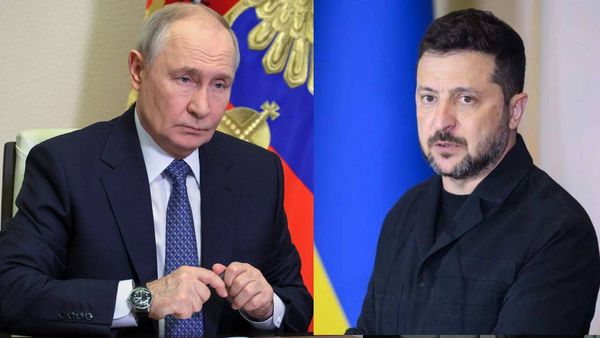
These inclinations were suspended when the pandemic forced everyone to focus on a more immediate crisis. But now that Covid-19 is gradually fading in the rearview mirror, nostalgia has returned with a vengeance. Russian President Vladimir Putin has taken this form of politics to an extreme by justifying his war of aggression against Ukraine on the false grounds that Russia's neighbour "is an inalienable part of our own history, culture, and spiritual space".
As is typical of nostalgia narratives, Mr Putin's account features a "golden age", followed by a "great rupture", leading to a current state of discontent. The golden age was the Russian empire, of which Ukraine was a fully integrated satrapy. The rupture came when Vladimir Lenin created a federation of Soviet national republics out of the ethnic diversity of the former Russian empire. According to Mr Putin, it follows that "modern Ukraine was entirely created by Russia or, to be more precise, by Bolshevik, Communist Russia". Finally, the current discontent is attributed to the persistence of this separation. As Mr Putin stated in March 2014, "Kyiv is the mother of Russian cities. Ancient Rus is our common source and we cannot live without each other."