
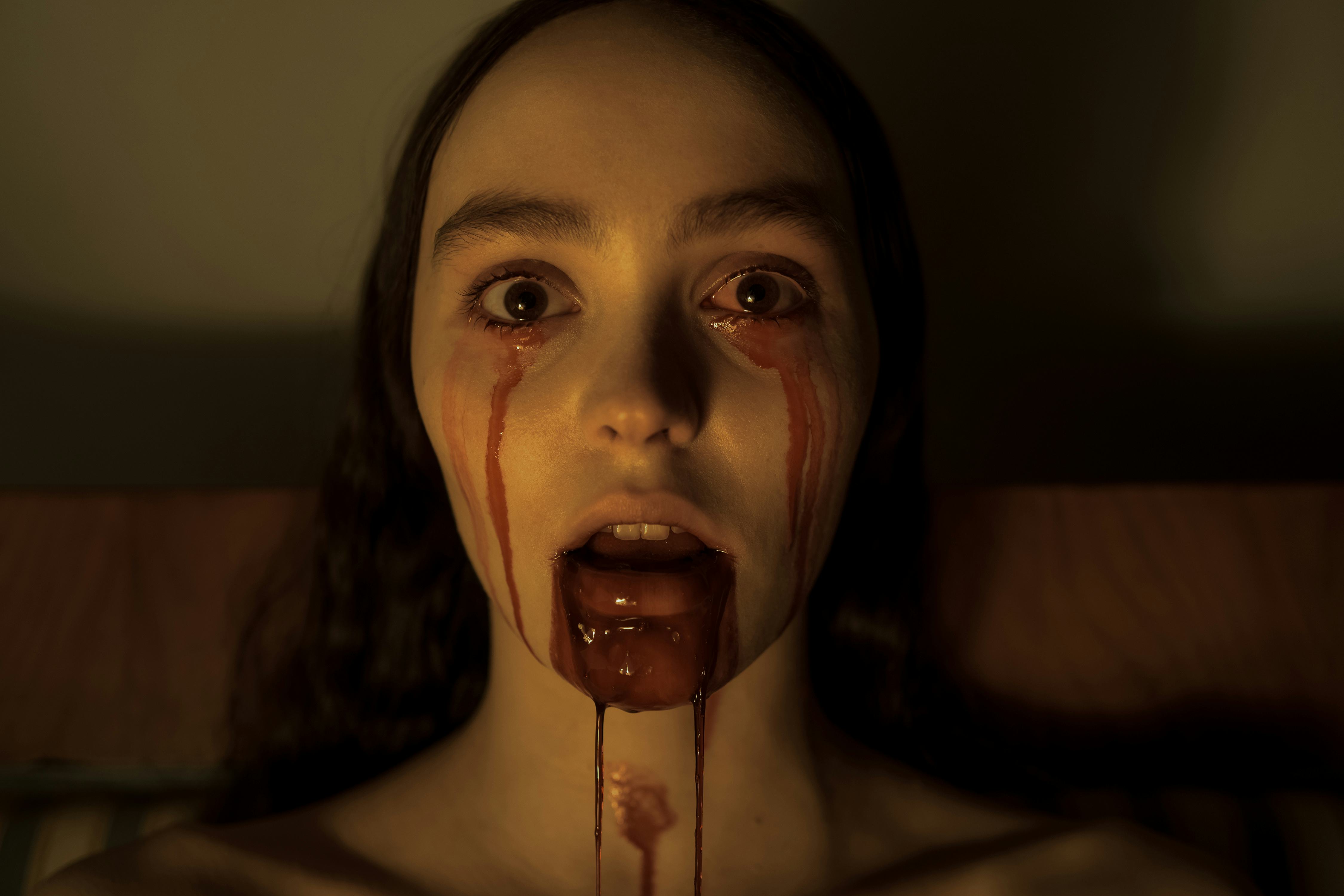
Shadows infiltrate every corner of Robert Eggers’ Nosferatu. They threaten to swallow up every flickering candle, they contort Lily-Rose Depp’s wan face until she looks like a walking skeleton, and they reach their wispy fingers around every door to let in the ultimate Evil. The entire world looks like a deathly pall has been cast over it, with Eggers, with help from his Lighthouse cinematographer Jarin Blaschke, managing to make every frame feel either abominably dreary or full of unspeakable dread.
This is Eggers’ way of paying homage to one of the most famous purveyors of cinematic shadows, F.W. Murnau’s Nosferatu: A Symphony of Horror. The intoxicating new Gothic horror movie from the director of The Witch and The Lighthouse is a remake of Murnau’s 1922 masterpiece, the second after Werner Herzog’s 1979 remake starring Klaus Kinski and Isabelle Adjani. But still, the original was the defining vampire movie, giving us that indelible image of Max Schreck’s gnarled shadow creeping up a staircase, an image seared on our collective pop culture imagination. How could you possibly top it?












