North Korea has made “very serious” progress in advancing its nuclear weapons arsenal by adding a new uranium enrichment facility, the UN nuclear watchdog said on Wednesday.
In February, supreme leader Kim Jong Un declared his desire to develop new weapons systems while hailing the accelerated development of nuclear and missile programmes as “permanently cementing” his nation’s status as a nuclear power.
The hermit kingdom’s nuclear programme is a major security challenge for other countries in the region, and flouts a range of UN Security Council resolutions.
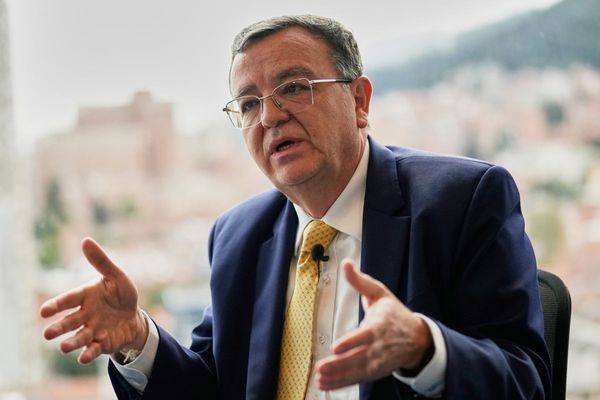
In a new report, International Atomic Energy Agency head Rafael Grossi confirmed a rise in activity at the Yongbyon nuclear complex. Satellite imagery from this month showed expansion of the suspected uranium enrichment facility and completion of a structure for producing weapons-grade material, the report noted.
“All of them point to a very serious increase in the capabilities of the DPRK in the area of nuclear weapons production,” the UN watchdog chief said at a news conference on Wednesday, using the initials for the East Asian country’s official name of the Democratic People’s Republic of Korea.
The IAEA was monitoring a new building at the Yongbyon complex similar to an enrichment facility at Kangson, another key nuclear site near the capital Pyongyang, Mr Grossi said earlier this month.
According to the Center for Strategic and International Studies, an American think tank, the new building, complete with generators, fuel storage tanks, cooling units, and support structures, was located about 1,800m north of Yongbyon’s existing centrifuge halls.
The suspected enrichment plant was nearly complete and undergoing internal fittings, it claimed.
“Any production of enriched uranium would significantly increase the number of nuclear weapons available,” the think tank said in a statement.

Mr Grossi said “moving towards nuclear weapons would never give any country increased security” but could trigger proliferation instead.
His agency was yet to see any evidence of Pyongyang using Russian technology in its nuclear weapons programme, he said.
North Korea sent soldiers to fight in the war against Ukraine in return for energy and technology assistance from its neighbour and the two countries signed a mutual defence treaty in 2024. The cooperation, however, appeared limited to civilian nuclear projects, although it was too early to draw firm conclusions, Mr Grossi said.
According to experts, enriching uranium could give North Korea a more effective way to acquire weapons-grade material than reprocessing spent plutonium from a nuclear reactor.
At the latest congress of the ruling party, Mr Kim set new goals to advance his nuclear forces over the next five years, calling for faster production of warheads and a broader range of delivery systems.
North Korea possesses a “small but dangerous stockpile of an estimated 50 nuclear weapons” and a growing arsenal of ballistic missiles, according to the Center for Arms Control and Non-Proliferation.
It also holds fissile material for another 70-90 nuclear weapons.
North Korean missile falls into sea after just 10 minutes following ‘abnormality’
Trump claims Kim Jong Un used a derogatory term to question Biden’s mental fitness
North Korea’s next likely leader named by South Korean spy agency
South Korean grandmother, 90, jailed for laundering drug money
BTS members open up about reunion fears, ‘egos’ and missing out on writing songs
Search for escaped wolf in South Korea scuppered by AI image confusion