
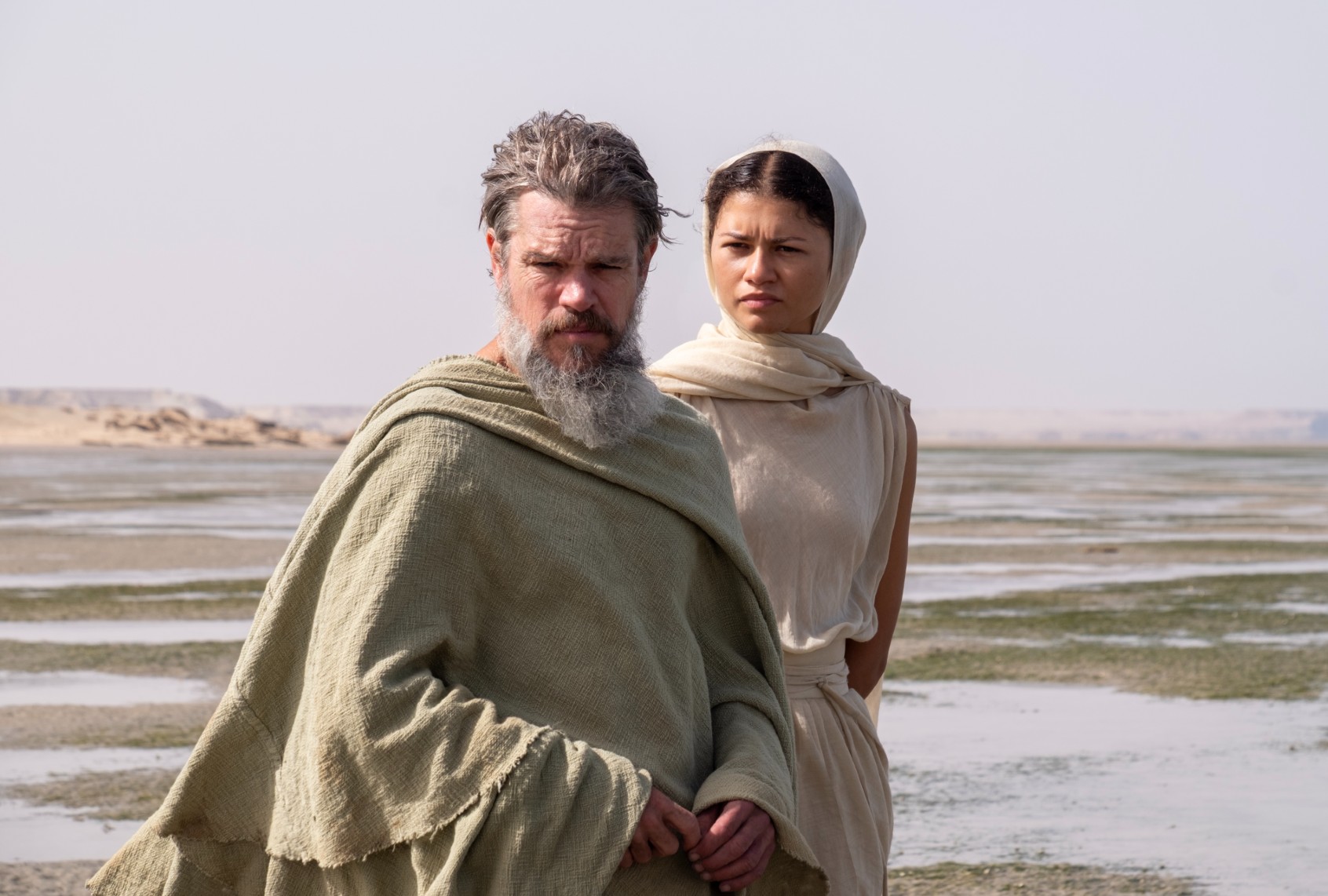
Throughout all three hours of Christopher Nolan’s “The Odyssey” — the acclaimed writer-director’s take on the ancient Greek epic attributed to Homer — I repeatedly returned to one question.
This isn’t entirely atypical. In the past, Nolan’s films have pushed me to ponder ideas both enormous and infinitesimal; much of his work ricochets across this spectrum at a dizzying rate, which is part of why his movies, though always grand in scale, feel different from your typical blockbuster fare. Unlike many of his contemporaries working in the big-budget space, Nolan has no affection for the slow build. His films are designed to be all-consuming experiences, opening in media res, grabbing the viewer by the ankle and dragging them into action already in progress. This technique also makes them difficult to refute based on feeling alone. When you’re swept up into the story immediately and held there for 180 minutes, it’s harder to pinpoint exactly where the film ends and your own impression of it begins. With its exhaustive narrative breadth and action set pieces that only a budget of a cool $250 million could afford, the fact that “The Odyssey” exists at all is intended to feel like a miracle. But that’s precisely why I couldn’t seem to shake that one nagging question: What’s the point of all this?