Get all your news in one place.
100's of premium titles.
One app.
Start reading
The Economic Times
The Economic Times

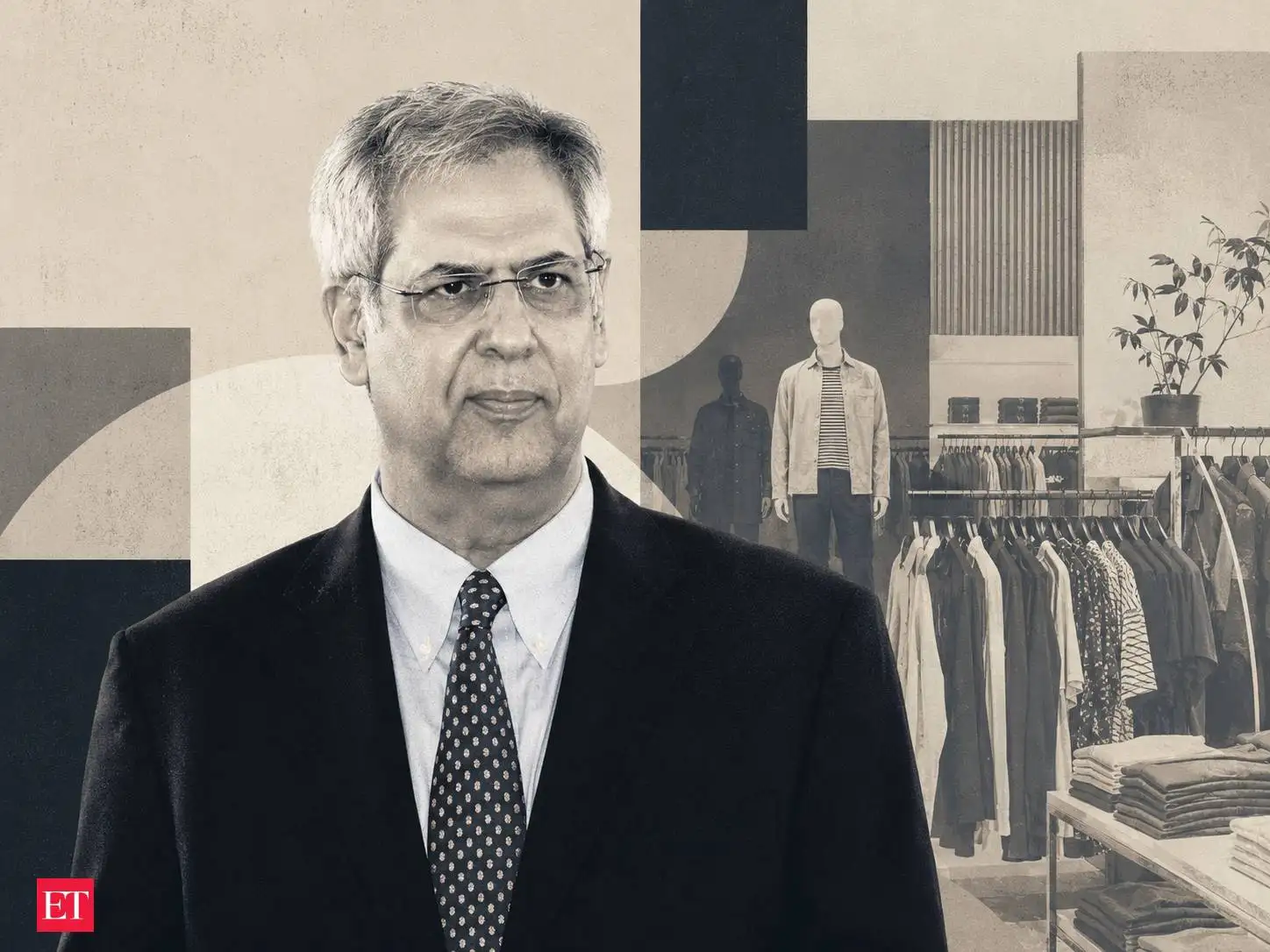
Noel exiting Trent: The quiet Tata who built a loud success story

When Noel Tata reportedly told shareholders at Trent’s annual general meeting on Monday that “this will be my last annual general meeting as chairman”, it marked the approaching end of one of the most consequential leadership tenures in Indian retail. The comment, which appeared in several media reports, came weeks after discussions emerged around his planned retirement from Tata group boards as he turns 70 in November.

Noel's departure will close a chapter that saw Trent evolve from a relatively modest retailer into one of the Tata group’s most valuable consumer businesses. Under his chairmanship, revenue expanded from Rs 2,333 crore in FY14 to more than Rs 20,000 crore in FY26, while profits climbed from losses into one of the strongest earnings profiles in Indian retail. The transformation was neither sudden nor accidental. It was built through years of disciplined execution, a belief in homegrown brands and a willingness to play a long game when much of the industry chased faster gains.

Also Read: Turning 70 in November, Noel gears up to retire from Tata company boards

From Lakmé to Trent

The story of Trent’s rise begins with a decision that, at the time, appeared far from obvious. After the Tata group exited the cosmetics business by selling Lakmé, it chose to enter organised apparel retail. Noel Tata joined Trent in 1999 with the task of building that business.

What followed was a period defined more by restraint than expansion. After opening the first Westside store in south Mumbai, the company spent several years refining its retail model instead of racing to add outlets. The focus was on developing private labels and creating a merchandise mix that balanced quality with affordability. While several competitors relied heavily on selling third-party brands, Trent sought to build its own identity through products designed and controlled in-house.

That patience became one of the defining features of Noel’s approach. Rather than pursuing rapid scale from the outset, he concentrated on getting the model right. The years invested in product development, sourcing and customer understanding created a foundation that later allowed the company to expand at a pace few retailers could match.

The philosophy remains visible in Tata’s own reflection on the company’s origins. Looking back at Trent’s evolution, he described it as a “thoughtful transition from Lakme into the fashion retail space” that eventually grew into a “meaningful business”.

Building instead of buying

A defining feature of Trent under Noel was its preference for building brands rather than acquiring growth. The company experimented extensively over the years. Some ventures succeeded while others did not. Trent entered partnerships with global names such as Zara, Massimo Dutti and Tesco. It acquired Landmark and launched formats including Fashion Yatra. Several initiatives were later shut down when they failed to meet expectations.

The willingness to close underperforming businesses became as important as the ability to launch new ones. Rather than allowing unsuccessful formats to consume resources indefinitely, Trent redirected capital toward opportunities with stronger long-term potential.

This discipline distinguished the company from many retailers that pursued growth through a proliferation of formats without achieving sustainable profitability. Noel’s Trent repeatedly demonstrated that expansion mattered only when supported by a clear customer proposition.

The Zudio moment changed everything

If Westside established Trent’s credibility, Zudio transformed its trajectory. Launched in 2016 as a private-label menswear chain in the value segment, Zudio entered a part of the market where organised retail penetration remained low but consumer demand was enormous. The concept was later expanded to women’s wear, kidswear and accessories.

The timing proved ideal. As India’s middle-class consumers increasingly sought fashionable products at accessible prices, Zudio emerged as one of the strongest retail brands in the country. It quickly became Trent’s fastest-growing format, overtaking Westside in store count and eventually surpassing it in revenue. The significance of Zudio extends beyond its financial contribution. It demonstrated Trent’s ability to identify underserved consumer needs and respond with a homegrown brand rather than relying on imported retail concepts. The success also validated the company’s long-standing investment in private labels and supply-chain capabilities. Zudio may have appeared to be an overnight success, but it was built on capabilities developed over many years.

Also Read: After Zudio boom, Trent still has a long runway for growth: Noel Tata

Not depending on one brand

One of Noel’s most consistent beliefs was that Trent should never become dependent on a single retail concept. “I have long believed that Trent is not intended to be defined by a single brand, but rather by a portfolio of brands,” he has said. That philosophy helped shape Trent into a multi-format retailer with distinct offerings across customer segments. Westside served the aspirational fashion consumer. Zudio targeted value-conscious shoppers. Star Bazaar provided a grocery and everyday consumption platform. The strategy reflected a broader understanding of the Indian market. Rather than searching for a single dominant brand capable of addressing every consumer need, Trent built specialised propositions for different occasions and income groups. As India’s retail landscape became more fragmented and diverse, that portfolio model gave the company multiple engines of growth.

Scale without losing profitability

The most striking aspect of Trent’s rise is not merely its expansion but the way it maintained profitability while growing. Under Noel Tata’s chairmanship, Trent’s revenue increased nearly ninefold between FY14 and FY26, reaching Rs 20,193 crore. Profit improved from a loss of Rs 19 crore to Rs 1,477 crore during the same period. Shareholders gained roughly 3,500% over those years.

By FY26, Trent operated 1,286 stores spread across 321 cities with a retail footprint of 17.7 million square feet. Those numbers illustrate how comprehensively the company expanded beyond its metropolitan origins. Yet the scale was achieved without abandoning the operating discipline that characterised its early years. Trent consistently outpaced much of the sector in revenue growth, store expansion and profitability, establishing itself as one of the Tata group’s most important value creators.

Still looking beyond India

Despite the scale already achieved, Noel does not appear to view Trent as a finished story. In his latest message to shareholders, he reiterated an ambition he first articulated in 2023, when he envisioned the company becoming ten times larger in revenue terms with corresponding profitability. He noted that revenue and profitability run rates have already grown more than 2.5 times since then and expressed confidence that the milestone could be reached in the “not-so-distant future”.

His vision now extends beyond domestic retail. He has spoken of taking Indian brands into international markets and building meaningful overseas revenues. “We should aspire boldly, execute with perseverance and celebrate the pride of brands built ground up from India,” he has said. The comment captures a theme that has run through Trent’s history. The company’s growth was never built on importing retail formulas. It was built on creating Indian brands, refining them patiently and scaling them with conviction.

The legacy of a retail builder

As Noel reportedly prepares to step away from Trent’s boardroom, the company he leaves behind bears little resemblance to the retailer he inherited. What began as a post-Lakmé experiment evolved into one of India’s most successful retail enterprises. His achievement lies not only in the numbers, impressive as they are. Instead, it lies in demonstrating that Indian retail brands could be built patiently, scaled profitably and positioned to compete with both domestic rivals and global players. The rise of Westside, the breakout success of Zudio and the emergence of Trent as a consumer powerhouse all stem from choices made years before the market recognised their value.

Noel may leave the company but the blueprint he created for Trent is likely to shape the company long after he leaves the chairman’s seat.

Sign up to read this article
Read news from 100's of titles, curated specifically for you.
Already a member? Sign in here
Related Stories
Top stories on inkl right now
One subscription that gives you access to news from hundreds of sites
Already a member? Sign in here
Our Picks
Fourteen days free
Download the app
One app. One membership.
100+ trusted global sources.