
Get all your news in one place.
100's of premium titles.
One app.
Start reading
The Times of India
The Times of India
World
Vivek Dubey

No victors, only losers: How Iran war left every side worse off

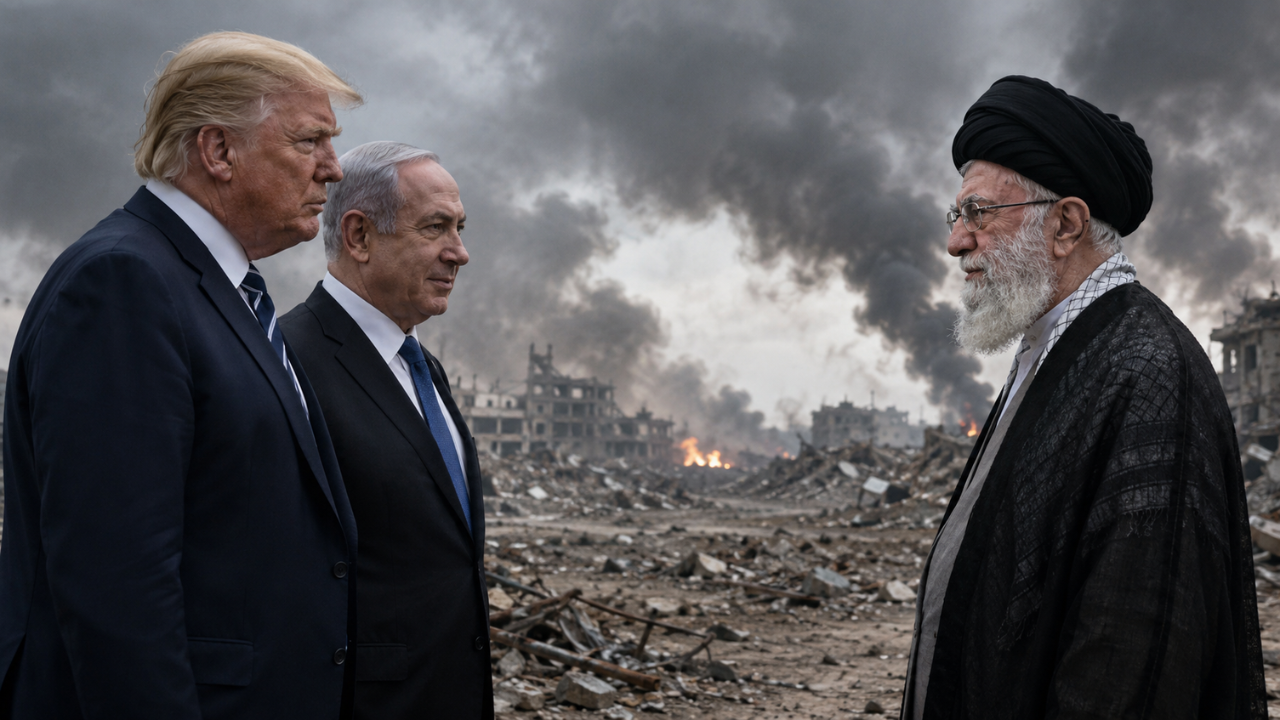
In war, there are usually winners. Someone gains territory, influence, or deterrence. The Iran war has produced none of that. After months of fighting, thousands of casualties, soaring energy prices, and one of the largest American military deployments in the Middle East in decades, it is difficult to identify a single participant that achieved its central objective.

Get breaking news anytime, anywhere. Download the TOI app now!

What began as a campaign to eliminate Iran's nuclear threat and reassert Western deterrence has instead become a case study in the limits of military power.

The United States spent billions without securing surrender. Israel widened the conflict without finding a lasting solution. Iran absorbed devastating losses yet remained standing. Russia and China watched a partner come under attack with little ability to shape events. Even countries far from the battlefield paid the price through disrupted trade and volatile energy markets.

High expectations

When President Donald Trump declared that the United States had "complete and total control of the skies over Iran" and called for Iran's "unconditional surrender", it set the tone for what the war was supposed to be: a swift, overwhelming campaign that would force Tehran to capitulate. It has not worked out that way.

The demand for unconditional surrender was always more rhetoric than strategy. Iran is not a country that bends easily. It survived the 2009 Green Movement, the sanctions regime that decimated its economy, repeated waves of domestic protest in 2019, 2022, and 2025, and years of covert Israeli operations that killed scientists and generals. The Islamic Republic has survived by absorbing punishment and refusing to fold. Demanding surrender from such a government, without a credible plan to enforce it, was less a war aim than a political performance.

Iran: Decapitated, not defeated

Iran entered this war in a weakened state. Years of sanctions had already hollowed out its economy. The 12-Day War of June 2025 had damaged its air defences and nuclear infrastructure. Domestic protests had killed thousands of its citizens and shaken the regime's confidence.

The killing of Supreme Leader Ali Khamenei in the opening strikes on February 28, 2026 created: a power vacuum, not a revolution. His son, Mojtaba Khamenei, was installed as the new Supreme Leader, and billboards carrying his image appeared on Tehran's streets within days. The IRGC's command structure, which had been designed to operate with decentralised authority in exactly this kind of scenario, continued to function. Iran's retaliatory strikes extended across nine countries. Ali Larijani, described as the de facto leader of Iran and the number one target after Khamenei, was assassinated by Israel on March 17.

None of it produced the popular uprising that Trump and Netanyahu had predicted. On March 18, then-US Director of National Intelligence Tulsi Gabbard assessed that the regime "appears to be intact, but largely degraded", and warned that if it survived, it would "seek to begin a yearslong effort to rebuild".

The civilian cost inside Iran has been severe, and almost entirely unreported in real time. The regime imposed what became the longest state-ordered internet blackout ever recorded in any country.

According to NetBlocks, connectivity dropped to around 1% of pre-war levels from February onwards. Combined with an earlier blackout imposed in January 2026 during the domestic protests, Iranians spent close to two-thirds of 2026 in near-total digital darkness. The economic damage was staggering. Afshin Kolahi, head of a business commission at Iran's Chamber of Commerce, estimated direct losses from internet shutdowns at $30 to $40 million per day, rising to $70 to $80 million when indirect effects were included.

Petrochemical exports, which account for a large share of non-oil revenues, were suspended entirely after strikes on production facilities in Assaluyeh and Mahshahr. Reconstruction at some sites, analysts warned, could take years.

The IRGC, paradoxically, emerged from the war more consolidated than before. The clerical leadership had been gutted. The civilian government had been sidelined. What remained was a military-security apparatus that had always operated as a state within a state, and that now found itself filling the vacuum left by the deaths of top officials.

US: Expensive, unpopular, inconclusive

America went to war against Iran in the face of domestic opposition that never fully materialised into political pressure but has steadily grown. A strong majority of Americans, roughly six in ten, opposed military strikes on Iran from the outset. By April 2026, a poll by Ipsos found that 51% of Americans believed that US military operations in Iran had not been worthwhile. Only 24% saw the outcomes as beneficial.

Part of the problem was that the objectives kept shifting. When Trump launched Operation Epic Fury on February 28, he outlined a sprawling list of goals in his video address to the nation: prevent Iran from ever having a nuclear weapon, ensure it cannot threaten the US or its allies with ballistic missiles, degrade its proxy forces, destroy its navy, and trigger the collapse of the Iranian regime.

Mark Cancian at CSIS said at the time that the administration had "put up a pretty high bar" for success. Senior officials struggled to coalesce around a coherent narrative. Trump himself had authorised a one-day bombing raid in June 2025, declared it had "obliterated" Iran's nuclear programme, and then launched a much larger war eight months later because aides were warning that Iran was weeks away from a bomb. The credibility gap was hard to ignore.

In the months that followed, Trump set a series of deadlines for Iran to agree to terms: 21 March, then March 23, then April 7. Each passed without a deal. The opposition in Congress attempted to force a war powers vote, citing the 60-day legal deadline on executive military action. The cost meanwhile climbed relentlessly. The Pentagon estimated the war had cost $11.3 billion in its first six days alone, according to a closed-door congressional briefing reported by the New York Times.

By May 2026, the official total had reached $29 billion, a figure that still excluded damage to American military bases across the region. A top budget expert estimated the full economic cost to the American economy could reach $210 billion when broader disruptions were factored in.

The military costs are equally striking. At least 42 US military aircraft were lost or damaged during the conflict, according to a Congressional Research Service report. The losses included four F-15E Strike Eagles, an F-35A Lightning II that sustained combat damage over Iranian airspace, KC-135 refuelling tankers, an E-3 Sentry airborne warning aircraft, and multiple drones including an MQ-9 Reaper and an MQ-4C Triton. The total cost of lost aircraft alone was estimated at over $2.6 billion. It was the first combat damage ever recorded to an F-35 stealth jet, the most expensive fighter aircraft in American history. Several more aircraft were destroyed on the ground at Prince Sultan Air Base in Saudi Arabia during Iranian missile strikes.

Israel: The war that keeps widening

Israel's original stated objective, when it launched the 12-Day War in June 2025, was to neutralise Iran's nuclear threat and degrade its missile capabilities. Netanyahu called it a "historic victory" and claimed it had "removed two existential threats". Eight months later, Israel was at war with Iran again. The lesson ought to have been obvious: decisive-sounding declarations do not resolve underlying conflicts.

In 2026, Netanyahu pushed further. He called for regime change. He encouraged Iranians to take to the streets, speaking to them directly in Farsi and promising that "the help you wished for has now arrived". The popular uprising never materialised. What came instead was a multi-front war. Hezbollah joined the fighting on 2 March, just two days after the opening strikes on Iran, launching missiles and drones into Israeli territory. A drone attributed to Hezbollah even struck a British Royal Air Force base in Cyprus, pulling a European NATO member unwillingly into the conflict. Israel responded with over 250 strikes across Lebanon, deployed ground forces deeper into southern territory, and called for civilian evacuations up to the Zahrani river, roughly 25 miles north of the Lebanese border.

The stress on the US-Israel relationship was visible throughout. According to reporting from the June 2025 conflict, Trump had opposed the assassination of Khamenei when Israel first identified a window to act. A senior administration official reportedly summarised the thinking at the time as: "It's the Ayatollah you know versus the Ayatollah you don't know." Israel proceeded in 2026 anyway, and the power vacuum that followed validated exactly that concern.

For Netanyahu personally, the war carries political stakes that are inseparable from strategic ones. He needed a decisive outcome to recover from the shadow of Hamas's October 7, 2023 attack. An Israel Democracy Institute poll found that 93% of Jewish Israelis support the war, with most believing it should continue until the regime falls.

Russia, China: Lost a war they never fought

Russia and China never fired a shot in the Iran war. Neither deployed troops. Both condemned the US-Israeli campaign and offered diplomatic backing to Tehran. Yet the conflict exposed a harsh reality for both powers: despite their ambitions to challenge American influence, they were largely reduced to spectators as one of their closest partners came under sustained attack.

At first glance, Russia appeared to be one of the war's biggest winners. Before the conflict, Moscow's finances were under pressure. Russia's oil export revenues had fallen to just $9.5 billion in February 2026, their lowest level since the start of the Ukraine invasion.

The closure of the Strait of Hormuz changed that almost overnight. Oil prices surged above $100 a barrel, lifting the value of Russian crude and providing an unexpected boost to Kremlin revenues.

But the financial windfall masked a deeper strategic setback.

Iran has long been one of Russia's closest partners, yet when Tehran came under attack, Moscow could do little beyond issuing condemnations. The Kremlin provided no military assistance and avoided direct confrontation with Washington. Russia's inability to materially support an ally underscored how much the war in Ukraine has constrained its global reach.

For Vladimir Putin, the episode was another reminder that Russia's influence is no longer what it once was. With the Ukraine war entering its fifth year, Moscow found itself watching a key partner absorb devastating blows while remaining largely powerless to intervene.

China's position was even more complicated.

Beijing condemned the strikes and called for diplomacy while reportedly continuing limited support for Iran through technology and supplies. Yet China had far more at stake economically than Russia.

Iran supplies a significant share of China's imported oil under a long-term strategic partnership. The disruption of shipping through the Strait of Hormuz threatened those supplies and forced Beijing to seek alternative sources at higher prices. For a country already facing slower economic growth, the conflict created a costly energy shock.

In that sense, the Iran war became a real-time military classroom for Beijing.

Yet the conflict also delivered an uncomfortable message. When Washington decided to act, neither China nor Russia could stop it. Both powers learned important lessons from the war, but neither was able to shape its outcome. For two countries seeking to build a multipolar world, that may be the most significant loss of all.

The Middle East: Bases are not enough

One of the lessons the Gulf states have absorbed from this conflict is both obvious and uncomfortable: hosting American military bases is not a guarantee of security. It may, in fact, be an invitation to become a target.

Iran struck Al-Udeid Air Base in Qatar, the largest American military installation in the Middle East and the regional headquarters of US Central Command. It hit bases in Saudi Arabia, Kuwait, Bahrain, Oman, and the UAE. Iran launched missiles and drones at Gulf states that had nothing to do with the original decision to go to war. Bystander geography provided no protection.

For the Gulf states, this has accelerated a quiet rethink about what security arrangements actually look like in a region where great power conflict has arrived at their doorstep.

Ukraine: The unexpected winner

In a conflict full of losers, Ukraine has emerged as something of a dark-horse beneficiary, though not in any comfortable sense.

Ukraine has spent four years learning to fight with drones. Russia pioneered the use of wire-guided drones in Kursk in late 2024. Ukrainian forces have developed some of the most sophisticated real-world experience in drone warfare anywhere on earth, including interception, evasion, and targeting. When the United States asked Ukraine in March 2026 for help countering Iranian drone attacks, Kyiv agreed to send military experts to the Gulf region. Eleven countries, including the US and several European and Middle Eastern states, reportedly reached out to Ukraine for advice on countering Shahed-style attacks.

That is a remarkable inversion. Ukraine, which is fighting a war with diminished American military aid, is now being asked to teach the United States how to deal with the same drones that Russia has been firing at Ukrainian cities for years. The Iran war has confirmed what Kyiv already knew: drones have fundamentally changed how wars are fought. Low-cost unmanned systems can degrade expensive platforms, disrupt supply chains, and hold entire regions at risk. That lesson is now global.

What nobody got

History tends to remember wars through the lens of victory and defeat. The Iran war resists such simple classification. The United States demonstrated overwhelming military power yet failed to secure the political outcomes it sought. Israel inflicted severe damage on its adversary but found itself confronting many of the same security challenges that existed before the first strike. Iran survived, but at an extraordinary cost to its leadership, economy and society.

Russia and China learned valuable lessons while exposing the limits of their influence. The Gulf states discovered that geography can turn allies into liabilities, while the global economy was reminded how vulnerable it remains to disruption in a single strategic waterway.

Perhaps the most striking feature of this war is how little there is to show for so much destruction. Tens of billions of dollars were spent. Cities, military bases and critical infrastructure were damaged. Thousands of lives were lost or permanently altered. Yet the central questions that drove the conflict remain largely unanswered. Iran's future is uncertain. Regional tensions endure. The nuclear issue has not disappeared. After all the bombs, speeches and promises of decisive victory, the Middle East looks much as it did before, only poorer, bloodier and more unstable.

Sign up to read this article
Read news from 100's of titles, curated specifically for you.
Already a member? Sign in here
Related Stories
Top stories on inkl right now
One subscription that gives you access to news from hundreds of sites
Already a member? Sign in here
Our Picks
Fourteen days free
Download the app
One app. One membership.
100+ trusted global sources.







