Ever since I came across Passport Photo Service: An Unexpected Archive of Celebrity Portraits, I've been thinking about portrait photography differently. Published by Phaidon, this new book brings together more than 300 photographs taken at a single London studio between 1953 and 2019.
Its subjects include Muhammad Ali, Sean Connery, Mick Jagger, Joan Collins, Madonna, Kate Winslet, Tilda Swinton and David Hockney. Yet none of them were there to get publicity shots. They were there to get a travel document.

Consider what that means, technically. No stylist, no lighting rig, no art director whispering adjustments. Just a plain backdrop, a fixed flash and about ten seconds to look like yourself, or at least a version of yourself that a border official will accept. For ordinary people, the results can border on humiliating. For the famous, they offer something far rarer: honesty.
An unlikely portrait studio
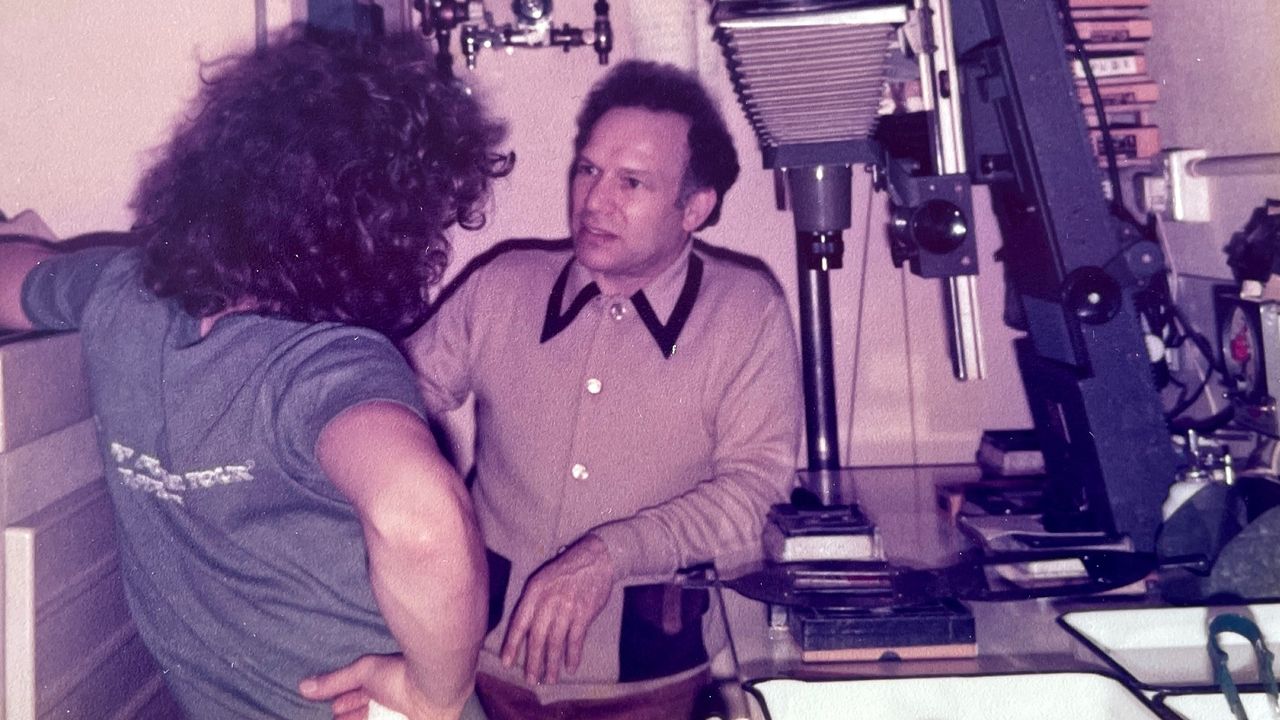
The studio was founded in 1953 by Dave Sharkey, a former professional boxer, and his wife Ann. Before opening on Oxford Street, Dave had cut his teeth shooting tourists on a Trafalgar Square pitch run by the Dove family, cameras slung around his neck, working fast in the open air. That grounding in speed and instinct would define the business he went on to build.


Its Oxford Street location was key: close to the US Embassy and Selfridges, it was a junction where the famous and the ordinary rubbed shoulders daily. The studio's promise of prints "ready in 10 minutes" was a genuine innovation at the time, drawing a steady clientele for more than six decades until it closed in 2019.
Dave's son Philip eventually took over, and it is his voice that runs through the book's captions and anecdotes. And he has some stories to tell. Joan Collins visited three times between 1971 and 1988. By her third visit she was at the peak of her Dynasty fame, and left the customers in the waiting room open-mouthed as she greeted staff with "Darlings, how are you? It's so nice to see you all again," before announcing she never goes anywhere else for her passport photos. She also knew exactly how she wanted to be posed.


Bianca Jagger came in wearing a wide-brimmed hat. Philip politely advised her it would not be accepted for a passport. "They will for me," she replied, and never came back for a retake. She was, apparently, right. Muhammad Ali stopped by en route to The Rumble in the Jungle. Uri Geller bent the studio's only spoon. They had not asked him to.
What photographers can learn
For anyone who shoots portraits, this archive raises a quietly provocative question: what happens when you strip away every advantage a photographer usually brings to a session?
Passport photos operate under rigid rules: neutral background, flat and even lighting, no shadows on the face, look straight ahead, do not smile. The format exists to identify, not to flatter. The subject cannot perform, because there is nothing to perform for. The photographer cannot manipulate, because the format does not allow it.
Speaking to me from Torquay in Devon, where he's since retired, Philip explains that the technical demands were once considerably higher than they are today. "When we used our Micropress and later our Sinar large format 5x4 cameras, we had to relax, pose and snap our subjects just right, as they only got one chance," he points out. "It was much more of a skill. When digital came in you could take hundreds of shots for no extra cost. Negatives were half the profit, so we had to get it right first time."


That pressure sharpened his eye in ways that are visible throughout the archive. Sean Connery in 1977 glowers at the lens with the intensity that made him a star. Van Morrison, photographed in 1988, stares into the middle distance with magnificent indifference, barely acknowledging the camera or apparently anyone in the room. Nancy Spungen, just two months before her death, fixes the lens with an expression no conventional portrait session could have manufactured.
The passport photo is not a lesser form of portraiture. It is, in many ways, a purer one. What the format removes, it turns out, is mostly noise.
An accidental archive
Philip Sharkey did not set out to build a celebrity portrait archive. He set out to run a photography business. The famous faces were simply customers who needed visa photos, and the studio treated them accordingly: politely, efficiently, without fuss.


That unselfconsciousness is what makes the archive so compelling. These are not portraits created with posterity in mind. They are working documents that happened to feature extraordinary people, photographed by a family more interested in getting the exposure right than in the significance of who was sitting in the chair.
As Stephen Fry, a regular customer, writes in the book, those lucky enough to have sat before Philip's lens always left feeling they had participated in a ritual that elevated them to a special kind of club. He calls this "wonderfully produced memoir" a vivid evocation of a vanished time in the capital.
He's right that it captures a vanished time. But it also captures something relevant to photographers today: the idea that the best pictures of people are sometimes the ones neither party was trying very hard to make.
Passport Photo Service: An Unexpected Archive of Celebrity Portraits is published by Phaidon on April 15, priced $24.95 / £19.95.