Get all your news in one place.
100's of premium titles.
One app.
Start reading
Homes & Gardens
Homes & Gardens
Molly Malsom

No Pantry? No Problem. These Fuss-Free Storage Solutions For Kitchens Without Built-In Food Storage Maximize the Space You Already Have

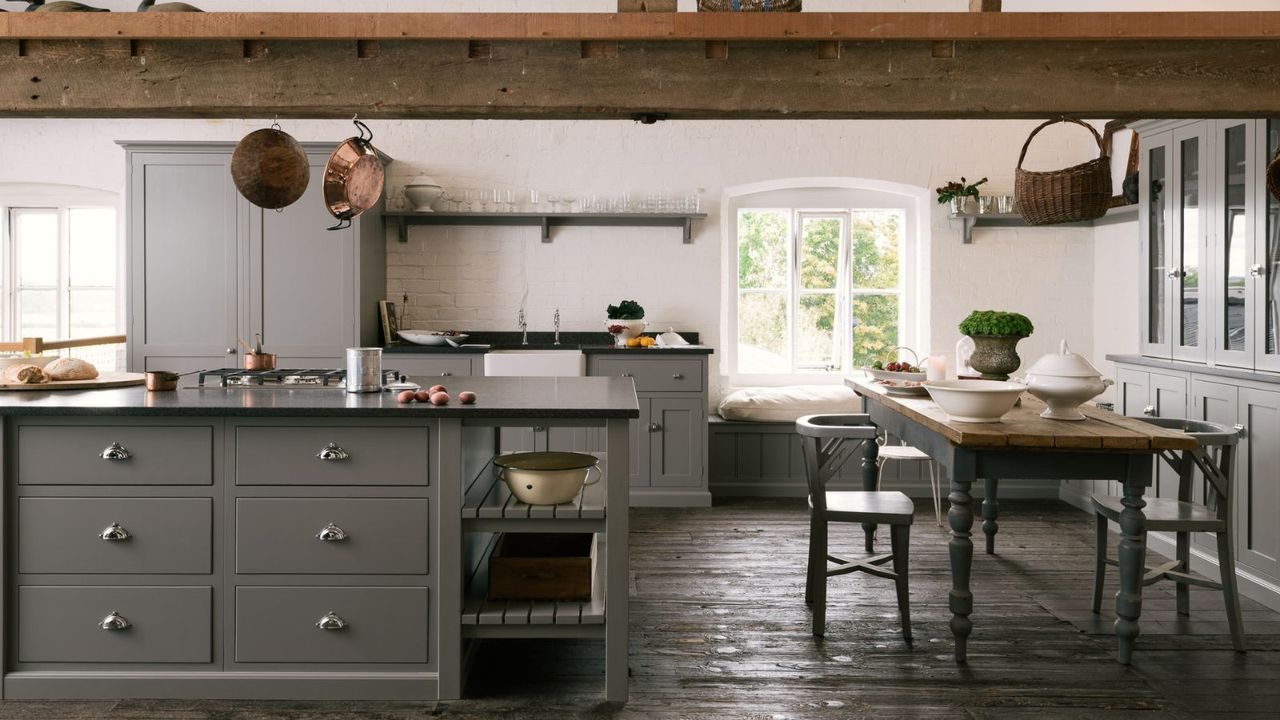
A large traditional kitchen with exposed wood ceiling beans, a large kitchen island, a dining table, and gray cabinetry.

Most people don't have the luxury of a walk-in pantry to store food, yet it's one of the most talked-about storage options. So, what's the solution when you don't have this additional space?

Thankfully, designers have seen and transformed lots of rooms where kitchen storage ideas needed to think beyond the classic pantry, and there are plenty of ways to create spaces dedicated to food that allow your cooking space to feel more organized and run more smoothly.

From freestanding furniture to upgrading your existing cabinetry and even looking to vertical space, these are the storage solutions experts always return to when designing spaces that lack built-in food storage, and how to make every inch work harder.

How to Store Food in a Kitchen Without a Pantry

It's easy to get carried away with solutions when you're trying to compensate for a lack of dedicated pantry space, but the truth is, you don't need to extend your kitchen or transform another room into a walk-in pantry space.

The issue isn't that you need more space; it's that you need a clever system that makes your existing kitchen work harder. Here are all the different ways you can create a pantry alternative with the space you already have.

Use Cabinets as a Pantry Substitute

In this kitchen, a countertop cabinet has been transformed into a pantry using pullout drawers and shelves of varying sizes. (Image credit: Christopher Boutlier Interiors)

1. Add Roll-Out Shelves

When you don't have a dedicated pantry, your kitchen cabinets can be carefully utilized to become the hub of food storage. Choosing a decent-sized cabinet to customize and use as a mini pantry is one of the simplest approaches.

'One of the easiest solutions is to dedicate a full-height cabinet as a pantry. We often design these with roll-out shelves or interior drawers so homeowners can easily see and access everything. It functions just like a traditional pantry but integrates seamlessly into the kitchen cabinetry,' says Cathleen.

'Adding rollout shelves to existing regular cabinets can make a difference in being able to access food and not end up buying 3 jars of mayonnaise because you don’t know what you have. A good builder can help you to add rollout shelves and other cabinet inserts that can make things more efficient,' agrees Seth Ballard of Ballard & Mensua Architecture.

2. Zone Shelves Smartly

The key to a successful pantry set-up in a kitchen cabinet is clever zoning. A standard cabinet has three tiers, so think carefully about how you want to categorize and organize your food items.

The lowest shelf should be dedicated to the things you reach for daily, whether that's cereals, granolas, seasonings, or canned goods. The middle shelf should then be for the things you reach for maybe a couple of times a week, while the top shelf should be for overflow items and ingredients you only reach for on certain occasions, as they are the most difficult to reach.

You can add some handy accessories to maximize the vertical height of each shelf, too. Risers are ideal for cans and jars that are only half the height of the shelf to stack them while remaining easy to grab – this Bamboo Shelf from Target is a sturdy and stylish option. For spices, this 3-Tier Expandable Shelf is super practical to see each jar really easily.

3. Utilize the Back of Cabinet Doors

Don't forget to utilize the back of your cabinet doors. There's almost always enough space to add some smaller pantry storage solutions, whether it's shallow racks for herbs and spices or pockets for tortilla wraps.

The type of door storage you add will depend on the height of your cabinets and how much depth you have to play with between the door and inner shelves. This 4-Tier Over-the-Door Storage Rack from Target is perfect for larger cabinets, with space to store a range of pantry items from clear canisters filled with dried goods to sauces and oils.

For smaller cabinets, this Set of 5 Wall Mounted Spice Racks from Wayfair gives you the option of how many and where you place each rack, so it's super customizable for your makeshift pantry.

Switch to Drawer-Based Pantry Storage

The deep drawers in this island ensure no storage space goes to waste. (Image credit: Laura Stephens)

4. Maximize Kitchen Island Drawers for Pantry Staples

When you're making up for the lack of a separate pantry space, the existing features in your kitchen need to work harder. And one of the most underrated places to create dedicated storage in your cooking space is the kitchen island.

'A kitchen island offers far more than additional countertop space; when designed thoughtfully, it can become a highly practical hub for storing everyday ingredients and food items, particularly in kitchens where wall cabinetry is already working hard,' says Charlotte Butler, Kitchen Design Manager at BK Eleven.

'Deep drawers within an island are especially effective for food storage because they allow ingredients to be organized in a way that is both visible and accessible. Rather than stacking cans and packets behind one another on a shelf, drawers allow items to be arranged in layers or containers so everything can be seen at a glance,' she explains.

To ensure your island drawers stay expertly organized, consider adding inserts. These Bamboo Adjustable Drawer Dividers with Labels from Wayfair help to keep large drawers in order, or if you only have cabinet space, this Malaree Slide-Out Shelf is a great solution to maximize storage space.

5. Work a Sideboard into Your Kitchen

If you want a more discreet furniture solution to add food storage to your kitchen, smaller designs like sideboards and chests can be incredibly effective. 'A sideboard can create additional, easily accessible storage while adding an extra dimension to the space,' suggests Tom Howley, Creative Design Director at the eponymous kitchen company.

'When a kitchen doesn’t have a built-in pantry, I often look to furniture as the solution. A beautiful armoire, cupboard, or even a large chest can become incredibly functional food storage while adding character to the room. Historically, kitchens relied heavily on freestanding pieces, so it is a very natural approach,' agrees interior designer Christopher Boutlier.

'Furniture works especially well because it brings warmth and flexibility. Built-in cabinetry can sometimes make a kitchen feel rigid, but a freestanding piece introduces a more relaxed and layered look while still giving you generous storage for dry goods, serving pieces, or small appliances.'

Add a Freestanding Pantry or Larder

Neptune's Borough larder is the perfect alternative to a walk-in pantry in this kitchen, offering versatile storage for food items. (Image credit: Neptune)

6. Introduce a Freestanding, Ready-Made Pantry Unit

The simplest (and one of the most effective) ways to create food storage in a kitchen is to introduce a freestanding pantry cabinet. This gives you so much flexibility, depending on how much space you have and how much food you need to store.

'A freestanding larder is a brilliant way to add extra food storage to your kitchen. Opt for something that offers flexibility within the design. From adjustable shelving for versatile storage, to marble shelf inserts for keeping food cool, or spice racks and door racks to keep everything organized,' says Fred Horlock, Design Director at Neptune.

Lauren Williams of MV Architects agrees: 'Adding food storage to a kitchen without built-ins is best achieved by installing freestanding cabinets. We've added breakfast bar pantries to kitchens to keep countertops clutter-free, allowing for a seamless morning routine.'

For a classic wooden look filled with closed storage, Wayfair's Arched Kitchen Pantry Cabinet is a timeless choice, offering five spacious shelves for food storage. For a mix of open and closed storage, Target's Tall Kitchen Pantry Cabinet features open counter space and glazed upper doors.

7. Repurpose a Vintage Hutch

If you want to add new food storage to your kitchen while also adding a characterful detail, decorating with antiques is always a designer-approved solution. In the kitchen, an antique hutch or dresser makes all the difference.

'An antique hutch can store dry goods, small appliances, or serving pieces. It’s a practical solution that also introduces warmth and personality to the space,' says interior designer Cathleen Gruver.

Searching for the perfect antique or vintage piece might take a little bit longer, but it always proves to be a lifelong addition. There are plenty of places to shop for antique furniture online, or you can take a trip to your local vintage fair.

Maximize Overlooked Food Storage Spaces

When you're running out of space, the walls are a great place to add new food storage, and these vegetable boxes are deep enough to store a variety of produce. (Image credit: deVOL)

8. Add Storage to the Back of Your Kitchen Door

Similarly to adding storage to the inside of your cabinet doors, the back of your kitchen door is a perfect area to add pantry space. It's a long vertical space that can be effectively utilized with an over-the-door storage rack that holds plenty of food items.

This full-length Over the Door Pantry Organizer from Wayfair is a perfect example of how you can create storage from an otherwise underutilized area of your kitchen. There's plenty of space to store food items of every size, and when the door is open, it's hidden from plain sight.

9. Introduce Drawers to Toe Kicks

Some of the most genius pantry alternatives come from unexpected places in your kitchen, and if there's one bit of space every kitchen has but doesn't utilize, it's the space hidden behind toe kicks.

Located at the base of your cabinets, the short but deep space is perfect for adding a slim drawer to store overflow pantry staples and extra containers you aren't currently using.

Something like this Malaree Slide-Out Shelf from Wayfair, which comes in a variety of sizes to fit your cabinet size, is a great way to maximize the storage space you've been overlooking.

10. Look to the Space Above Your Cabinets

For a lot of people, wall cabinets run all the way to the ceiling, so there isn't any space above to utilize as pantry storage. However, if you do have slightly lower cabinets with a space above, it's the perfect area to add baskets filled with pantry items.

Because this storage solution is tall and not within easy reach, it's best to store your lesser-used items and overflow food that doesn't yet fit into canisters, so you don't have to climb up high every time you cook or prepare a meal. This Folding 2-Step Ladder from Wayfair will come in handy for reaching taller pantry storage.

This pantry alternative appeals because it solves the conundrum of what to put above the cabinets, and it can also be a pretty addition to your space. Choose aesthetic designs in materials like wicker or rattan – Anthropologie's Wicker Ripple Baskets are a great option here.

11. Add Narrow Storage to the Side of a Fridge

If you have a full-length fridge-freezer in your kitchen, it's likely that there is a slim gap between it and either the wall or cabinetry. This narrow gap is ideal for using as a pantry alternative that doesn't encroach on your existing storage.

There are a few options here. You could have a custom unit installed that perfectly fits the gap with pull-out drawers, or for a more budget-friendly option, a ready-made pull-out pantry or cart makes access really easy.

The Lantine Slim Rolling Kitchen cart from Target is a great option if you want easily accessible shelves to store food items, as well as a chic wooden top to extend your counters.

12. Utilize Empty Wall Space

If you're looking for a small food storage solution for your kitchen, specifically for fresh produce, look no further. Wall-mounted vegetable boxes are a less-obvious way to store goods, but they also maximize under-utilized space in your kitchen.

'Wall-mounted Vegetable Boxes are an authentic addition to any heirloom kitchen and the perfect place for keeping all your autumn and winter root veg,' says Helen Parker, Creative Director of deVOL Kitchens.

It's a great way to store your produce, but keeping them somewhere visually accessible means you are always aware of what you have on hand, so less food goes to waste from getting lost at the back of a pantry shelf.

You can find wire designs to give an industrial look to your kitchen, like these baskets that also have handy shelves from Wayfair. Pottery Barn also has a clever organization system that creates an open pantry, and you can customize it with other accessories, too.

Baskets are also a great option, whether they are hung on the wall, suspended from the ceiling, or placed on top of empty surfaces. The style of baskets you choose will depend entirely on where you plan to hang them. For wall hanging, the Threshold™ Upright Folio Grass Handwoven Basket from Target is the perfect size with a sturdy handle, whereas Walmart's Mainstays Woodchip Storage Basket with Handles is better for a ceiling-mounted option.

Keep Food Visible and Easy to Access

In this pantry cabinet, pull-out drawers have been added to make accessing containers even easier. Everything is stored in clear containers with labels for a tidier look. (Image credit: Brakes & Kropp)

Whichever pantry alternative you choose to add to your kitchen, a well-designed system is key. One of the best ways to make the most of the available space is to decant dried goods into clear containers, which can then be clearly labeled.

This makes it easier to find the food items you are looking for and allows you to fit more containers into one space. When you are labeling your clear containers, remember to make a note of the expiry date – this label can be added to the base of the canister, as it looks a bit messy front and center.

Really think about where you locate different pantry items – the food and ingredients you reach for most regularly should be in the most easily-accessible place, whether that's a shelf at eye level or the top drawer.

Avoid Clutter Without a Pantry

The countertops in this kitchen have been kept clutter-free, with only intentional items left on display. A statement fruit bowl is the perfect place to store and display produce, while an oil cruet and pepper mills are tucked neatly beside the cooktop. (Image credit: Pringle & Pringle/Photographer Barnaby Dixon )

Countertop clutter is the last thing you need in your kitchen when you don't have a pantry, especially if that clutter is overflowing with food items and food you have nowhere else to store.

Be considerate about what can actually be left on the countertops and what should be put away. Things like oils, fruit, and bread can be kept out on the countertops; just make sure you have appropriate vessels to hold them.

Oil cruets placed on a tray with a crock of utensils feels far more intentional and organized, as does a beautiful fruit bowl and a charming bread bin. It's about storing everything with intention and storing food in a way that feels considered rather than cluttered.

Overflow pantry items are always an area of contention, with people often wondering where they should be kept. A whole bag of pasta might not all fit in a canister, so the overflow should be kept nearby in a basket or container that creates a tidy look.

This is where space above the cabinets comes in really useful, or you can store them on the top shelf, which is a bit more difficult to reach day-to-day. Remember to keep a stock of what you have in the overflow section so you aren't overbuying.

How to Organize a Pantry-Free Kitchen So it Stays Tidy

Food items have been clearly categorized in these pantry cabinets to make cooking fuss-free. (Image credit: Sims Hilditch)

The key to keeping a pantry-free kitchen tidy and organized is to avoid overcomplicating it – introduce simple systems that make everyday tasks easier and fuss-free.

Start by grouping different items. Organize your pantry alternative so grains and pulses sit together, canned goods have a section, vegetable baskets sit together, etc. It's about making it really easy to navigate your food storage – imagine if someone was accessing your pantry for the first time, how easily can they find the ingredients they need?

Once you've grouped all of your food storage, consider how you will contain it. Decanting into clear containers creates a tidier look and allows you to fit more into a smaller space. You might also want to introduce dividers or trays to group different sections and create zones.

Finally, label everything. Each container should be clearly labeled with what it holds and the expiry date, so you don't end up confusing similar food items. If it feels necessary, you can also label the shelves so it is clear which categories sit where.

Shop Chic Yet Clever Kitchen Food Storage

A dedicated walk-in pantry isn't the only option for food storage in your kitchen. These alternate ideas, from converting a cabinet to adding a new piece, prove that there are plenty of creative and stylish ways to keep your produce and ingredients in one place.

Love beautiful kitchen design ideas, expert advice, and inspiring decor trends? Sign up for our newsletter and get the latest features delivered straight to your inbox.

Sign up to read this article
Read news from 100's of titles, curated specifically for you.
Already a member? Sign in here
Related Stories
Top stories on inkl right now
One subscription that gives you access to news from hundreds of sites
Already a member? Sign in here
Our Picks
Fourteen days free
Download the app
One app. One membership.
100+ trusted global sources.