
Get all your news in one place.
100's of premium titles.
One app.
Start reading
The Economic Times
The Economic Times
Piyush Shukla

No one had entered this cave near the legendary Rock of Gibraltar for 40,000 years. Then archaeologists opened it

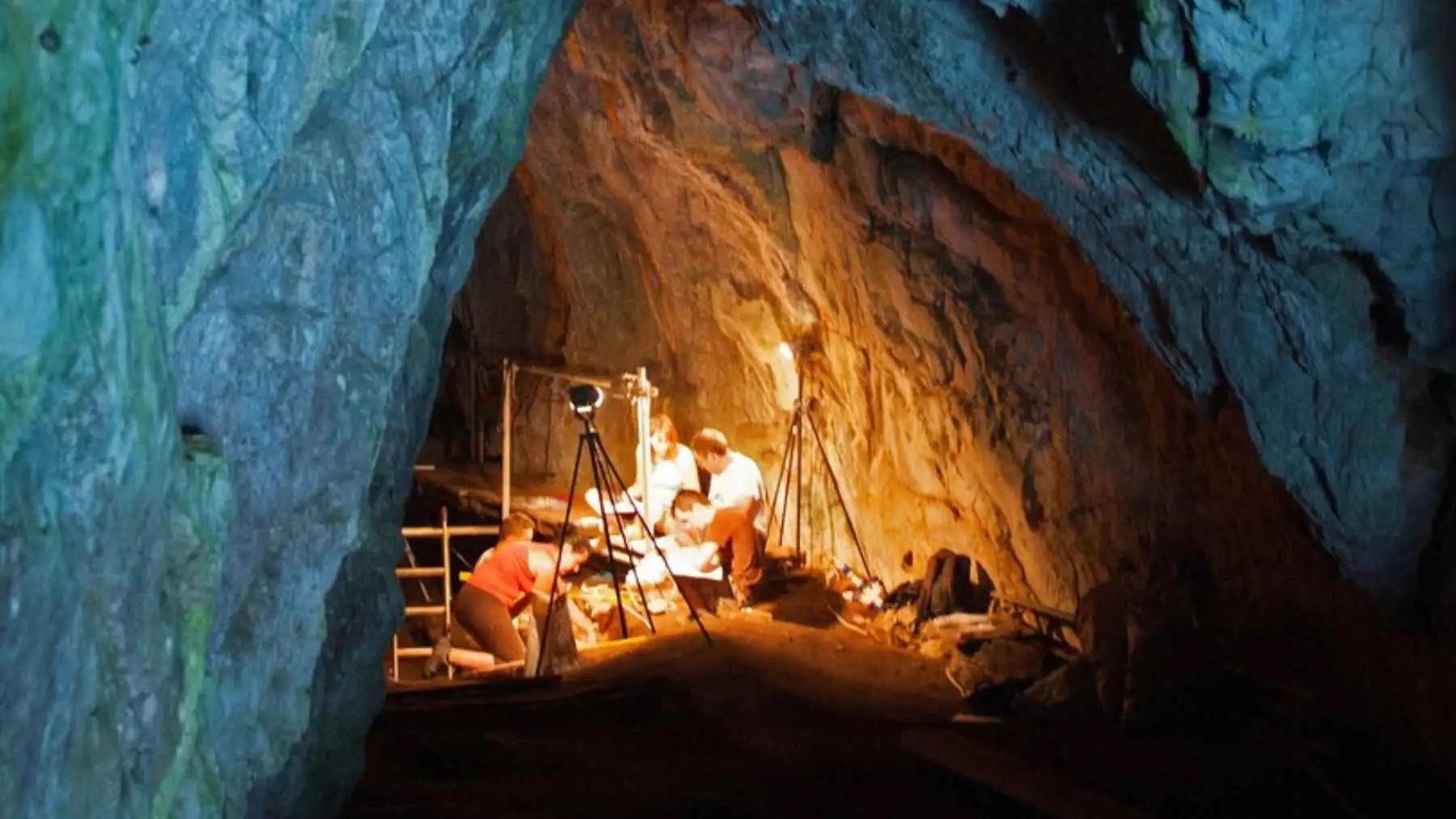
Imagine opening a doorway that has not moved since the Ice Age. Behind it is a chamber sealed away while Neanderthals still walked along the ancient Mediterranean coast. That is exactly what archaeologists have uncovered inside Vanguard Cave in Gibraltar, where a hidden room remained protected under sand for around 40,000 years.

The discovery of this sealed Gibraltar cave chamber is offering scientists a rare glimpse into one of the final chapters of Neanderthal history. Instead of a forgotten empty space, researchers found signs of an ancient environment filled with animal remains, geological layers, and clues about life during the last days of Europe’s Neanderthals.

Located inside the Gorham’s Cave Complex, a UNESCO World Heritage Site, the chamber may represent one of the last places where Neanderthals survived before disappearing from the continent. The find is changing how scientists view these ancient humans, showing them not as simple cave dwellers, but as skilled coastal survivors who understood their surroundings deeply.

How did archaeologists discover a cave sealed for 40,000 years?

The newly revealed chamber sits at the back of Vanguard Cave, high within the cave roof and hidden behind layers of ancient sand. Archaeologists from the Gibraltar National Museum spent years carefully removing sediment to search for unknown passages.

Inside, researchers discovered a surprisingly preserved scene. The floor contained bones from lynx, hyenas, and griffon vultures. They also found marks suggesting that a large carnivore had moved through the area. A single dog whelk shell, a marine shell species, was another important clue. It connected the hidden room to the nearby coastline, where Neanderthals gathered food and lived.

According to researchers, the chamber must have been older than the sand that sealed it. Since the sealing layer dates back roughly 40,000 years, scientists believe Neanderthals were likely responsible for using the space. The discovery is important because untouched archaeological sites from this period are extremely rare. Most ancient caves have been disturbed by later humans, animals, or natural processes.

Why is Gibraltar considered a last refuge for Neanderthals?

The Gibraltar cave discoveries are part of the larger Gorham’s Cave Complex, a collection of caves that preserves more than 100,000 years of human history.

The complex includes Gorham’s Cave, Vanguard Cave, Hyaena Cave, and Bennett’s Cave. Today, these caves face the sea, but during the Ice Age the landscape looked completely different.

Lower sea levels exposed wider coastal areas. Neanderthals living there had access to marine resources, hunting grounds, and shelter. For decades, scientists thought Neanderthals were mainly hunters of large animals. But discoveries in Gibraltar have created a more complex picture.

Evidence from the caves shows Neanderthals collected shellfish, caught fish, and used marine animals as food sources. Bones of fish, dolphins, and monk seals show cut marks from stone tools, suggesting deliberate processing rather than random scavenging.

These findings reveal a group that adapted to changing environments. They understood seasons, landscapes, and available resources. The idea of Neanderthals as primitive humans has slowly disappeared. Archaeological evidence now shows they created tools, used fire, decorated objects, and made practical decisions to survive.

One of the biggest lessons from the Gibraltar caves is that Neanderthals were much more advanced than older stereotypes suggested. Researchers have found evidence that they collected feathers, possibly for decoration, and created abstract engravings on cave walls. These behaviours suggest symbolic thinking and cultural expression.

Another remarkable discovery came from Vanguard Cave in 2024. Scientists identified evidence of a fire used to heat plant material and create a sticky substance called tar.

The hidden chamber adds another piece to this story. It may reveal how these communities organized their spaces and interacted with the animals around them.

Could this hidden chamber change what we know about the last Neanderthals?

Scientists are still studying the newly opened room, and future excavations may reveal even more. Because the chamber remained sealed for thousands of years, it could preserve delicate evidence that normally disappears. Researchers hope to find additional tools, animal remains, or even traces of Neanderthal activity.

Their disappearance around the end of the Ice Age remains one of archaeology’s biggest questions. Climate changes, competition with modern humans, and population pressures may all have played roles.

But Gibraltar shows that Neanderthals were not simply fading away. They were adapting in one of Europe’s most challenging environments. The sealed cave is a reminder that history is often hidden in quiet places. A layer of sand can preserve a story for tens of thousands of years, waiting for someone to uncover it.

The real surprise may not be what archaeologists find inside ancient caves. It may be how much these discoveries continue to change our understanding of who Neanderthals truly were.

FAQs

Did Neanderthals live only in caves?

No. Caves survived in the archaeological record because they preserve materials well. Neanderthals likely used open landscapes, coastal areas, and temporary camps that are harder to detect today.

What role did climate play in Neanderthal survival?

Climate shifts changed landscapes, food availability, and migration patterns. Neanderthal groups had to adjust to colder periods, changing coastlines, and shifting ecosystems to survive.

Sign up to read this article
Read news from 100's of titles, curated specifically for you.
Already a member? Sign in here
Related Stories
Top stories on inkl right now
One subscription that gives you access to news from hundreds of sites
Already a member? Sign in here
Our Picks
Fourteen days free
Download the app
One app. One membership.
100+ trusted global sources.







