
Get all your news in one place.
100's of premium titles.
One app.
Start reading
The Economic Times
The Economic Times
Pihu Yadav

No broadcaster for World Cup? What FIFA’s India standoff could really cost

In 2022, more than 110 million people in India streamed the FIFA World Cup online. The final between Argentina and France alone saw 32 million viewers log on to JioCinema, while total watch time crossed 40 billion minutes, according to Viacom18, which acquired the rights 14 months in advance at $60 million.

Four years later, FIFA still does not have a broadcaster in India for the 2026 World Cup.
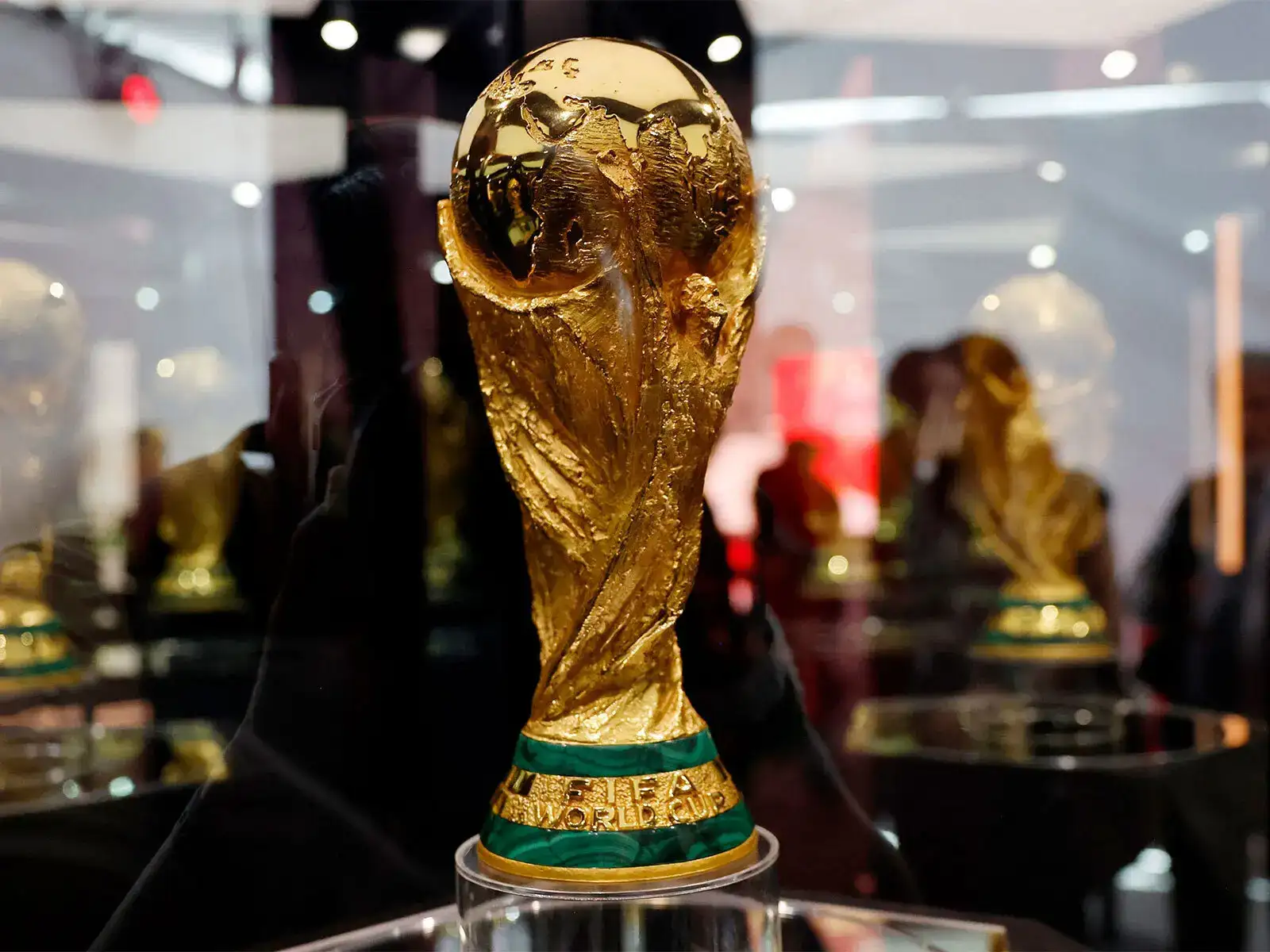
With less than a month to go before football’s biggest tournament kicks off across the United States, Canada and Mexico, the sport’s global governing body remains locked in negotiations in one of the world’s biggest markets: India.

Also Read: Football: China state broadcaster reaches World Cup deal with FIFA

According to a Reuters report from earlier this month, Reliance-Disney’s joint venture JioStar offered around $20 million for India rights — far below FIFA’s expectations — while Sony also chose not to bid because the economics “did not make sense.” This time around, FIFA reportedly sought $100 million for broadcast rights for the 2026 and 2030 World Cups.

For a tournament FIFA president Gianni Infantino has repeatedly described as the “most inclusive” World Cup ever, the possibility of millions in India not being able to legally watch it is more than just an optics problem. It exposes a deeper fault line in the global sports business: scale does not always translate into money.

India is, in many ways, exactly the market FIFA wants: Young, digital-first, mobile-heavy and massive in scale. According to data from Reuters, India accounted for 2.9% of global linear TV reach during the 2022 FIFA World Cup.

The economics problem

But if the audience story looks promising, the monetisation story does not.

When Viacom18 acquired the rights for the 2022 World Cup in India, the deal was valued at roughly $60 million and announced more than a year before the tournament. This time, FIFA reportedly entered negotiations seeking close to $100 million for bundled rights to the 2026 and 2030 tournaments before lowering expectations to around $35 million. Even then, there were no takers.

131167155

The sharp drop says less about football fandom in India and more about the changing economics of media.

For years, broadcasters chased sports rights aggressively, betting that scale and streaming growth would eventually justify ballooning costs. Cricket led that race. Companies spent billions securing rights for the Indian Premier League and ICC tournaments, treating sports as a customer acquisition engine for streaming platforms.

Now, media companies are under pressure to show profitability, not just growth. Advertising markets have softened. Another blow came from the ban on real-money gaming ads. Fantasy gaming platforms like Dream11 and My11Circle had become some of the biggest advertisers in Indian sports over the last few years, especially during cricket tournaments. Their exit has left a noticeable gap in sports ad spending. Economic uncertainty linked to the West Asia conflict has further weakened advertiser sentiment.

Also Read: FIFA World Cup 2026 match timings for India: All you need to know

The other factor

And then there is cricket.

Football may generate online buzz in India, but advertisers still do not value it the way they value cricket. Industry executives quoted by The Economic Times described football as a “niche segment” commercially, despite its digital popularity.

Part of that comes down to timing. The 2026 World Cup will be played in North America, meaning several matches will air in India well past midnight. That weakens television advertising potential dramatically. Even marquee knockout games will compete against India’s white-ball cricket tour of England in July — another headache for broadcasters trying to split finite ad budgets across an increasingly crowded sports calendar.

“The challenge is that FIFA is approaching India with Europe-like expectations, but football does not have that scale here,” one senior media executive told The Economic Times.

But FIFA’s standoff with India may also reveal how much bargaining power has shifted toward broadcasters.

The Reliance-Disney merger has effectively reshaped India’s sports media landscape. Between them, the companies already control some of the country’s most valuable sports properties, from the IPL to ICC cricket. With fewer serious bidders in the market, FIFA no longer has the leverage it once did.

That explains why a $20 million offer — a fraction of earlier valuations — could still realistically be the best deal on the table.

The irony is that the World Cup’s actual cultural footprint in India has probably never been bigger.

An Ormax Media 2024 report estimated India’s football audience at around 305 million, second only to cricket at 612 million. There was no data available for 2025.

For context, broadcaster JioStar recently said that TATA IPL 2026 is on course to cross 500 million TV viewers, while the combined TV and digital reach has crossed a record 1.1 billion viewership. That difference matters because advertisers still value football very differently from cricket even when the online buzz around global tournaments suggests otherwise.

Walk into a sports bar in Delhi, Mumbai or Bengaluru during a Champions League final or an El Clásico clash and the crowds spill well past midnight. Fan clubs for teams such as Manchester United F.C., FC Barcelona and Liverpool F.C. routinely organise screenings, merchandise drops and community events around major tournaments. The World Cup amplifies that ecosystem.

For pubs and screening venues, the tournament is not just another sporting event. It is one of the few properties capable of drawing consistent weekday midnight crowds for an entire month.

An organiser who regularly hosts football match screenings across pubs in Delhi-NCR told ET Online that a typical game draws around 50–60 people, while marquee matches attract 400–500 attendees across multiple venues. The biggest screenings have recorded footfalls of over 3,000 people across 18 outlets.

Speaking about expectations around FIFA screenings, the organiser said, “We expect 5–6 matches to draw significant viewership, especially towards the later stages of the tournament. Group-stage matches may not see as large an audience, largely due to the time difference.”

That disconnect — between visible fandom and weak monetisation — is exactly what makes India such a complicated market for FIFA.

Also Read: FIFA fever grips India: Fans rush to book World Cup 2026 trips despite high airfares and rupee woes

The problem is not audience demand. It is turning that demand into premium revenue.

And that may ultimately force FIFA into a difficult choice: lower its expectations or risk losing visibility in one of the few large markets where football viewership is still growing.

The bigger question

The stakes extend beyond one tournament cycle.

FIFA expects to generate $8.9 billion in revenue this year, with nearly $3.9 billion coming from broadcasting rights, according to Reuters Breakingviews columnist Ka Sing Chan. The expanded 48-team format is designed partly to push deeper into emerging markets and unlock new audiences. But if the World Cup itself struggles to secure buyers in India, it raises uncomfortable questions for the broader football business.

If broadcasters are reluctant to pay top dollar for the biggest sporting event on earth, smaller football properties may face an even harsher reality.

For now, FIFA insists discussions remain ongoing and confidential. A deal could still emerge at the last minute. In India, the issue has even reached the Delhi High Court, where a petition has sought directions to ensure the tournament is televised, including on free-to-air platforms.

But regardless of whether an agreement is reached, the episode has already punctured one long-held assumption in global sports media: that populous digital markets automatically translate into limitless growth.

India has the viewers. It has the fandom. It has the engagement.

Sign up to read this article
Read news from 100's of titles, curated specifically for you.
Already a member? Sign in here
Related Stories
Top stories on inkl right now
One subscription that gives you access to news from hundreds of sites
Already a member? Sign in here
Our Picks
Fourteen days free
Download the app
One app. One membership.
100+ trusted global sources.







