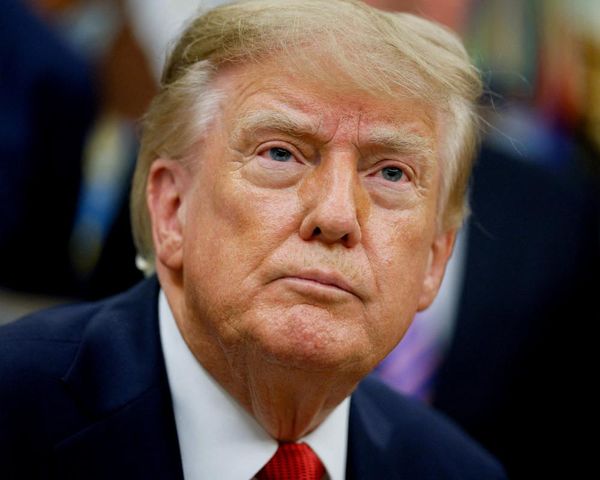
Nigel Farage has called allegations of racist and antisemitic bullying during his time at Dulwich college “complete made-up fantasies”, saying his accusers are “people with very obvious political motivation”.
More than 30 people have spoken to the Guardian as part of an investigation based on multiple accounts of racism, including Peter Ettedgui, 61, an Emmy- and Bafta-winning director, who recalled Farage growling repeatedly “Hitler was right” or “Gas them” at him when they were at school.
Farage has previously denied “directly” targeting anyone with racist or antisemitic abuse or having the “intent” to hurt anyone, and has not publicly recognised the events described. His response to claims of racism, which he was first questioned on in 2013 by the Channel 4 reporter Michael Crick, have shifted over time.
In a broadcast interview in November, he said: “I would never, ever do it in a hurtful or insulting way. It’s 49 years ago. It’s 49 years ago. I had just entered my teens. Can I remember everything that happened at school? No, I can’t. Have I ever been part of an extremist organisation or engaged in direct, unpleasant, personal abuse, genuine abuse, on that basis? No.”
Challenged again about whether he had racially abused anyone, Farage responded: “No, not with intent.”
But when asked at a Reform UK press conference in central London on Wednesday why he had not apologised to his accusers, he said: “I don’t apologise for things that are complete made-up fantasies.”
Amid loud booing from Reform members directed at the ITV journalist who asked the question, Farage added: “Some of what is out there is just absolute nonsense made by people with very obvious, if you look, political motivation.” He said others could focus on “stuff that happened in the 1970s” but Reform was looking ahead to the May local elections.
Farage has been asked to apologise in a letter signed by 26 of his school contemporaries. Last month an ex-Dulwich teacher spoke out about the racism claims, saying: “Of course he abused pupils.”
Farage was speaking at an event in London Bridge at which Laila Cunningham, a Muslim and former CPS prosecutor, was announced as Reform’s candidate for London mayor when the capital goes to the polls in 2028.
During the press conference, Farage said remarks by another Reform mayoral candidate, Chris Parry – who suggested the London-born David Lammy should “go home” to the Caribbean – were “over the top”, when questioned about the issue for the first time.
The Reform leader was asked whether Parry was a good representative of the party in light of his views. In a past tweet that came to light at the end of last year, Parry, Reform’s candidate for the Hampshire and the Solent mayoralty, suggested the deputy prime minister’s “loyalty lies” in the Caribbean.
Farage said Parry had also criticised “many white politicians, called them unpatriotic, and suggested they went to live in other countries”, but said: “Some of his comments are a bit rich.”
He said: “I get that. He is intensely patriotic. He’s risen to the rank of rear admiral, he’s given enormous service to this country. But I do think his comments on Lammy were over the top and he should apologise for them.”
Cunningham, asked if she thought London was too diverse, said the problem in the capital was “not about diversity”, adding that her parents had come from Egypt in the 1960s and had had to integrate.
“But what you find in certain parts of London is that immigration is too much, and when it’s too many, they dominate,” she said. “And you do have certain parts of London where people who have been in that area, grew up there, do not feel it’s their part any more. It doesn’t feel like London, and that is a problem.”
Farage boycotted prime minister’s questions in the Commons on Wednesday to appear on Times Radio, saying it was “more worthwhile than sitting in the House of Commons being abused by a prime minister and having absolutely no chance to respond”.
He faced criticism from Labour’s Michael Shanks, who wrote on X that Farage had been selected to ask a question in the Commons on Tuesday on energy but had withdrawn and did not “bother to turn up”.
Commenting on Farage’s decision to boycott PMQs, the Labour MP Chris Bryant wrote: “Not really an mp at all.”
The best public interest journalism relies on first-hand accounts from people in the know.
If you have something to share on this subject, you can contact us confidentially using the following methods.
Secure Messaging in the Guardian app
The Guardian app has a tool to send tips about stories. Messages are end to end encrypted and concealed within the routine activity that every Guardian mobile app performs. This prevents an observer from knowing that you are communicating with us at all, let alone what is being said.
If you don't already have the Guardian app, download it (iOS/Android) and go to the menu. Select ‘Secure Messaging’.
SecureDrop, instant messengers, email, telephone and post
If you can safely use the Tor network without being observed or monitored, you can send messages and documents to the Guardian via our SecureDrop platform.
Finally, our guide at theguardian.com/tips lists several ways to contact us securely, and discusses the pros and cons of each.