There have been countless shots at this year’s Australian Open that seem to stretch beyond the realms of human physicality. There’s the sight of Rafael Nadal, aged 35, with tendons stitched back together like a puzzle, skidding at full pelt to claw a drop shot over the net. There’s been Gael Monfils, only a few months younger, hurling himself against the hard courts in Melbourne as though trying to chase down time itself. The examples of players pushing themselves to the brink of exhaustion, sickness or, in some cases, quite literally shedding blood in pursuit of victory, have been endless. It is the nature of a grand slam and of sport itself, modern and gladiatorial: to sacrifice more than anyone else; to prevail or surrender.
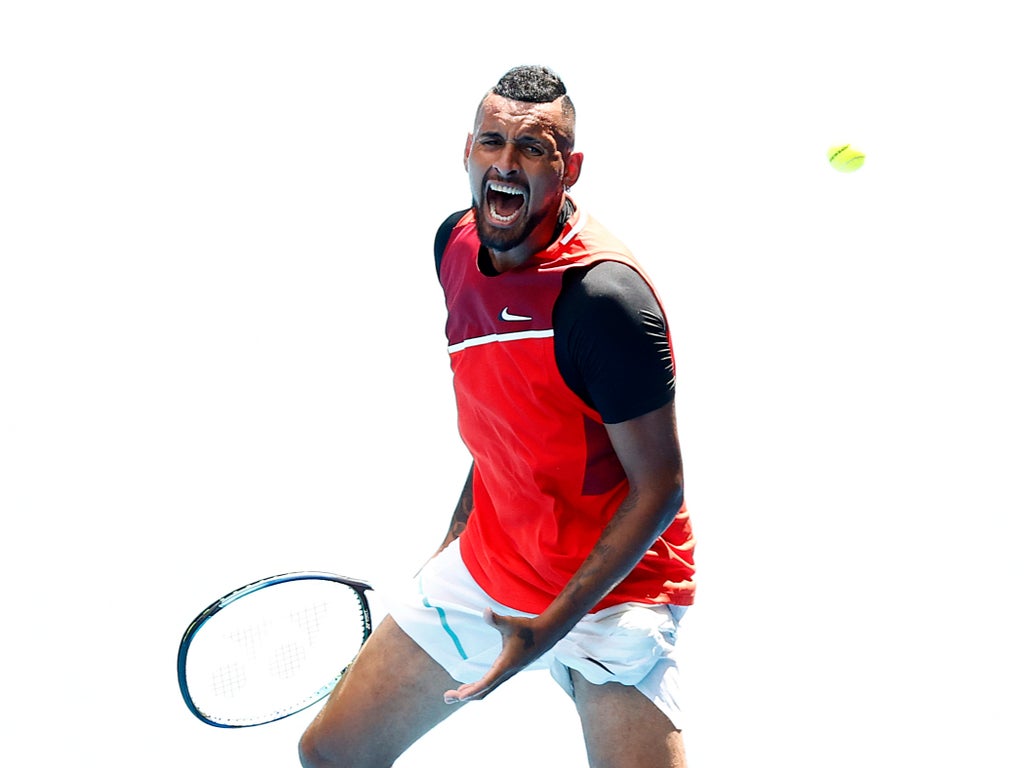
And yet the shot that drew the wildest reaction, or at least provoked the clearest sense of joy, was struck way back in the relative freedom of the first round. Leading Britain’s Liam Broady by a set and a break, Nick Kyrgios’s eyes lit up in a way that you could almost see the thought flash through his mind. And so, as a top-spin forehand arced towards his nether regions at around 70mph, the Australian sprung onto his toes and attempted a tweener with complete nonchalance. For all its audacity, and disdain for the circumstances, it was hardly ineffective. A little confounded, Broady’s return sat up invitingly and Kyrgios then annihilated a forehand with such fury it threatened to leave John Cain Arena in a state of mass whiplash.