Twenty-eight patients have died across hospitals in England after NHS staff wrongly inserted feeding tubes into their airways.
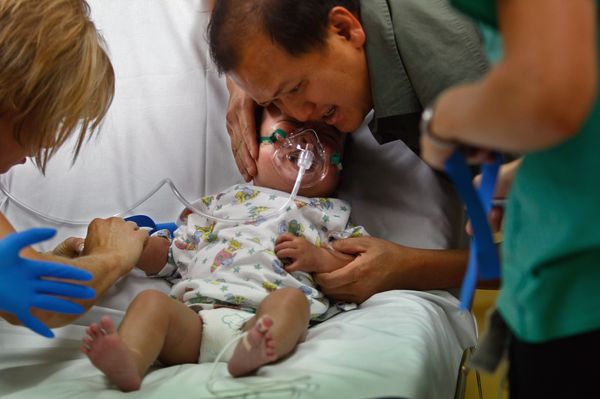
Tube feeding, also referred to as artificial feeding, is a way of providing nutrition or fluids to patients who are unable to eat or drink.
There are many reasons why someone is not able to drink or eat enough, with some of the most common being swallowing difficulties for example following a stroke or due to neurological conditions such as motor neurone disease.

A doctor may also recommend tube feeding when a patient's digestive tract is obstructed or if they need increased nutritional or fluid requirements that cannot be met sufficiently by their diet.

Some of the most common complications of tube feeding include mouth discomfort, reflux and vomiting, abdominal pain, diarrhoea and constipation, explains Charitable Association BAPEN.
It is very rare that medics mistakenly place the tube into a patient's airways, which can cause them to slowly drown as fluid gets into their lungs.
These incidents are classified by the NHS as "never events", which means they should be totally avoidable if doctors follow protocol.
But a Freedom of Information request by Mail Online discovered that over the past five years, 145 incidents of wrongly inserted nasogastric tubes have been recorded by hospitals in England.
Of these, 28 incidents ended in death - including seven times at Barts Health, seven times at United Lincolnshire Hospitals and six times at Lancashire Teaching Hospitals.
The report says that a stroke patient received 300ml of feed into their lung after staff confused an earlier X-ray for the most recent one, assuming that the feeding tube was properly inserted.

In another incident, a nurse mistakenly placed the feeding tube into the patient's airways, causing 150mls of feed to drip into the lung in three hours.
Seven hours later, the patient was found to be "extremely short of breath and unwell" and only after they died, medics understood the tube had been misplaced.
In another case, a patient was left for two days with a nasogastric tube inserted into their airways.
The NHS said these incidents are "extremely rare" and when they happen, a full investigation is launched, in a bid to create safer care for patients and avoid prevent similar things from happening in the future.
Paul Whiteing, chief executive of the charity, Action against Medical Accidents described the findings as "shocking" and called for urgent action to be taken in order to avoid similar incidents.
He added: "We understand that the NHS is under unprecedented pressure, but it's vital that training and learning is not sacrificed otherwise avoidable accidents and deaths will only increase."
An NHS spokesman said: "NHS staff work exceptionally hard to keep patients safe and thankfully never events are extremely rare.
"When they do occur, NHS Trusts are required to investigate and understand what has happened, which then helps them to reduce the number of these incidents, creating even safer care for patients."