As a temperature check on the Democratic Party’s base, last night’s election results clearly show that the energy in the party once again rests with the populist left. Democratic socialists swept to victory last night in New York City’s primary election, defeating other progressives and establishment Democrats alike in a major show of force coming right in the backyard of the Democratic Party’s centrist leadership.
Across the three marquee races of the night, Democratic Socialists of America-aligned candidates ran the board. In New York’s Seventh District, state assembly member Claire Valdez led Brooklyn Borough President Antonio Reynoso, a Working Families Party-endorsed progressive, by roughly 19 points as of Wednesday morning. And, in the closely watched 13th District, community organizer Darializa Avila Chevalier led Rep. Adriano Espaillat, the chair of the House Hispanic Caucus, by roughly 3.5 points.

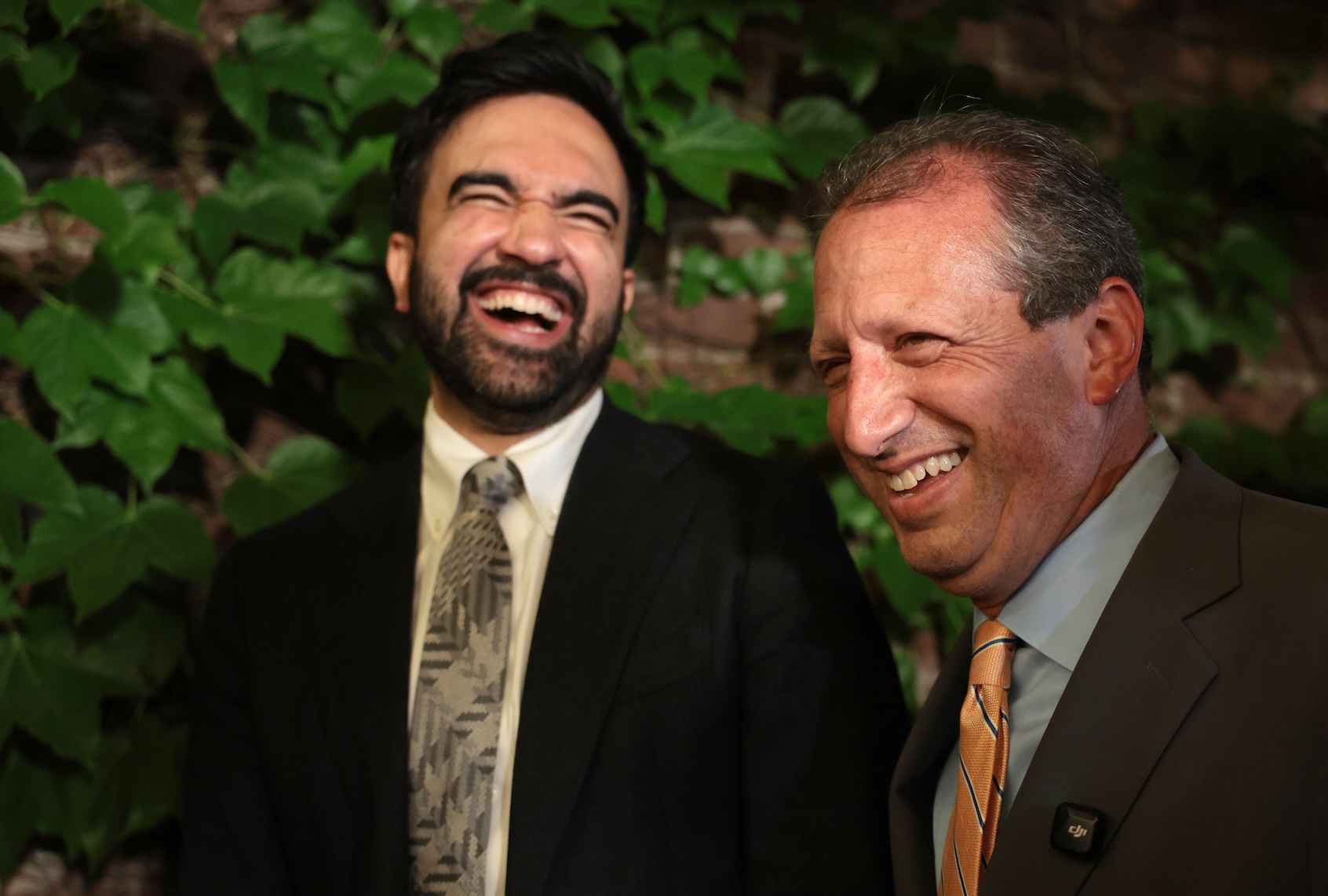
In New York’s 10th District, former city comptroller Brad Lander trounced Rep. Dan Goldman, a fairly mainstream Democrat, by a whopping 31 points. Though Lander was not endorsed by the DSA, he did receive the endorsement of Mayor Zohran Mamdani.
Progressives also marched to victory downballot. Of the ten DSA-endorsed candidates who ran for office in Tuesday’s primaries, just one of them appears to have lost their race.
While the high-profile race in New York’s 12th featured different dynamics that the other three big congressional primaries in the city, it’s noteworthy that Alex Bores, a progressive-leaning candidate who had become the darling of the self-fashioned “abundance” wing of the Democratic Party, lost to the establishment-backed Micah Lasher.
The results were also an affirmation of the Mamdani/DSA style of campaigning. The DSA is highly organized on both a national and local level and, at least in New York City, can mobilize a small army of volunteers to canvas. And while the movement’s stars like Rep. Alexandria Ocasio-Cortez and Mamdani might be the personalities energizing volunteers, the door-knocking they do is getting people elected up and down the ballot. At one point yesterday, it was impossible to walk down the street in New York’s Seventh District without being handed a flier for a DSA-backed candidate.
As an aside, some politicians are paying for turning their backs on progressives in the city as well. For example, state Sen. Jessica Ramos, who rose to power as a progressive before endorsing former Gov. Andrew Cuomo for mayor last year, lost her re-election bid as well.
The last topline observation from last night, however, has not to do with the personalities or politicians making waves, but with the institutions behind them. The race in New York’s Sixth District is an illustrative example.
In the Sixth District, Chuck Park, a former diplomat, was challenging Rep. Grace Meng on a platform aligned with last night’s progressive winners, but lost to Meng by about 14 points. Park lacked what last night’s winners had: support from progressive institutions.
The influence of these institutions goes beyond just the DSA. Valdez, Chevalier, and Lander, for example, all received support from the Justice Democrats, which supports progressive candidates for Congress around the country, and the Sunrise Movement, an environmentally-focused group with significant support among younger progressives.
The last thing about these results — and the results of many other Democratic primaries around the country so far this year — is that they are showing a progressive left that is growing beyond the personalities that have defined it for the better part of a decade. For a long time, the movement’s champions like Sen. Bernie Sanders, I-Vt., and Ocasio-Cortez have largely defined the movement in the public sphere. While these figures will undoubtedly continue to have a major influence over this wing of the party, it’s clear that in 2026, the movement has appeal outside of any particular candidate.