
A new rapid sensor has been developed that can determine whether you have Covid-19 or the flu within 10 seconds.
The device is made of a single-atom-thick nanomaterial that can simultaneously detect the presence of viruses that cause Covid and the flu - at much lower levels and much more quickly than lateral flow and other conventional tests.
Scientists in the US constructed it using graphene, a single layer of carbon atoms arranged in a hexagonal lattice pattern. Its thinness makes it highly sensitive to any electrical changes in its environment, giving it the ability to differentiate between Covid and the flu.
Deji Akinwande, from the University of Texas at Austin, said the symptoms of both flu and Covid overlap considerably, making it difficult to distinguish between them.
“When both of these viruses are circulating together as they did earlier this winter, it would be immensely useful to have a sensor that can simultaneously detect whether you have Covid, flu, none of the above or both,” he said.
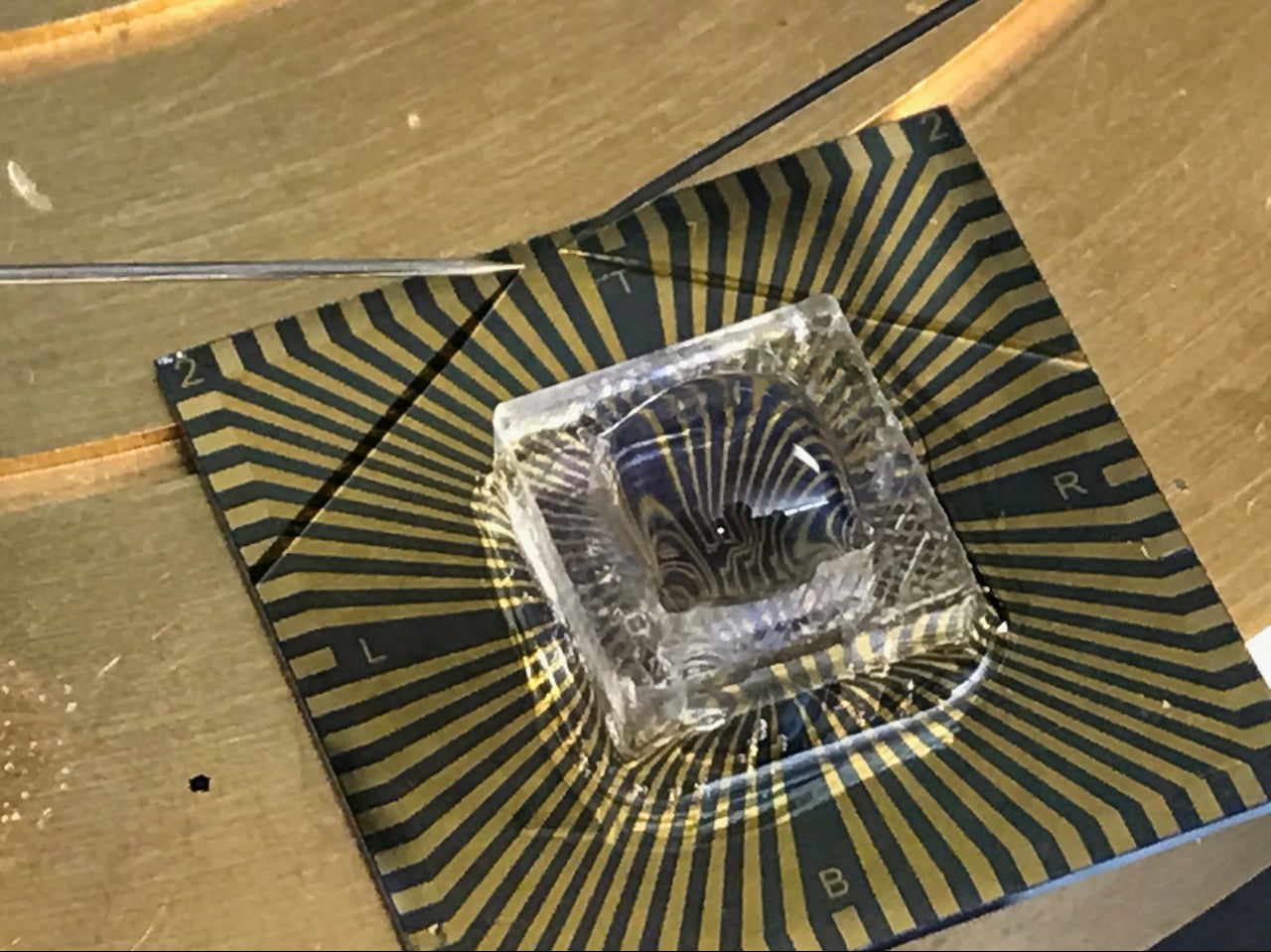
Researchers extracted antibodies that the human body produces and linked them to the graphene. When scientists place a sample from an infected person on the device, the antibodies bind to their target proteins, prompting a change in the electrical current.
The research team used proteins from the flu and Covid delivered in fluid intended to resemble saliva.

Their results indicated that not only could the sensor detect the presence of the proteins, but could also when present at extremely low quantities.
The team believe their device can be modified to test for other infections too.
Mr Akinwande said: “[The sensor] can improve the ability to detect very small quantities of basically anything that needs to be sensed, whether it’s bacteria or viruses, in gas or in blood.”
The researchers presented these findings at the spring meeting of the American Chemical Society this week.