
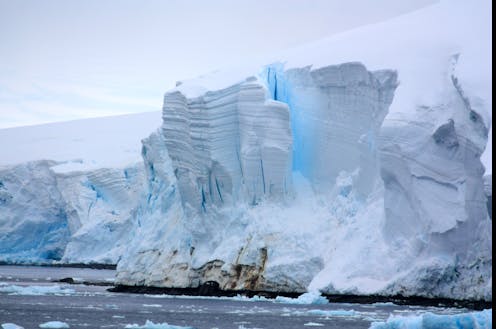
The Antarctic Ice Sheet, which covers an area greater than the US and Mexico combined, holds enough water to raise global sea level by more than 57 metres if melted completely. This would flood hundreds of cities worldwide. And evidence suggests it is melting fast. Satellite observations have revealed that grounded ice (ice that is in contact with the bed beneath it) in coastal areas of West Antarctica has been lost at a rate of up to 30 metres per day in recent years.
But the satellite record of ice sheet change is relatively short as there are only 50 years’ worth of observations. This limits our understanding of how ice sheets have evolved over longer periods of time, including the maximum speed at which they can retreat and the parts that are most vulnerable to melting.













