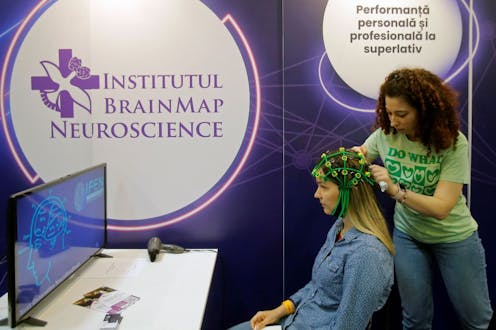
Neurotechnologies – devices that interact directly with the brain or nervous system – were once dismissed as the stuff of science fiction. Not anymore.
Several companies are trying to develop brain-computer interfaces, or BCIs, in hopes of helping patients with severe paralysis or other neurological disorders. Entrepreneur Elon Musk’s company Neuralink, for example, recently received Food and Drug Administration approval to begin human testing for a tiny brain implant that can communicate with computers. There are also less invasive neurotechnologies, like EEG headsets that sense electrical activity inside the wearer’s brain, covering a wide range of applications from entertainment and wellness to education and the workplace.