Some in-law relationships start off great, only to unravel the moment someone enters a challenging period in their life. Suddenly, boundaries that seemed natural are tested, and even small disagreements can turn into full-blown confrontations.
Reddit user DearPomegranate1200 shared on r/JUSTNOMIL, a community for venting about your mother-in-law, how her husband’s mom changed after the birth of their child.
She described repeated arguments and the emotional toll of dealing with a relative who refuses to respect her role as a parent—all building up to a dramatic standoff over the phone.
It takes a village to raise a child, and ideally, you’d want your in-laws to be a part of it

Image credits: Natalia Blauth / Unsplash (not the actual photo)
But some of them can turn into enemies rather than allies


Image credits: SkelDry / freepik (not the actual photo)

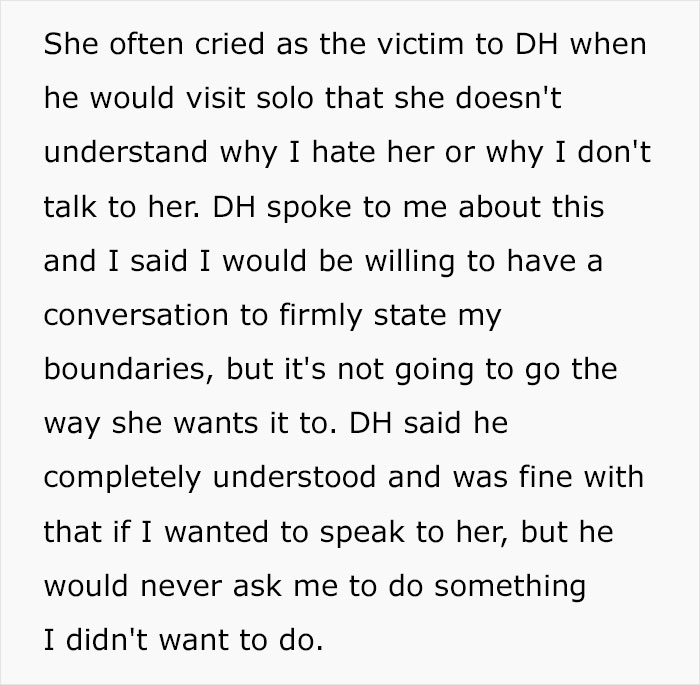



Image credits: SkelDry / freepik (not the actual photo)

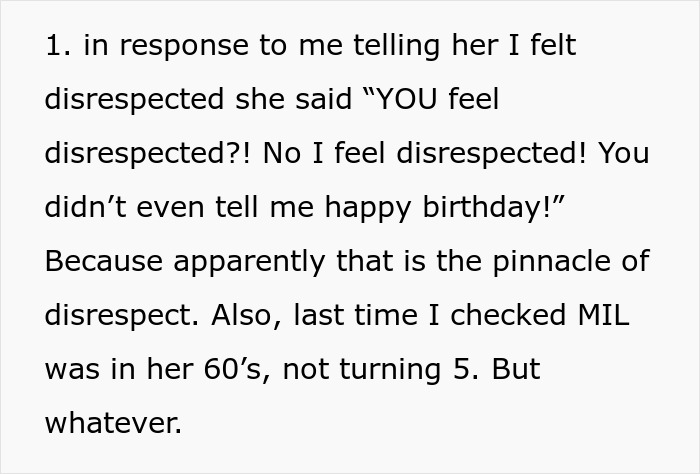


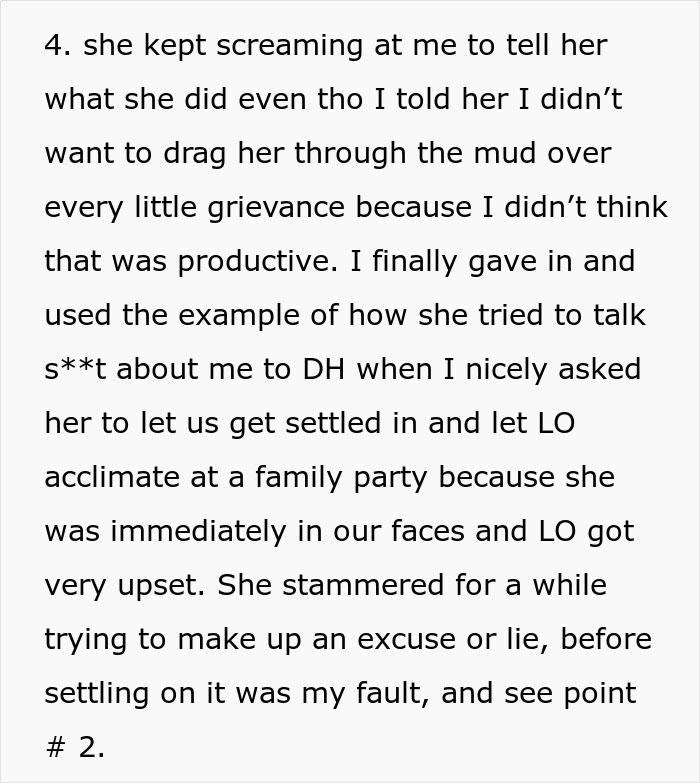
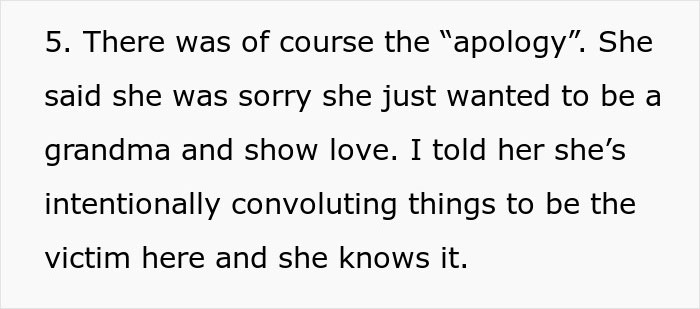




Image credits: Wavebreak Media / freepik (not the actual photo)



Image credits: DearPomegranate1200
This story is a pretty good example of the broader picture

Image credits: prostock-studio / freepik (not the actual photo)
To learn more about conflicts between mothers- and daughters-in-law, researchers in Taiwan gathered written accounts from more than one hundred women about their experiences. They wanted to identify not only what tends to spark tension, but also how each side typically reacts once conflict begins.
The results showed that the most common trigger was criticism directed from the mother-in-law toward the daughter-in-law, accounting for 42% of cases. These criticisms often focused on parenting, household routines, or personal behavior. The second most frequent cause was mothers-in-law making unreasonable or illegitimate demands, reported in 16% of cases. Conflicts rooted in generational differences or value clashes made up 14% of cases, and criticism moving in the opposite direction, from daughter-in-law to mother-in-law, accounted for another 14% of cases.
When it came to conflict styles, the difference between the two groups was stark. Mothers-in-law overwhelmingly relied on a competing style, which is assertive and focused on winning rather than compromise. This approach appeared in 84.4% of cases. Daughters-in-law used a broader mix of strategies—not just competing (41%), but also accommodating (26.0%), avoiding (18%), and active problem-solving (13%).
The study also revealed patterns in how certain triggers linked to certain responses. For example, as it was for our Redditor, when mothers-in-law criticized or made demands, they almost always followed up with more competing behavior. Daughters-in-law sometimes pushed back, but often resorted to avoiding further conflict or accommodating to keep the peace.
Of course, the numbers might look (a little) different in other cultures, but the underlying trends are clear.
For example, Geoffrey Greif, co-author of In-law Relationships: Mothers, Daughters, Fathers, and Sons, said the research he has done for the book revealed that mothers-in-law rated their relationship with their daughter-in-law much higher than vice versa:
- 33% strongly agreed the two were close, compared to 18% for the younger women.
- 42% strongly agreed they admired their daughter-in-law, but only 23% of the younger women felt the same way about their husband’s mother.
- 37% strongly agreed they enjoyed spending time together, compared to 22% for the younger women.
- 50% strongly agreed they trusted their daughter-in-law, but only 23% of the younger women felt the same way about their mother-in-law.
Additionally, more than half of daughters-in-law, 52%, strongly disagreed or disagreed that they had the same parenting philosophy as their mothers-in-law.
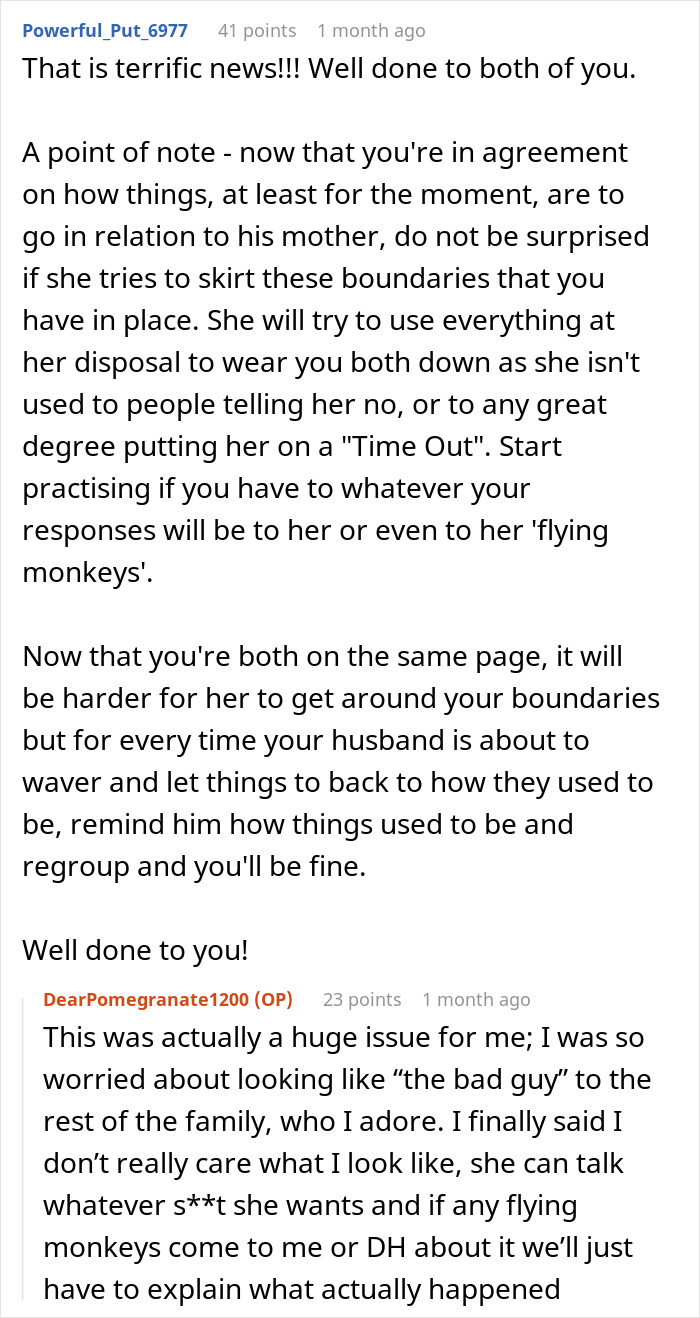
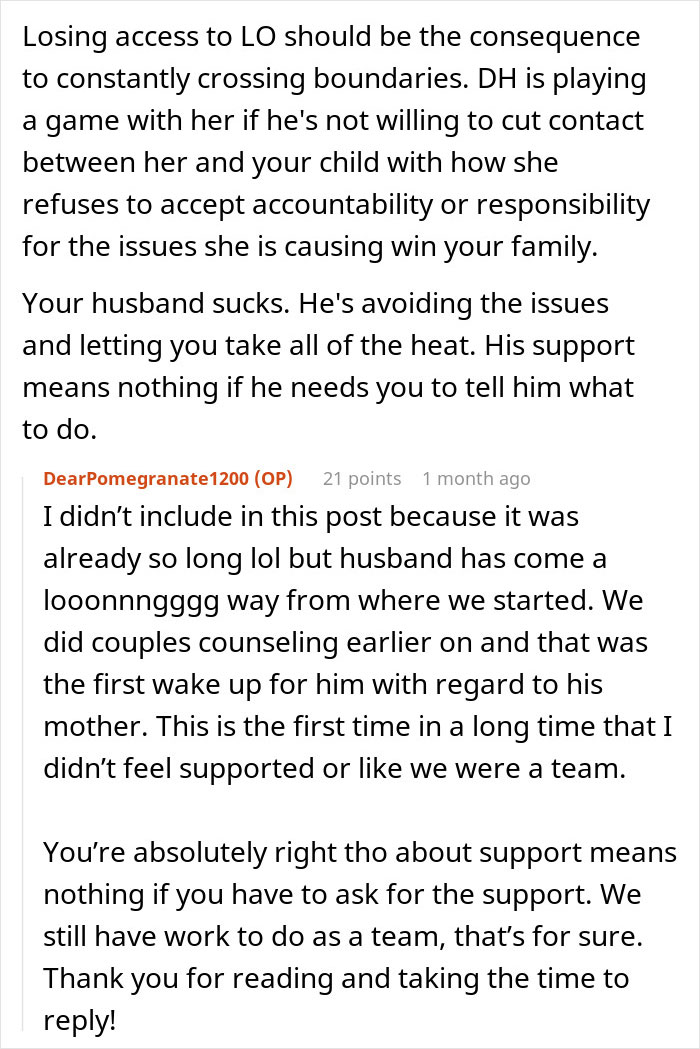
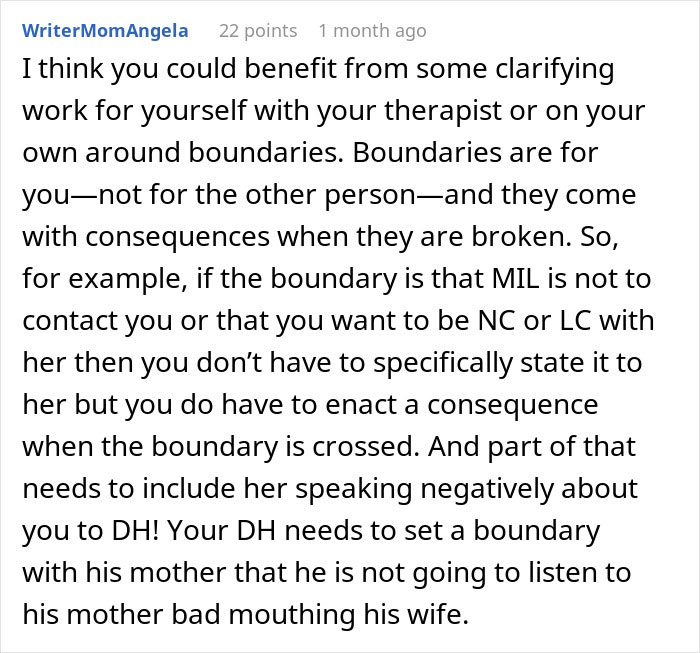
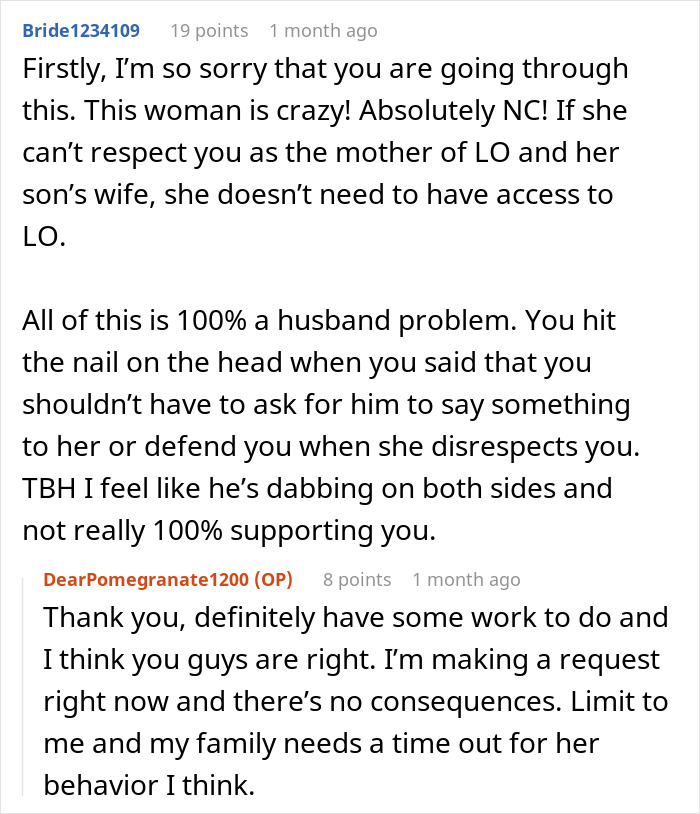
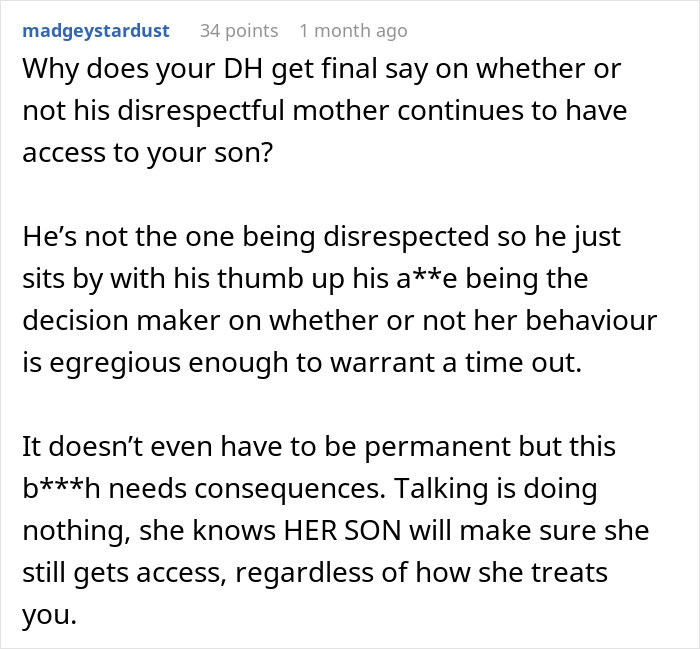
People who read the woman’s story were horrified by her mother-in-law’s behavior






























Later, the woman released an update on her situation, and she was happy that her husband had fully committed to playing his part






Image credits: DearPomegranate1200
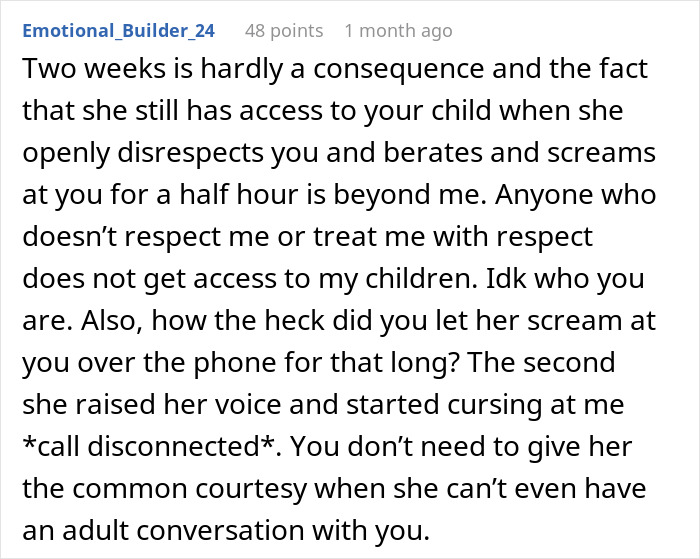
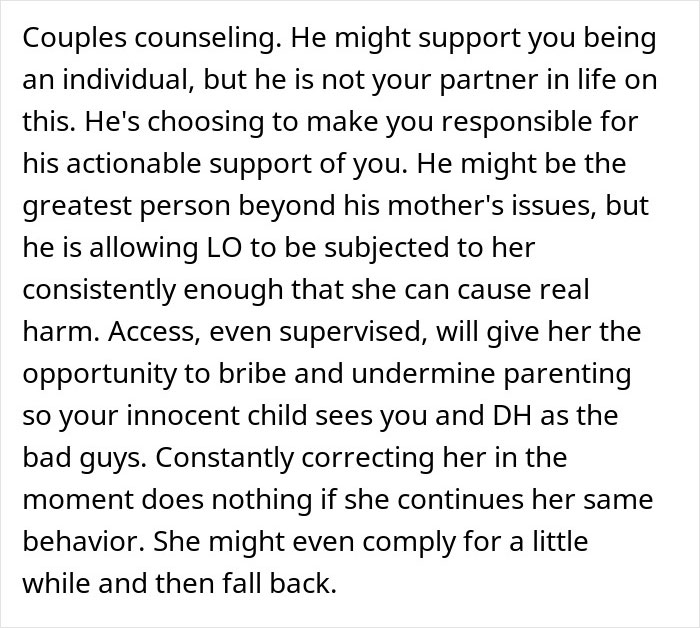
People were optimistic, but advised her to remain cautious