Get all your news in one place.
100's of premium titles.
One app.
Start reading
Motorsport
Motorsport
Sport

F1 relies on thousands of volunteers — here’s how many

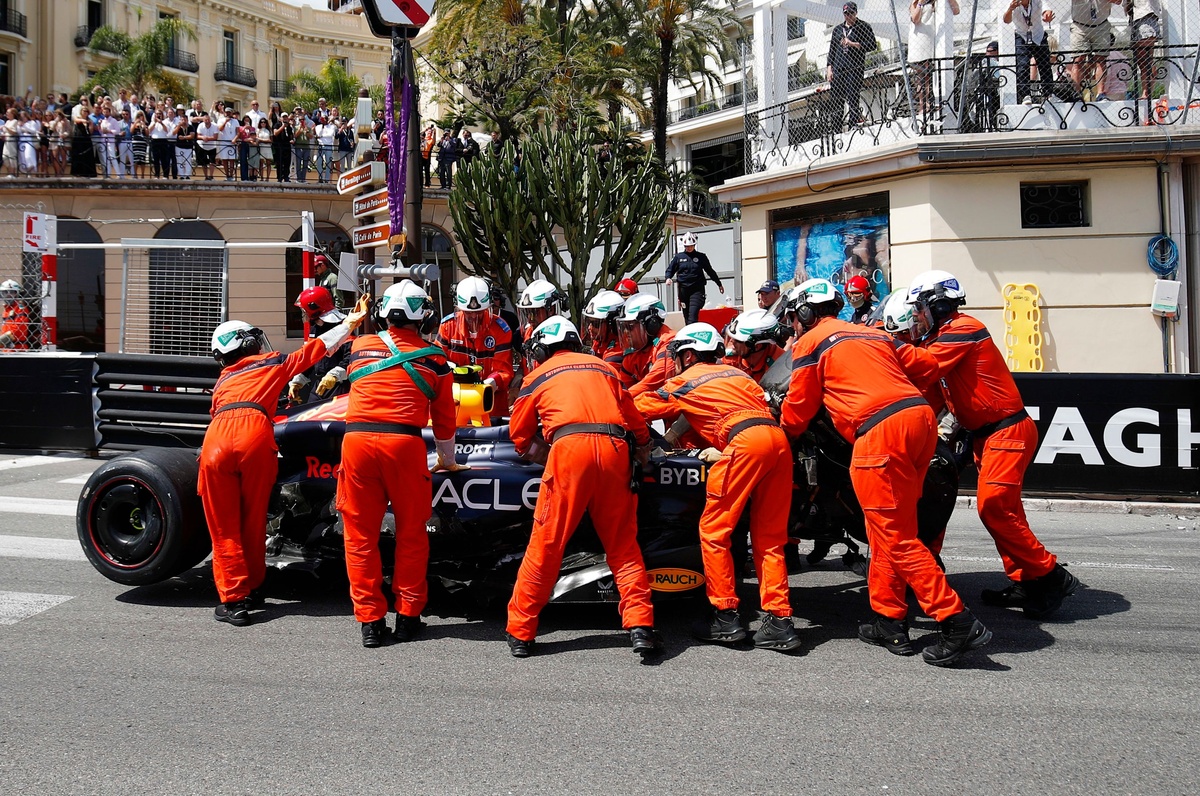
A new study commissioned by the FIA revealed that it takes more than 20,000 volunteers per year to adequately organise Formula 1's 24 grands prix weekends, at an average of 838 per weekend.

Motor racing is the global sport that relies on volunteers the most for the safe running of its wide pyramid of events, from grassroots racing all the way to its range of world championships.

To more adequately map out the lay of the land, the FIA commissioned a report through its FIA University to quantify the needs and impact of its existing volunteering corps, as well as make recommendations for the future. To gather this data, researchers conducted a survey of the FIA's Sporting Organisers Working Group representing the organisers and promoters of F1's 24 grands prix.

A key metric to come out of the report is that it took an average of 838 volunteers, the majority of which are marshals, to run an F1 grand prix in 2025 - this equates to a 20,112-strong workforce for the entire 24-race calendar. The report said volunteers work an average of 48 hours per race weekend, extrapolating that figure to 965,376 hours per season, with two thirds taking annual leave or unpaid holidays in order to work at a grand prix. It also states the total cost associated with the training and recruiting of these volunteers is 11.1 million euros per year, with the total labour value estimated at 13.2 million.

Marshals at work at the Singapore Grand Prix (Photo by: Filip Cleeren)

Those numbers further solidify the FIA's desire to widen the worldwide pool of volunteers and further support them, as their average workload has gone up by an estimated 20%. Within F1 in particular, there is a growing desire to professionalise roles like race control and stewarding to further solidify consistency in decision making. A new Concorde Governance Agreement between the FIA and F1 management, which was signed at the end of last season, is expected to provide the governing body with more resources to help improve its officiating.

Some of the recommendations made by the report are to appoint a welfare officer to look after volunteers, investment in research and technology, and implement a more systematic and professional model of volunteer management.

The FIA has already made steps in that regard with its new officials department, which aims to centralise and homogenise the training that is done at a local level to ensure the correct standards are maintained across members clubs and events.

It has also put together a high performance programme to identify and train the next generation of stewards and race directors, offering opportunities for talented officials to graduate to wider roles within racing. The first class of six stewards graduated to roles within FIA-sanctioned championships last year. Three race directors from the programme will be deployed in 2026.

The report also backs the FIA's plans for a new centre of excellence, a dedicated officials training centre to boost its quality and quantity of officials.

This new pathway for official training is important both for F1 and for other series because motorsport requires a steady supply of officials to events in years to come. One positive finding from the report is that the majority of volunteers is sticking around for at least five years, citing the training, camaraderie and opportunities to grow within the sport as some of main drivers to stay involved despite the personal cost.

Rui Marques, the FIA's F1 race director, started his motorsport official career as a marshal at Estoril. (Photo by: Mark Sutton / Formula 1 via Getty Images)

Speaking to Motorsport.com last year, F1 race director Rui Marques said the love for motorsport led to him becoming a marshal at the age of 18 before graduating to more senior roles.

"I was waiting to turn 18 to become a marshal," Marques said. "What I found is a family, wherever you go around the world. It's all about the passion for the sport. We have colleagues in race control who still volunteer as marshals when they have time."

Marques witnessed the welcome trend of F1's marshalling corps becoming younger in recent years, which has been linked to the series' mainstream success via Netflix series Drive to Survive. "Yes, in Europe the age of the volunteers was getting higher and higher," he said.

"Don't get me wrong, we want and respect everyone. Some of them have 30 years of experience, which is also important. But we can now see more younger people arriving, which is really good."

Sign up to read this article
Read news from 100's of titles, curated specifically for you.
Already a member? Sign in here
Related Stories
Top stories on inkl right now
One subscription that gives you access to news from hundreds of sites
Already a member? Sign in here
Our Picks
Fourteen days free
Download the app
One app. One membership.
100+ trusted global sources.