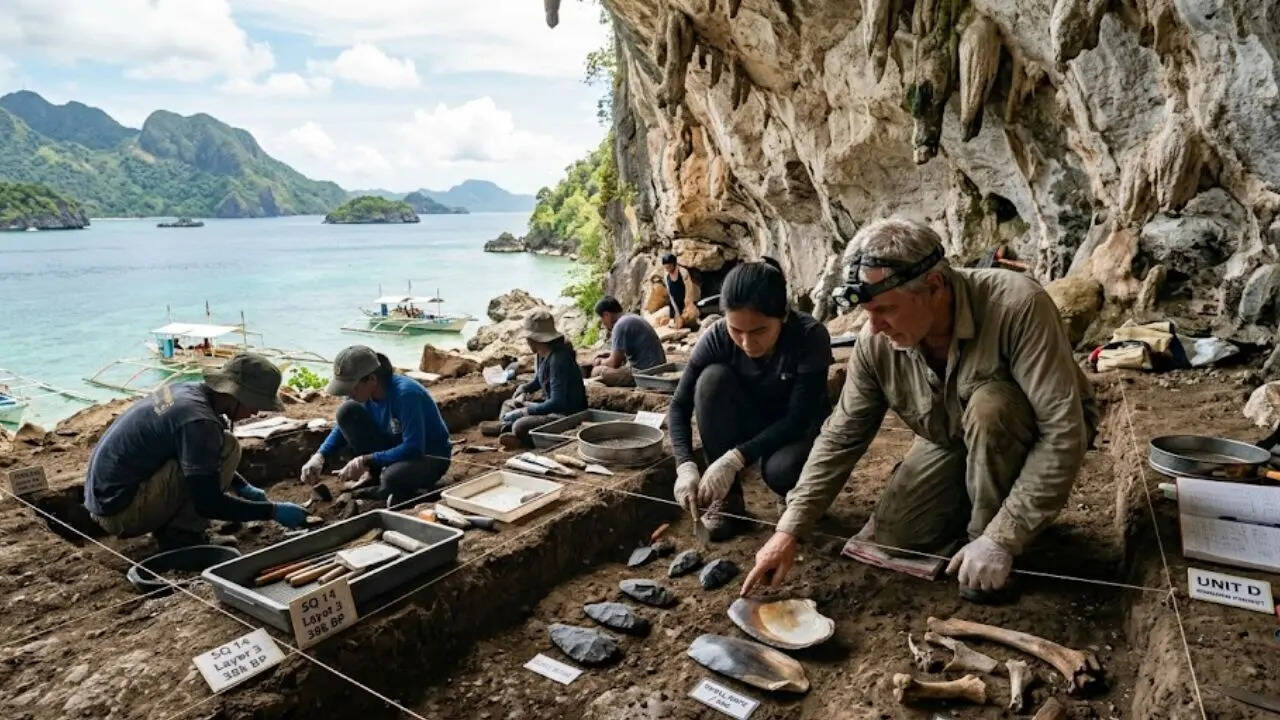
Recent archaeological discoveries have reshaped our understanding of prehistory in Southeast Asia. Early people in the Philippines are now considered to be the pioneers and innovators of sailing, instead of being isolated groups of humans inhabiting these archipelagos. Research based on evidence from Mindoro Island shows that over 40,000 years ago, people were navigating open-ocean corridors; practising pelagic fishing, and, creating complex and interconnected communities as well as technology around the water. Contrary to what has long been believed about how these Islands were remotely located and reached by accident while adrift at sea.
According to Modern Sciences, evidence has been found on the Islands that includes the use of more advanced tool-making methods for shellfish, and evidence of pelagic fish being located far away from land, indicating that people willingly travelled many times between landmasses. As researchers document through mapping these previous interactions between communities throughout the world, there is a realisation that one of the main areas where interaction occurred between communities was through sailing and using the waters that are present around the Philippines and building strong networks for trade and cultural exchanges. These findings fundamentally rewrite human migration history, confirming that ancient maritime societies possessed sophisticated navigational skills and intentional, extensive seafaring capabilities.