
I have been walking for a few minutes when the Pulcino della Minerva, a curious, fanciful sculpture standing tall in Rome's hyper-central yet mysteriously calm Piazza della Minerva, appears against a darkening sky to my right. Depicting a doe-eyed elephant carrying an ancient Egyptian obelisk (one of the 12 dotting the Eternal City's traveled piazzas, and the smallest of its kind), this fascinating landmark is the work of pioneering Italian sculptor Gian Lorenzo Bernini. It has sat in the square since it was first unveiled in 1667, a symbol of the strong intellect (the elephant) and the divine wisdom (the obelisk) that, at least for Pope Alexander VII, characterized the Romans.
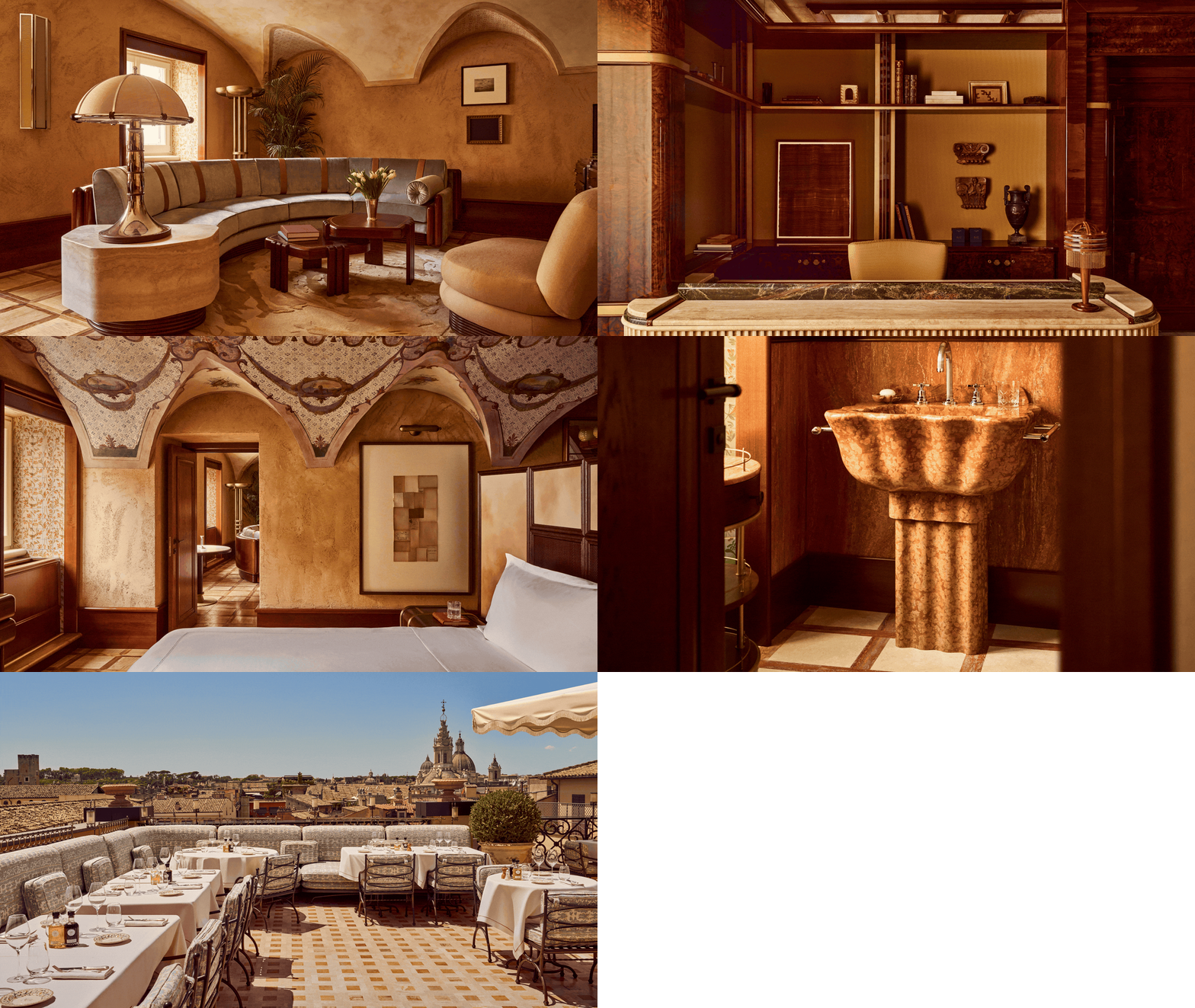
Now, picture how many travelers before me that statue must have seen over the past 359 years — how many love stories, adventures, crimes, and plot twists must have unfolded in the stretch that goes from the white-marble, affective grin of that colossal animal to the Pantheon, situated in Piazza della Rotonda behind its back. That's where the story of Orient Express La Minerva, the debut hotel in Rome of the namesake lifestyle brand, begins. Or better even, where, looking straight at it, it starts again, with one challenge as its incipit: "working with the existing traces of history present all around it to create a dialogue between the location, the building, and the identity of Orient Express," Franco-Mexican architectural designer Hugo Toro tells me.